To build a two-week survival pantry, begin by assessing your household’s unique needs, including dietary restrictions and preferences. Focus on stocking essential non-perishable items that are vital for long-term sustenance, such as grains, canned goods, and dried staples. Ensure you have a sufficient water supply—aim for one gallon per person, per day, to stay hydrated during emergencies. Strategically plan meals that provide both variety and nutrition, utilizing items like pasta, rice, canned beans, and freeze-dried foods. Proper storage is crucial; keep everything organized and practice FIFO (First In, First Out) to maintain freshness. Continue to seek out more tips on maximizing your pantry for effective prepping and survival readiness!
Key Takeaways
- Assess family dietary needs and preferences to ensure a variety of meals for the two-week survival period, considering nutritional requirements for energy and health.
- Inventory existing pantry and fridge supplies to avoid unnecessary purchases, minimize waste, and ensure readiness for any situation.
- Stock essential non-perishable items like grains, canned goods, and dried staples to maintain balanced nutrition during emergencies or prolonged situations.
- Calculate water needs, storing at least one gallon per person per day for two weeks to ensure hydration in case of supply disruptions.
- Implement a FIFO (First In, First Out) system to rotate pantry stock, ensuring older items are used first for freshness and minimizing the risk of spoilage.
Assessing Your Household’s Needs
When you start planning your two-week survival pantry, it’s crucial to assess your household’s needs first to create a meal plan that can sustain everyone in an emergency.
Begin by listing all family members, such as John, Sarah, and little Timmy, while noting any dietary restrictions or preferences. Next, take stock of your pantry, fridge, and freezer to identify what supplies you already have.
Start by listing family members and their dietary needs, then inventory your pantry and fridge for existing supplies.
Factor in everyone’s favorite meals to ensure a varied and satisfying menu. Calculate the total meals needed by multiplying daily requirements by family size, keeping in mind the importance of nutrition during stressful times.
Additionally, be sure to include essentials like water, first aid supplies, and toiletries in your emergency supply, ensuring your household is fully prepared for any situation that may arise.
Essential Non-Perishable Food Items
When building your two-week survival pantry, it’s crucial to stock up on essential non-perishable food items that will serve as the foundation of your meals during emergencies.
Consider meal versatility, as these staples can be combined in countless ways to keep your menu varied and prevent monotony.
Additionally, prioritize nutritional balance to ensure you have a mix of proteins, grains, and healthy fats, which are vital for maintaining energy and health during challenging times.
Being prepared means having a well-rounded supply that can sustain your family through any situation.
Pantry Staples Overview
A well-stocked pantry is crucial for quick meal preparation and emergency sustenance, especially for those focused on survivalism and prepping.
Begin with essential staple foods like grains—rice and pasta—and incorporate canned goods such as beans, vegetables, and meats that can serve as long-lasting protein sources. Dried staples like lentils and quinoa are also vital for their nutritional value.
Ensure you have a supply of essentials like flour, sugar, salt, and various cooking oils, which are foundational for creating a range of meals.
Consider shelf-stable snacks like nuts and granola bars for quick energy boosts during emergencies. Dried fruits and canned fruits packed in juice not only provide vitamins but also offer a sweet treat when needed.
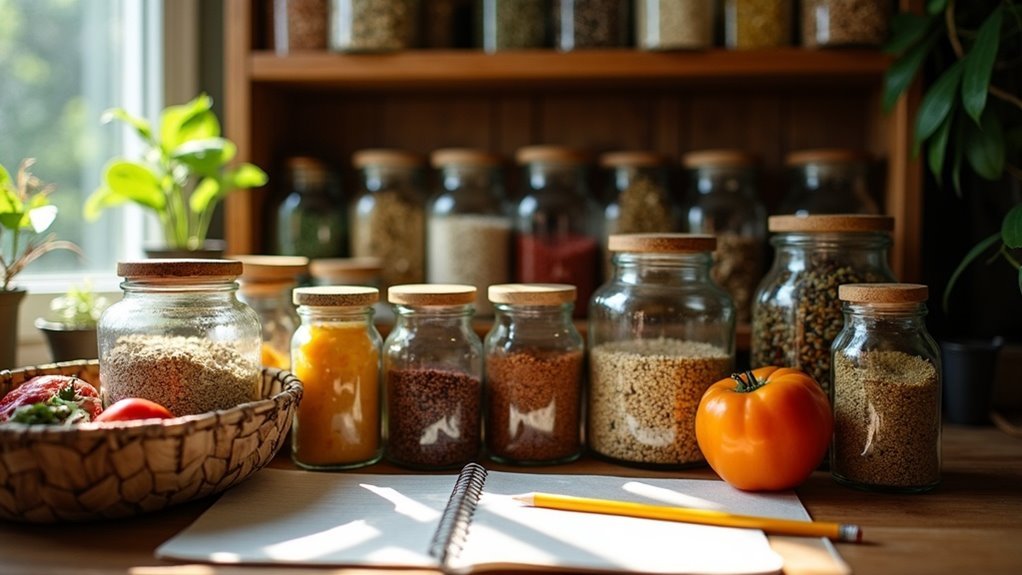
Lastly, don’t overlook the importance of a diverse selection of spices and herbs. Store them in food storage containers to preserve their potency and to enhance flavors, making your meals not only nutritious but enjoyable, even in challenging situations.
Meal Versatility Importance
Building a two-week pantry with versatile non-perishable food items is essential for survival and preparedness, ensuring you can create a variety of meals even in challenging situations.
Non-perishable staples like rice, beans, and pasta serve as robust meal bases, helping you maintain nutritional balance during emergencies. Canned proteins, such as tuna or chicken, can easily enhance recipes like salads or casseroles, significantly increasing your meal options.
Incorporating dried herbs and spices can elevate flavors without relying on fresh ingredients, which may be scarce. Instant grains like quinoa not only cook quickly but also pair well with an array of sauces and proteins, making them a practical choice for survival cooking.
Additionally, stocking shelf-stable fats like olive oil and nut butters can enrich your meals, providing essential calories and satisfaction when traditional fresh foods are unavailable.
Nutritional Balance Considerations
To maintain nutritional balance in your two-week survival pantry, it’s crucial to include a diverse selection of non-perishable food items that cater to your dietary needs.
Focus on versatile grains like rice and oats, durable legumes such as canned beans, and reliable protein sources including nuts and canned meats to ensure you remain nutritionally balanced.
Don’t overlook shelf-stable fruits and vegetables for essential vitamins, along with healthy fats like olive oil for sustained energy.
If you have specific dietary restrictions or food allergies, be sure to select alternatives that meet your needs.
Regularly rotate your pantry items and check expiration dates to ensure you’re equipped with safe, nutritious options for any emergency situation.
Proper preparation is key to thriving during challenging times.
Water Supply Considerations
Water is a critical resource for survival, particularly during emergencies when access may be restricted.
It’s crucial to prepare a minimum water supply of one gallon per person per day, ideally for a duration of two weeks.
Don’t overlook your pets—consider their hydration needs as well, estimating about one ounce of water per pound of body weight daily.
Store water in clean, food-grade containers, and remember to rotate your supplies every six months to ensure freshness.
In addition to drinking water, account for additional needs for cooking and hygiene, which can significantly increase your total water requirements.
Lastly, always have a contingency plan for water purification, utilizing tablets or filters to combat potential contamination or shortages.
Being prepared can make all the difference in a survival situation.
Meal Planning for Variety and Nutrition
When planning your meals for survival, it’s crucial to ensure a balanced mix of proteins, carbohydrates, fruits, and vegetables to sustain energy and health during emergencies.
Get creative with your combinations by utilizing shelf-stable ingredients and canned or dehydrated seasonal produce to keep your meals interesting.
By focusing on variety, you’ll not only meet your nutritional needs but also make mealtime more enjoyable in challenging situations.
Nutritional Balance Essentials
Building a balanced two-week pantry is essential for survival preparedness, ensuring you have sufficient food supplies while also maintaining a nutritious diet.
To effectively meet your nutritional needs during emergencies, focus on incorporating a diverse range of food groups for well-rounded meals. Aim for:
- Proteins: Stock up on canned meats, beans, and lentils, which provide essential nutrients and are long-lasting.
- Grains: Include brown rice, whole grain pasta, and quinoa, all of which offer energy and can be stored for extended periods.
- Fruits: Opt for canned or dried fruits to ensure you have a source of vitamins that can withstand time.
- Vegetables: Choose frozen or canned vegetables to guarantee you have minerals and nutrients readily available during any crisis.
Creative Meal Combinations
To keep your meals interesting and nutritious during an emergency, think creatively about how you can combine pantry staples. Use versatile meals like hearty soups and robust stews to mix proteins, whole grains, and frozen vegetables.
Consider incorporating items like canned beans, rice, and pasta for added sustenance. Experiment with inventive recipes that transform leftovers into new meals, such as converting roasted chicken into a zesty chicken salad with shelf-stable ingredients.
Keep a rotating list of favorite meals that utilize pantry staples, ensuring you don’t fall into a monotonous routine. Don’t hesitate to explore international flavors; spices like curry powder, Italian herbs, or even chili powder can elevate simple ingredients, making each meal enjoyable while guaranteeing balanced nutrition throughout your two-week pantry plan.
Always be prepared, and remember that creativity in the kitchen can turn limited resources into nourishing, satisfying meals.
Seasonal Ingredient Utilization
Embracing seasonal ingredients in your meal planning can significantly enhance your survivalist cooking experience, optimizing both flavor and nutrition while also ensuring sustainability.
By focusing on what’s fresh and local, you can create a variety of nutritious dishes while minimizing food waste and maximizing your preparedness. Here are some practical tips for incorporating seasonal ingredients into your prepping strategy:
- Plan meals around seasonal items like summer tomatoes and zucchini, which can be easily stored for the winter months.
- Preserve seasonal produce through canning, freezing, or dehydrating to ensure you have a stock of nutritious food during leaner times.
- Rotate your pantry stock to use older items first, reducing the chances of spoilage and waste.
- Track local seasonal availability to inspire creative and resourceful recipes that utilize what’s abundant.
This approach not only supports local farmers and strengthens your community but also guarantees that your meals remain vibrant, nutritious, and delicious throughout the year, enhancing your overall preparedness and self-sufficiency.
Storage Solutions for Freshness
When you store pantry items properly, you can significantly enhance their longevity and quality, which is crucial for survival preparedness.
Proper pantry storage boosts food longevity and quality, essential for effective survival preparedness.
Keep your storage area cool, dark, and dry to minimize exposure to humidity and light, both of which can compromise food integrity.
Utilize airtight containers or resealable bags for opened items to safeguard well-preserved foods from pests and moisture, ensuring your supplies remain viable for emergencies.
Implement a First In, First Out (FIFO) system to prioritize using older items first, effectively reducing the risk of expiration dates catching you off guard.
Regularly assess your inventory every six months, removing any damaged or expired items to maintain a reliable stockpile.
Label containers with purchase or expiration dates to easily monitor freshness and ensure that your emergency provisions are always ready for use.
Rotating Your Pantry Stock
Proper storage is crucial for a well-organized pantry, especially in survivalism and prepping, where having a reliable food supply is essential.
However, without regular rotation, even the best storage practices can lead to waste. Keep your pantry ready for any situation by implementing these key strategies for rotating food items:
- Use the FIFO (first in, first out) method to ensure that older items are used first, maximizing their shelf life.
- Regularly check expiration dates at least twice a year to ensure all items are still viable.
- Place new items behind older ones to facilitate easy access to the items you should use first.
- Maintain a written inventory or digital tracker to monitor your stock and ensure you have adequate supplies for emergencies.
Tips for Emergency Preparedness
Preparing for emergencies is a critical aspect of survivalism and prepping, and it goes beyond merely stocking up on supplies. It’s essential to customize your pantry to meet your household’s specific needs and preferences.
Begin by thoroughly evaluating your food supply, ensuring it includes familiar, ready-to-eat items, durable canned goods, and versatile grains. Water is paramount—store at least one gallon per person per day for a minimum of three days to ensure hydration during crises.
Implement a FIFO (First In, First Out) strategy to effectively manage food rotation and perform pantry checks twice a year to maintain freshness. Furthermore, consider collaborating with neighbors to share resources, which can help create a stronger community response and alleviate panic during emergencies.
Including comfort foods in your preparations can also provide psychological relief, making your emergency preparedness plan more robust and effective.