To store grains for the long term, it’s essential to select hard grains like wheat and corn, which can last up to 30 years under optimal conditions. Utilize airtight containers such as food-grade buckets lined with Mylar bags to effectively block moisture and pests, critical for maintaining your stockpile. Ensure your storage area remains cool and dry, ideally between 50°F and 70°F, to maximize longevity. Regularly inspect your grains for any signs of spoilage or pest activity, and implement the FIFO (First In, First Out) method to ensure that you’re using older grains first. Staying prepared and knowledgeable about proper food preservation techniques is vital for any survivalist or prepper.
Key Takeaways
- Select hard grains like wheat and corn, which can last between 10 to 30 years when stored correctly, making them ideal for long-term preparedness.
- Use airtight containers, such as food-grade buckets or Mylar bags, to effectively block moisture and deter pests, ensuring your supplies remain intact.
- Store grains in a cool, dry environment, ideally between 50°F to 70°F, to maximize their shelf life and maintain their nutritional value.
- Include oxygen absorbers in your storage containers and seal them tightly to prevent spoilage, thereby extending the longevity of your food reserves.
- Regularly inspect your grain supplies for any signs of damage or pest infestation, and implement a FIFO (First In, First Out) rotation system to minimize waste and ensure freshness.
Importance of Long-Term Grain Storage
When it comes to survivalism and emergency preparedness, comprehending the significance of long-term grain storage is crucial for ensuring a reliable food supply.
Properly stored grains provide high nutritional value and can last for years, with hard grains lasting 10 to 12 years, and potentially up to 30 years under optimal conditions.
Properly stored grains offer exceptional nutrition and longevity, lasting up to 30 years under ideal conditions.
Utilizing airtight containers and storing them in a cool, dry environment is essential to prevent spoilage, guaranteeing that your emergency food remains viable.
Diversifying your grain selection not only supports a balanced diet but also bolsters your overall health during times of food scarcity.
Make long-term grain storage a priority in your prepping strategy for ultimate peace of mind.
Suitable Grains for Long-Term Storage
When considering long-term storage for survival scenarios, hard grains like hard red wheat and corn stand out as your top choices. Their robust outer shells provide excellent protection against moisture and pests, making them ideal for prepping.
While soft grains such as oats and barley can also be stored long-term, it’s crucial to ensure they’re sealed properly to maximize their shelf life.
Understanding the distinctions between these grain types will empower you to make strategic choices for your emergency pantry. Prepare wisely and stay ready for any situation.
Hard Grains Overview
If you’re preparing for long-term storage in a survival situation, hard grains like hard red wheat and durum wheat should be at the top of your list.
These grains feature thick outer shells that protect them from moisture and pests, providing a shelf life of 10 to 12 years, and up to 30 years with optimal storage conditions.
Other valuable hard grains for your prepping stockpile include corn, millet, flax, kamut, and buckwheat, all of which are nutrient-dense.
To ensure their longevity, store them in airtight containers and keep them in a cool, dry environment.
These grains are excellent survival foods, requiring minimal maintenance compared to soft grains, making them perfect for any prepper’s pantry.
Soft Grains Considerations
While hard grains offer durability and long shelf lives, incorporating soft grains into your long-term survival food storage plan can be a strategic move. Options like barley, rolled oats, rye, hulled oats, and quinoa can provide essential nutrients and variety in your diet during emergencies.
However, these grains are more susceptible to moisture and pests, making proper storage critical for maximizing their longevity. To ensure your soft grains remain viable, use airtight containers or mylar bags with oxygen absorbers to prevent spoilage and germination.
Typically, soft grains have a shelf life of around 8 years, but under optimal conditions, they can last over 20 years. Regularly inspect your stored grains for any signs of spoilage or pest infestation to maintain their quality and ensure you’re prepared for any situation that may arise.
Techniques for Storing Grains
To store grains effectively for long-term preparedness, it’s crucial to select airtight containers such as food-grade buckets or Mylar bags equipped with oxygen absorbers.
Keeping your grains in a cool, dry location with temperatures maintained between 50°F to 70°F will significantly extend their shelf life.
Airtight Container Selection
When it comes to storing grains for survival and prepping purposes, selecting the right airtight container is crucial for maintaining freshness and preventing spoilage.
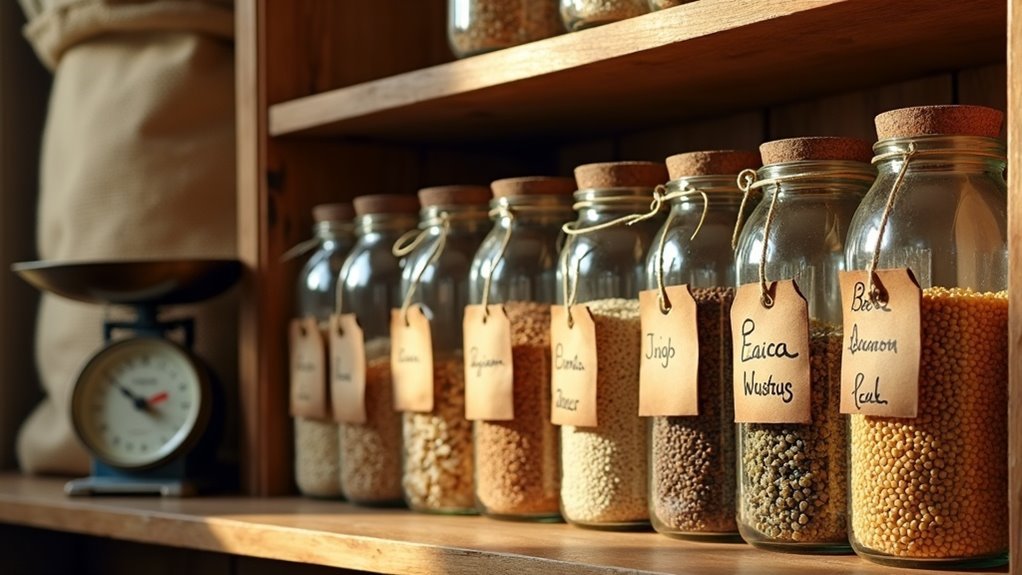
Choose airtight containers made from food-grade materials such as plastic buckets or glass jars that can withstand long-term storage. To enhance protection, consider lining these containers with Mylar bags, which provide an effective barrier against moisture and light, essential for preserving your food supply.
Ensure your containers are sealed tightly to keep oxygen out, as exposure can lead to spoilage and compromise your preparedness efforts. Utilizing 5-gallon food storage bags or vacuum-sealed bags inside the containers can further minimize air exposure, extending the shelf life of your grains.
Regularly inspect your grains for pests and promptly replace any damaged containers to maintain quality, ensuring that you’re always ready for any situation that may arise.
Ideal Storage Conditions
Storing grains effectively is crucial for survivalism and prepping, as it ensures you have quality food supplies on hand during emergencies.
To optimize your grain storage, use airtight, food-grade containers such as mylar bags or buckets, and consider adding oxygen absorbers for enhanced protection against spoilage. The ideal storage temperature for grains is between 50°F and 70°F; keeping them in cooler environments can significantly extend their shelf life.
Implement the first-in, first-out method when rotating your grain supplies to ensure you use the oldest stock first, maintaining freshness and preventing spoilage.
Regularly inspect your supplies for signs of spoilage or pest infestations, and always store grains in a cool, dry, and dark location to maximize their longevity.
Essential Storage Equipment
Effective grain storage is crucial for survivalists and preppers looking to stockpile food supplies.
Begin with food-grade buckets, which offer airtight storage that effectively blocks moisture and pest infiltration, essential for long-term preservation. For added protection, line these buckets with Mylar bags to shield against light and moisture, two factors that can compromise your food storage.
Food-grade buckets provide airtight storage to block moisture and pests, while Mylar bags add essential protection against light and moisture.
Incorporate oxygen absorbers to lower oxygen levels, ensuring your grains remain fresh and preventing spoilage over time. A portable heat sealer is indispensable for creating a hermetic seal on the Mylar bags, greatly extending shelf life and making your supplies more resilient.
Finally, consider using airtight containers, such as Super Pails, specifically designed for grain storage, guaranteeing optimal defense against moisture and pests.
This comprehensive approach will help keep your grains safe for the long haul, ensuring you’re well-prepared for any situation.
Best Practices for Grain Preservation
To maximize the longevity of your grain supplies for survival and prepping, adopt best practices that safeguard their quality and freshness.
Store grains long-term in airtight containers, such as food-grade buckets lined with Mylar, to protect against moisture, oxygen, and pests, which can compromise your stock in a survival situation.
Keep them in a cool, dry place with a consistent temperature between 50-70°F, as this range is ideal for extending shelf life.
Implement a food storage plan using the FIFO (First In, First Out) method to rotate your grain stock effectively, ensuring that older grains are utilized first to minimize waste.
If you open a package, consider freezing the grains at 0°F for 48 hours to eliminate any dormant pests, which can be crucial in maintaining quality and extending their shelf life during uncertain times.
Monitoring and Maintaining Stored Grains
While you’ve taken crucial steps to store your grains for long-term survival, it’s essential to monitor and maintain them regularly to ensure their longevity and quality.
Check your stored grains frequently for signs of spoilage, such as off odors or discoloration, which could indicate potential issues.
Utilize temperature cables to maintain optimal conditions between 35°F and 60°F, crucial for preserving the integrity of your food supply.
Remember to aerate your grain bins periodically to prevent the buildup of heat and moisture, both of which can compromise your stock.
Implement a FIFO (First In, First Out) rotation system to use older grains first, helping to keep your provisions fresh and ready for use.
Lastly, inspect all storage containers for integrity, promptly replacing any damaged seals to keep out moisture and pests, thereby safeguarding the quality of your vital food reserves.