To store rice for the long term as part of your survival and prepping strategy, select the right type, such as white rice, which can last up to 10 years at room temperature. Utilize airtight containers like Mylar bags or food-grade buckets equipped with oxygen absorbers to protect against pests and spoilage. Store rice in a cool, dry, and dark location, ideally below 55°F, to maximize its shelf life. Ensure that the rice is clean and thoroughly dry before sealing it away. Regularly inspect your stash for any signs of spoilage, including unusual odors or discoloration. For more tips on maintaining rice freshness and ensuring your food supply is ready for any situation, explore additional resources.
Key Takeaways
- For long-term storage of rice, utilize airtight containers such as Mylar bags or food-grade buckets equipped with oxygen absorbers to significantly enhance shelf life, crucial for emergency preparedness.
- Keep white rice stored in a cool environment below 70°F to preserve its quality for up to 10 years; dark and cool conditions are essential for maximizing longevity in survival situations.
- Prior to storage, ensure that rice is thoroughly cleaned and dried, eliminating any debris to guard against spoilage and maintain readiness for use in emergencies.
- Regularly check your stored rice for any signs of spoilage, including unusual odors, discoloration, or pest activity, to ensure your survival supplies remain viable.
- Implement a FIFO (first-in, first-out) system and clearly label containers with storage dates to maintain an organized inventory that supports effective management of your prepping supplies.
Types of Rice and Their Storage Requirements
When it comes to storing rice for long-term survival and prepping, it’s crucial to understand the different types and their specific storage requirements to maximize their shelf life.
White rice is a staple for preppers, as it can last up to 10 years at room temperature and an impressive 30 years when stored in cool, airtight containers. In contrast, brown rice has a significantly shorter shelf life of 3 to 6 months but can be extended to 18 months if refrigerated.
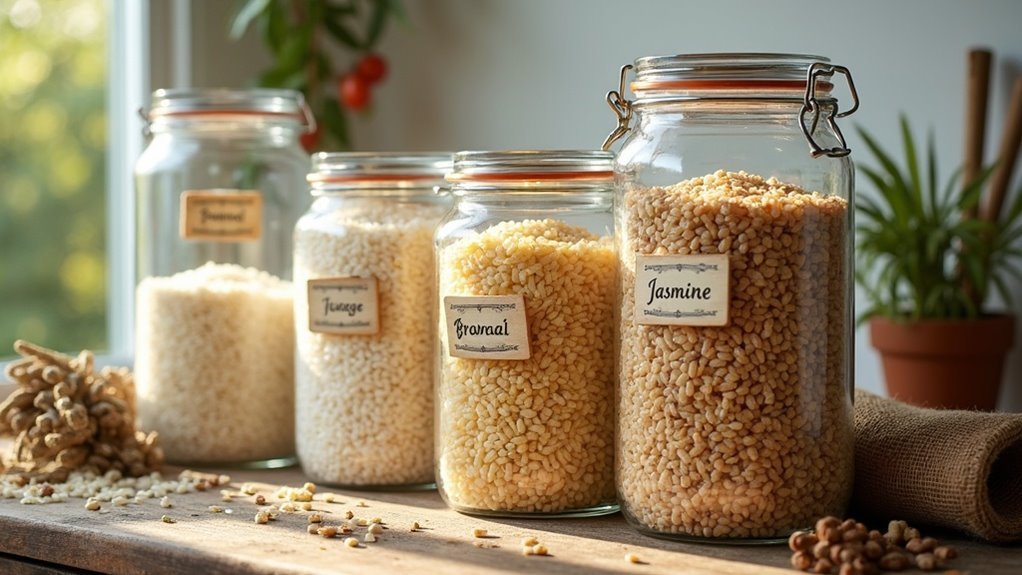
Specialty rice varieties like Jasmine and Basmati adhere to white rice guidelines, making them viable options for long-term storage as well.
For optimal long-term preservation, it’s best to utilize airtight containers combined with oxygen absorbers. This method not only prevents spoilage but also deters pest infestations, helping to ensure that your rice remains fresh and ready for use during emergencies or extended survival situations.
Properly storing rice can provide a reliable food source for months or even years, making it an essential component of any preparedness plan.
Best Containers for Long-Term Rice Storage
To ensure your rice remains fresh and retains its quality for the long haul, selecting the right storage containers is critical in survival and prepping scenarios.
Mylar bags, ideally 4 to 6 mils thick, are excellent for airtight and moisture-resistant storage, allowing white rice to last up to 30 years—an essential consideration for long-term food supplies.
Mylar bags, 4 to 6 mils thick, provide airtight storage, extending white rice’s shelf life to 30 years for long-term preparedness.
For larger stockpiles, food-grade buckets equipped with oxygen absorbers offer superior protection against moisture and pests, keeping your supplies safe during emergencies.
For smaller quantities, Mason jars are a reliable option, especially when combined with oxygen absorbers to minimize oxidation.
Additionally, vacuum-sealed bags create a sterile environment, making them suitable for storing more perishable rice varieties.
It’s vital to transfer rice from its original packaging into these durable containers to maximize its longevity and ensure you’re prepared for any situation.
Optimal Storage Conditions for Rice
Storing rice effectively is crucial for survivalism and prepping, as it ensures you have a reliable food source during emergencies. To maximize the longevity and quality of your rice, it’s important to maintain optimal storage conditions.
Ideally, keep your rice in a cool, dry place, with temperatures below 55°F. However, temperatures up to 70°F can still preserve white rice for up to 10 years if managed properly.
Utilize airtight containers like Mylar bags or food-grade buckets, and enhance preservation by adding oxygen absorbers to keep the rice fresh. Regularly monitor humidity levels to prevent spoilage and deter pests, as they can compromise your food supply.
- Minimize light exposure to protect the rice’s quality.
- Regularly inspect your stock for any signs of spoilage.
- Ensure the temperature remains consistent to maintain optimal conditions.
- Choose dark storage areas to enhance preservation.
Preparation Steps Before Storing Rice
Before you store rice for long-term preparedness, it’s crucial to clean and sort it thoroughly to remove any debris or impurities that could compromise your food supply.
Ensure the rice is completely dry, as moisture can lead to spoilage and attract pests, which can be detrimental in a survival situation.
Finally, select appropriate storage containers and environments that will protect your rice from light, air, and humidity, ensuring it remains safe and fresh for your emergency stockpile.
Clean and Sort Rice
Cleaning and sorting your rice is a crucial step in ensuring its quality and longevity during storage, especially for survivalists and preppers.
Begin by rinsing the rice under cold water to eliminate debris, dust, and excess starch, which can attract pests. Next, sort through the rice to remove any discolored grains or foreign materials, ensuring that only high-quality rice is stored for your emergency supplies.
- Allow the cleaned rice to dry completely to prevent moisture buildup, which could lead to spoilage.
- Conduct a thorough inspection for pests, looking for any signs of insect infestation that could compromise your stored food.
- Store the rice in airtight containers to protect it from moisture and pests.
- Clearly label containers with the date and type of rice to maintain proper rotation and ensure you use the oldest supplies first.
Drying Techniques
Proper drying techniques are crucial for ensuring your rice remains safe and usable for long-term survival and preparedness.
Begin by thoroughly cleaning your rice to eliminate any debris and impurities that could compromise its quality. Next, ensure that the rice is completely dried to prevent moisture accumulation, which can lead to spoilage and attract pests.
For enhanced safety, consider freezing the rice for at least 48 hours to eradicate any potential pests or eggs. Once the rice is adequately dried, store it long-term in airtight containers such as glass jars or Mylar bags to protect it from environmental factors.
Lastly, label all containers with the storage date to help you monitor freshness and ensure proper food preservation, especially for varieties with shorter shelf lives, making your food storage plan more effective in any emergency situation.
Choosing Storage Environment
After ensuring your rice is thoroughly dried, the next step is to choose the right storage environment for your survival pantry. For long-term food storage, target a cool, dry area with an optimal temperature of 40°F; however, 70°F is acceptable for short to mid-term storage.
Always be vigilant about protecting your food supply from pests and strong odors that could compromise your rice.
- Utilize airtight containers such as Mylar bags or food-grade buckets to ensure maximum protection.
- Maintain a moisture-free environment to prevent spoilage.
- Clean and rinse rice before storage to reduce debris and potential contaminants.
- Clearly label all containers with storage dates to track freshness and rotation in your prepper inventory.
Signs of Spoilage and Maintenance Tips
When storing rice for survival and prepping, it’s essential to recognize signs of spoilage, such as unpleasant odors, discoloration, or changes in texture, particularly with brown rice.
Regularly inspect your rice for pests or moisture, as bulging Mylar bags can indicate potential issues that could jeopardize your food supply.
To maintain the quality and longevity of your rice, store it in a cool, dry, and dark place, safeguarding it against spoilage and ensuring it remains a reliable resource in times of need.
Spoilage Indicators
Identifying spoilage indicators in stored rice is crucial for ensuring its quality and safety, especially for those focused on survivalism and prepping.
When it comes to brown rice, be vigilant for the following signs:
- A rancid or unpleasant odor, which indicates oil spoilage and can compromise your food supply.
- Discoloration or clumping due to moisture exposure, suggesting that the rice may not be safe to eat.
- Bulging storage containers, a clear sign of gas buildup that could indicate spoilage or contamination.
- Evidence of pests or animal damage, which can lead to further contamination and loss of your food resources.
If you encounter any of these spoilage indicators, it’s imperative to discard the rice immediately to ensure your food supply remains safe.
Conducting regular inspections allows you to identify issues early, keeping your rice fresh and ready for consumption.
Always emphasize proper storage techniques to minimize spoilage risks and enhance your preparedness for any situation.
Regular Inspection Practices
Regular inspections of your stored rice are crucial for survivalists and preppers to ensure its longevity and prevent spoilage. Frequently check for unpleasant odors, discoloration, or texture changes, particularly in brown rice, which can spoil more quickly.
Be vigilant for bulging packaging, as this may indicate spoilage or pest activity. Maintain a storage environment that’s cool, dry, and dark to safeguard against humidity and light, which can degrade quality.
Inspect for any signs of pest damage, such as small holes, and ensure that your containers are tightly sealed to keep pests out. Implement a first-in, first-out (FIFO) approach by labeling your rice bags with storage dates, enabling you to consume older rice first and maintain optimal freshness.
Regular inspections empower you to identify potential issues early, ensuring you’re always prepared for any situation.
Freezing Rice for Extended Shelf Life
Freezing rice is a practical strategy for survivalists and preppers, as it can significantly extend its shelf life, ensuring it remains fresh and nutritious for several months.
To effectively freeze rice, follow these essential steps:
- Portion rice into airtight containers or vacuum-sealed bags to protect it from air and moisture.
- Rinse the rice and thoroughly dry it to eliminate any excess moisture, preventing freezer burn.
- Use freezing for more perishable varieties, such as brown rice, to avoid rancidity and maintain their nutritional value.
- Label all containers with dates to help you track storage time and rotate your supplies effectively.