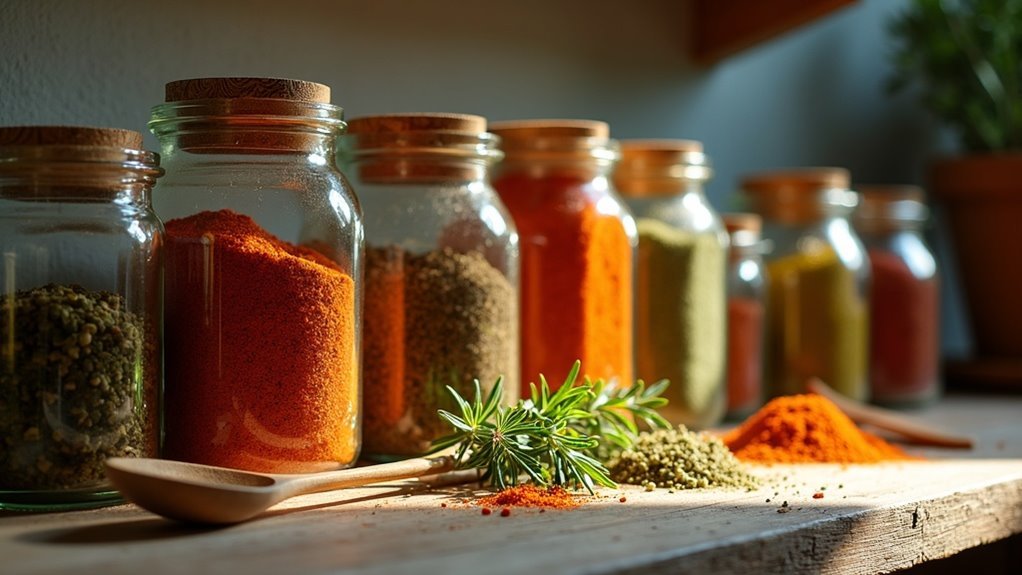
To store spices for longevity in a survivalist context, use airtight containers such as glass jars or high-quality plastic that can withstand rugged conditions. Store them in a cool, dry place, away from direct light and moisture, as refrigeration is not ideal for long-term storage. Regularly inspect your spices for any color changes or loss of aroma to ensure their freshness. Whole spices can maintain their potency for 3-5 years, while ground spices generally last about 2 years. Interested in learning how to prepare spices for optimal storage in a survival situation? There is much more to discover about preserving your supplies!
Key Takeaways
- Store spices in airtight containers such as glass jars or high-quality plastic to protect against air and moisture, crucial for long-term survival preparations.
- Keep spices in a cool, dark place, away from heat sources and direct sunlight, to ensure they remain fresh and potent for extended periods.
- Regularly inspect your spices for any changes in color and aroma, as this will help you assess their usability and effectiveness for survival meals.
- Label all containers with the spice names and purchase dates to easily monitor freshness and usage over time, which is vital in prepping scenarios.
- For maximum preservation, consider freezing whole spices after ensuring they are clean and thoroughly dried, allowing for longer-term storage solutions in your survival stockpile.
Factors to Consider When Storing Spices
When storing spices for survival and prepping, it’s essential to consider several key factors to ensure their flavor and potency remain intact for long-term use.
First, utilize airtight containers, such as glass jars or vacuum-sealed bags, to prevent air and moisture from degrading their quality. A cool, dry environment is ideal; avoid storing spices in the refrigerator, as the humidity can lead to clumping and spoilage.
To preserve spices, use airtight containers and store them in a cool, dry place, avoiding the refrigerator’s humidity.
Proper storage is vital for extending shelf life, so regularly conduct a visual inspection of your spices. Look for any color changes or diminished aroma, which could indicate that it’s time to discard them.
Additionally, organizing your spices not only guarantees visibility and accessibility but also encourages regular use, helping you avoid neglecting any crucial supplies in your preparedness stock.
Choosing the Best Container for Storing Spices Long Term
To effectively store spices long-term for survival and prepping purposes, selecting the right container is crucial for preserving their flavor and potency.
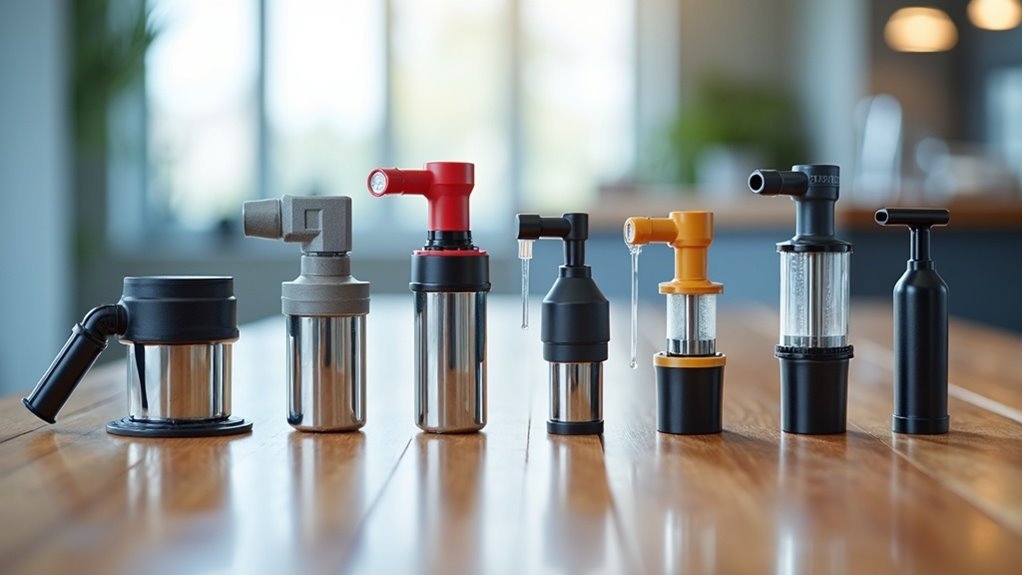
Glass jars are an excellent choice, as they provide airtight seals and allow you to easily monitor your inventory. If you prefer plastic, opt for high-quality containers like the Tightvac Spicevac, which effectively shield against air and moisture, crucial for maintaining freshness in austere conditions.
While tin containers are lightweight and portable, they often lack airtightness, which can compromise the quality of your spices over time.
Ensure your chosen containers offer protection against light and moisture, and always start with clean and dry options to prevent spoilage. This will help ensure your spice supply remains effective and flavorful for your long-term prepping needs.
Preparing Spices for Storage
After you’ve chosen the right containers for your spices, preparing them for storage is crucial to ensure they remain fresh and potent, especially in a survival situation.
Start by making sure your spices are clean and dry; moisture can lead to clumping and mold, which can compromise your supplies. If you’re using whole spices, consider lightly roasting them to enhance their aroma and flavor, which can be particularly beneficial in a long-term storage scenario.
Remember to grind spices just before use for maximum flavor, as ground spices have a shorter shelf life. Store everything in airtight containers, away from light and moisture, ideally in a cool, dark place.
Label each container with the names and purchase dates to keep track of freshness and ensure you’re using the oldest stock first. Properly stored spices can greatly enhance your meals and last significantly longer, making them a valuable asset in your preparedness plan.
Storing Spices by Type
Storing spices effectively is crucial for survivalists and preppers who need to maximize the shelf life of their supplies. Understanding the differences between various types of spices can help ensure you have flavorful, nutritious options available during uncertain times. Whole spices can last three to five years when stored in airtight containers kept in a cool, dark place, making them a reliable choice for long-term storage. In contrast, ground spices have a shorter shelf life of up to three years due to their exposure to air, so it’s best to use them more quickly. Dried herbs, such as basil and sage, should ideally be consumed within one to two years to maintain their potency. Spice blends tend to degrade faster, so proper storage is essential in a survival scenario. For longer-term preservation, consider freezing whole spices. Here’s a quick overview for your prepping needs:
| Type | Shelf Life | Storage Tips |
|---|---|---|
| Whole Spices | 3-5 years | Airtight containers, cool dark place |
| Ground Spices | Up to 3 years | Airtight containers |
| Dried Herbs | 1-2 years | Airtight containers |
| Spice Blends | Varies | Airtight containers, cool dark place |
How Long Do Spices Last?
While you might think all spices last indefinitely, their shelf life varies considerably based on type and storage conditions, which is crucial for survivalists and preppers looking to maintain a well-stocked pantry.
To keep your spices fresh and effective for long-term storage, consider the following:
- Whole spices: Can last 3 to 4 years when stored in airtight containers, making them ideal for long-term preparedness.
- Ground spices: Typically last about 2 years; they lose potency faster, so consider grinding your own when possible.
- Dried herbs: Such as basil and sage, remain fresh for 1 to 2 years, but proper storage can extend their usability.
- Seasoned salts: Have a shelf life of 3 to 5 years due to added herbs, making them a valuable addition to your survival supplies.
Store your spices in a dark, cool place to minimize air exposure and preserve their freshness, ensuring you have flavorful options during times of need.
Is It Safe to Eat Expired Spices?
Have you ever considered the safety of using expired spices in a survival situation? Generally, expired spices are safe to consume, but their flavor and potency may be diminished. While they typically don’t pose significant health risks, there’s a possibility they could harbor bacteria or mold, which could increase the risk of foodborne illnesses. In a survival scenario, it’s crucial to prioritize quality and freshness in your food supplies. Always check the “best by” dates and be vigilant for signs of spoilage. Here’s a quick overview relevant to prepping:
| Status | Flavor | Health Risks |
|---|---|---|
| Fresh | Strong | Low |
| Expired | Diminished | Minimal |
| Spoiled | None | High |
In prepping, maintaining a well-stocked pantry with fresh spices can enhance your meals and overall morale during challenging times.