To plan shelf-stable meal rotations effectively for survival preparedness, begin by organizing your pantry with a strategic approach. Implement the First In, First Out (FIFO) method to ensure that you utilize older items before they expire. Regularly inspect expiration dates, and move near-expired goods to the forefront for immediate use. Store your food supplies in a cool, dry environment to optimize longevity, and utilize high-quality packaging to extend shelf life. Diversify your food inventory by incorporating a variety of canned, dried, and freeze-dried foods into your meal planning. Staying well-informed about storage guidelines and expiration indicators will help you maximize your food resources. Explore additional strategies to enhance your food management and readiness for any situation!
Key Takeaways
- Implement the FIFO (First In, First Out) method by placing older shelf-stable items at the front and newer ones at the back to ensure timely consumption, which is crucial for survival preparedness.
- Regularly check expiration dates every six months and remove expired items to maintain a fresh inventory, keeping your supplies ready for any emergencies.
- Create a balanced seven-day meal plan that incorporates various shelf-stable foods, ensuring that you have diverse and nutritious options available for long-term survival.
- Engage family members in meal planning to accommodate their preferences and ensure efficient use of your stockpile, fostering a sense of teamwork in your preparedness efforts.
- Maintain an organized inventory checklist with purchase and expiration dates for effective meal rotation and resource management, allowing you to stay prepared for any situation.
Why Food Rotation Matters
When you consider your food storage in the context of survivalism and prepping, understanding the importance of food rotation is crucial. Implementing proper food rotation, particularly using the FIFO (First In, First Out) method, ensures that you consume older items first, thereby preserving their nutritional value for emergencies.
Regularly checking expiration dates every six months is essential for discarding expired products, keeping your stockpile safe and viable when you need it most. By prioritizing food rotation, you not only minimize food waste but also maximize your resources, saving money by using items before they spoil.
Organizing your pantry with clear labels enhances your ability to track supplies effectively, allowing you to maintain a well-managed food inventory and enjoy fresh meals, even in challenging times.
Implementing the First In, First Out Method
To effectively implement the First In, First Out (FIFO) method in your survival pantry, start by labeling all your food items with purchase dates to easily track which ones need to be used first.
Organize your supplies so that older items are at the front and newer ones are at the back, ensuring quick access to essentials that are nearing expiration.
Regularly assess your inventory every six months, removing expired items and repositioning near-expired goods to keep your meals fresh and minimize waste.
This practice not only maximizes the longevity of your food supplies but also enhances your preparedness for any situation.
Labeling With Purchase Dates
Establishing a robust labeling system for your shelf-stable meals is crucial for effective inventory management in your survival preparations. This not only streamlines the process of tracking supplies but also ensures that you utilize older items first, thereby reducing waste and maximizing your resources.
Begin by using permanent markers to clearly label each item with its purchase date. Organize your pantry so that the newest items are placed at the back, adhering to the FIFO (First In First Out) principle.
Conduct regular checks on your supplies every six months, discarding expired items and prioritizing those nearing expiration. It’s essential to educate family members about the labeling system, fostering a collaborative approach to minimize food waste and maintain a well-organized food storage system that supports your preparedness efforts.
Organizing Pantry for Efficiency
Organizing your pantry efficiently is crucial for survivalism and prepping, ensuring quick access to your shelf-stable meals while minimizing waste.
Implement the FIFO (First In, First Out) method by placing newly purchased items at the back, so older canned foods are used first, promoting longevity in your food stockpile. Clearly label expiration dates with permanent markers for easy identification, allowing you to keep track of your supplies.
Create zones for different food categories like canned goods, dry foods, and snacks to streamline meal preparation and ensure that you can quickly find what you need in an emergency.
Utilize stackable storage bins and adjustable shelves to enhance visibility and optimize space, maximizing your food storage capabilities.
This approach not only promotes better food rotation but also helps maintain a safe, usable food reserve, ensuring you’re prepared for any situation while maximizing shelf life.
Regular Inventory Assessments
While maintaining a well-stocked pantry is crucial for survival preparedness, regularly assessing your food inventory is essential to ensure your supplies remain fresh and usable.
Schedule comprehensive inventory assessments every six months to check expiration dates and identify items that need to be used immediately. Implement the FIFO (First In, First Out) method by placing older items at the front, ensuring they’re consumed first to minimize waste.
Use permanent markers to label cans for easy tracking, and create designated zones in your pantry for different categories of survival foods, such as canned goods, grains, and dehydrated items, to streamline organization.
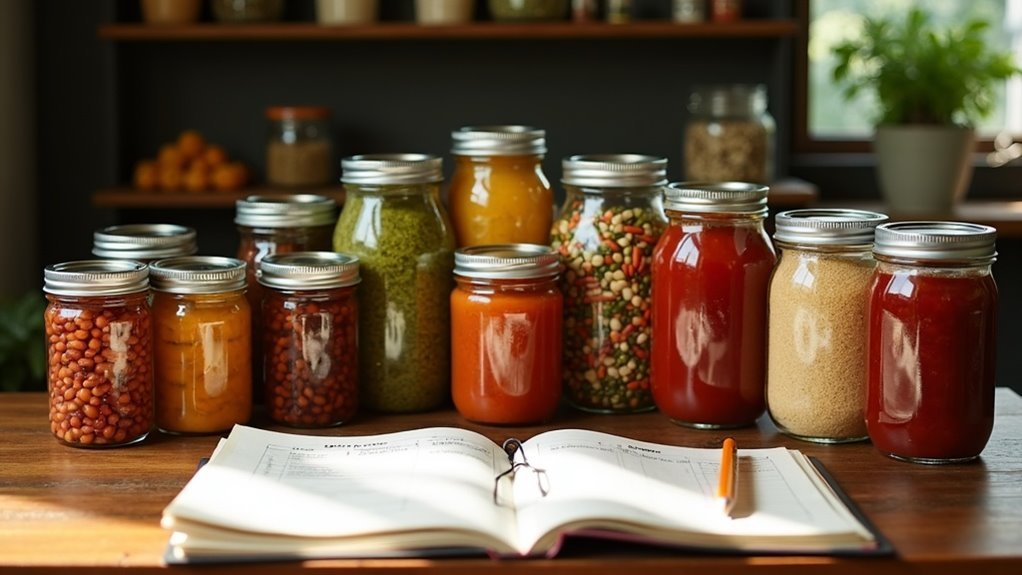
Additionally, keep an updated inventory checklist to log descriptions, purchase dates, and expiration dates, promoting effective food rotation and ensuring you’re always prepared for any situation.
Checking Expiration Dates Regularly
How often do you check the expiration dates on your food stockpile?
It’s crucial to do this every six months to ensure your supplies are safe for consumption. Discard any expired goods to prevent spoilage and potential health risks.
Move near-expired items to your kitchen to encourage their immediate use, helping you avoid waste and ensuring your stockpile remains effective in a survival situation.
Always organize your stockpile from oldest to newest, making it easier to utilize the oldest items first.
When you replace near-expired items, be sure to add fresh stock to maintain a robust supply.
Regular checks are vital for effective food rotation and keeping your stockpile prepared for any emergencies.
Proper Food Storage Techniques
To ensure your food remains fresh and safe for long-term storage, keep it in a cool, dry location shielded from sunlight, maintaining temperatures at 70°F or lower.
Utilize effective packaging methods such as mylar bags with oxygen absorbers or vacuum-sealed mason jars to significantly extend shelf life.
Always label your supplies with purchase and expiration dates to facilitate easy rotation and reduce waste, which is crucial for survival preparedness.
Ideal Storage Conditions
Creating ideal storage conditions for your shelf-stable meals is crucial for survival preparedness and extending their shelf life.
Store your canned goods and dry foods in a cool, dry environment at 70°F (21°C) or lower to maintain their integrity over time.
Utilize airtight containers for dry goods to minimize exposure to air and moisture, which can compromise quality.
Elevate your food storage off the ground to prevent moisture accumulation and deter pests, which can be critical in a survival situation.
For long-term food storage, consider using mylar bags with oxygen absorbers to ensure optimal freshness and viability.
Regularly assess your storage system, and label items with purchase and expiration dates to facilitate effective food rotation, ensuring that older items are used first and reducing waste in your preparedness plan.
Effective Packaging Methods
When it comes to storing shelf-stable meals for survival and prepping, selecting the right packaging methods is crucial for preserving quality and extending shelf life. For optimal food storage, consider using mylar bags with oxygen absorbers for dried items, as they effectively protect against moisture and air infiltration.
Vacuum-sealed mason jars are also excellent for long-term storage, ensuring minimal air exposure. Always prioritize airtight containers and secure sealing techniques to guarantee freshness and readiness in an emergency.
Elevate your food storage off the ground to prevent moisture accumulation and deter pests. Implementing these effective food rotation practices will help maintain the integrity and viability of your meals over time, ensuring you’re well-prepared for any situation.
Long-term Shelf Life
Establishing long-term shelf life for your survival food supplies requires meticulous attention to proper storage techniques, as even minor missteps can lead to spoilage.
Store items in a cool, dry, dark place at 70°F (21°C) or lower to ensure their longevity. Utilize airtight containers, such as glass jars or food-grade buckets, to minimize air and moisture exposure.
For optimal preservation, consider vacuum sealing your supplies; freeze-dried items can last up to two years in the freezer, making them an excellent choice for long-term preparedness.
Regularly check your inventory and rotate food every six months, placing near-expired items at the front for immediate use to avoid waste.
Elevate your storage off the ground to prevent moisture and pest issues, ensuring your survival items remain safe, usable, and ready for any situation.
Types of Food to Prepare for Rotation
To ensure a robust and sustainable food supply for your meal rotations in the context of survivalism and prepping, it’s critical to include a diverse selection of foods. Incorporate a mix of canned, dried, and freeze-dried meals alongside fresh items to establish a balanced rotation system. Pay attention to the shelf life of each food type:
| Food Type | Shelf Life |
|---|---|
| High-Acid Canned | 1 to 1.5 years |
| Low-Acid Canned | 2 to 5 years |
| Dried Foods | 1 to 2 years |
| Freeze-Dried Foods | Up to 20 years |
Ensure you maintain a well-rounded supply by including essential meal components such as proteins, grains, and vegetables to support overall nutrition in a survival situation.
Planning Meals Using Stockpile Items
Planning meals with your stockpile items is a crucial skill for survivalists and preppers, as it ensures you can sustain your family during challenging times.
Start by maintaining an organized inventory checklist to assess your canned goods, dried foods, and freeze-dried meals. Prioritize using perishable items that are approaching their expiration dates to maximize freshness and reduce waste.
Maintain an organized inventory to evaluate your stockpile, focusing on using perishable items first to enhance freshness and minimize waste.
Strive for a balanced seven-day menu that incorporates meal rotations to keep morale high and prevent boredom during tough situations. Involve your family in the meal planning process to accommodate their preferences and foster teamwork.
Experimenting with various recipes not only helps you efficiently utilize your pantry but also guarantees that everyone receives nutritious meals, even in uncertain circumstances.
Conducting Regular Inventory Checks
While it might seem tedious, conducting regular inventory checks is crucial for maintaining an effective survival stockpile. Aim to do this at least every six months to identify expired items and assess your food supplies.
Create a detailed inventory checklist that includes item descriptions, purchase dates, and expiration dates. Implement the FIFO (First In, First Out) method: place newer items at the back and older ones at the front to minimize waste.
Additionally, evaluate your stockpile’s usage rates during these checks to refine your meal planning, ensuring you’re purchasing based on actual consumption patterns and reducing the risk of spoilage.
This practice not only helps in maintaining a well-stocked pantry but also prepares you for any emergencies or disruptions in supply chains.
Staying Informed About Food Storage Guidelines
Staying informed about food storage guidelines is crucial for survivalists and preppers aiming to maintain a reliable food supply. Regularly consult resources like the USDA and FDA to understand how different foods and meals behave over time, especially in long-term storage scenarios.
It’s essential to recognize that high-acid foods, such as tomatoes, typically have a shelf life of one to two years, while non-high-acid canned foods can last indefinitely if sealed properly—ideal for your emergency stockpile. Unopened dry goods can remain viable for up to four years, but opened items should be consumed sooner to ensure quality.
Additionally, familiarize yourself with expiration, best by, and use by dates to manage older items effectively and guarantee that you’re consuming foods at their peak freshness, maximizing your preparedness for any situation.