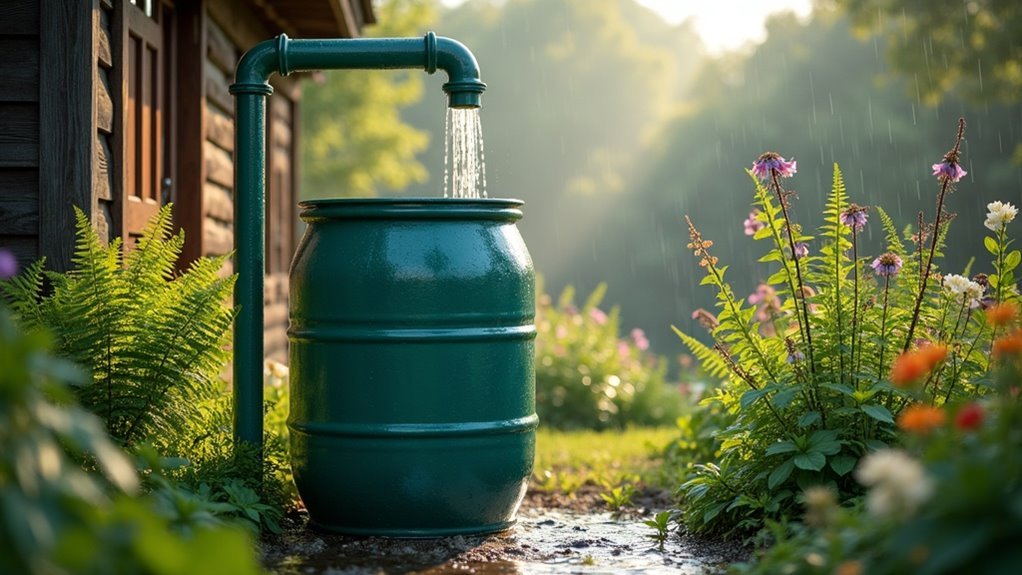
To capture rainwater safely for your survival and prepping needs, invest in food-grade barrels priced between $15 to $25, strategically placed under roof valleys or modified downspouts. It’s crucial to implement measures that prevent mosquito breeding, which can be a health hazard in a survival situation. Keep your system clean by sealing containers, performing regular inspections, and cleaning gutters frequently. Store water in opaque barrels to minimize algae growth, and aim to use it within one to two weeks to ensure freshness and safety. Additionally, familiarize yourself with local regulations regarding rainwater harvesting; doing so can help you comply with guidelines and might even provide access to incentives. There’s much more to explore about optimizing your rainwater harvesting system for emergency preparedness.
Key Takeaways
- Invest in food-grade rain barrels, which typically range from $15 to $25, to ensure safe and reliable water collection and storage for emergency preparedness.
- Strategically position barrels under roof valleys or modify downspouts to optimize rainwater capture, enhancing your water supply during critical times.
- Seal containers with screened openings to prevent mosquito breeding and maintain the quality of your stored water, ensuring it remains safe for use.
- Regularly clean gutters and downspouts to eliminate debris and contaminants, safeguarding the integrity of your collected rainwater for survival scenarios.
- Stay informed about local regulations on rainwater harvesting to ensure compliance and safety while maximizing your water resources for prepping efforts.
Choosing the Right Collection System
When you’re selecting a rainwater collection system for your survival and prepping needs, it’s essential to choose options that not only meet your storage requirements but also ensure the water remains clean and safe for consumption.
Opt for food-grade rain barrels priced between $15 to $25, which are ideal for efficient rainwater harvesting. Position these barrels strategically under roof valleys or modify downspouts to maximize your ability to collect rainwater effectively.
For larger storage needs, consider installing cisterns that hold up to 275 gallons. It’s crucial to confirm that your system includes mosquito prevention measures, such as sealing openings or installing screens, to maintain water quality and minimize breeding habitats.
This will ensure you have adequate water pressure for various uses, while also preparing you for any unforeseen situations where water supply may be compromised.
Ensuring Cleanliness and Maintenance
To ensure your rainwater is clean and safe for consumption, regular maintenance and proper handling are crucial for survival preparedness.
Regular maintenance and careful handling of rainwater are essential for ensuring its safety and cleanliness for consumption.
Use food-grade barrels for rainwater harvesting to avoid contaminants that could compromise your water supply. Seal containers with screened openings to prevent mosquito larvae while allowing necessary airflow.
It’s wise to use harvested rainwater within one to two weeks to maintain freshness and reduce mosquito issues. For long-term storage, implement light-blocking measures, such as opaque covers, to inhibit algae growth.
Regularly clean gutters and downspouts to eliminate debris that could contaminate your water.
Safe Storage Practices
Storing rainwater safely is crucial for survival and preparedness, ensuring its quality and usability for various critical needs.
Always opt for food-grade rain barrels or containers to keep the collected water clean and free from harmful contaminants that could jeopardize your health. Seal these containers tightly to prevent mosquito breeding, which can lead to disease, and consider adding screens to block insects while allowing for easy water access.
Regularly inspect and clean your storage tanks to remove debris that could compromise water quality, especially in a survival situation where every drop counts.
Utilize opaque materials to minimize algae growth caused by sunlight, protecting your water supply from degradation.
Finally, rotate your stored rainwater by using it within one to two weeks to prevent stagnation and ensure that every gallon remains fresh and ready for use in your prepping strategy.
Local Regulations and Guidelines
While rainwater harvesting is a valuable practice for survivalists and preppers, it’s crucial to understand local regulations and guidelines before setting up your system. Many municipalities across the United States not only permit rainwater harvesting but may also offer financial incentives such as discounts and rebates, making it a practical choice for those preparing for self-sufficiency.
In states like Texas, for example, the Property Code prevents homeowners’ associations from prohibiting rainwater capture systems, which is beneficial for those looking to enhance their water security.
In Texas, homeowners’ associations cannot ban rainwater capture systems, boosting water security for residents.
By familiarizing yourself with your local regulations, you can ensure compliance and take full advantage of any available support for your rainwater harvesting efforts.
Stay proactive by regularly checking with your local government to stay updated on any changes or additional guidelines that may affect your survival strategy.
Practical Uses for Harvested Rainwater
Understanding local regulations is crucial for effectively utilizing harvested rainwater in survival and prepping applications.
Harvesting rainwater can be a vital resource for irrigation systems, offering a sustainable water source for your gardens and crops, particularly during times of drought or watering restrictions. This practice can save you thousands of gallons of treated water, which is essential when preparing for emergencies.
Additionally, rainwater can be used for washing vehicles, as its natural softness is free from harsh chemicals that can damage surfaces. It’s also perfect for filling decorative water features like fountains, which can provide psychological comfort and enhance your homestead’s aesthetics.
While rainwater isn’t safe for drinking, it’s suitable for non-potable needs such as flushing toilets or watering foundations, promoting conservation and supporting plant health—key aspects of a self-sufficient lifestyle.