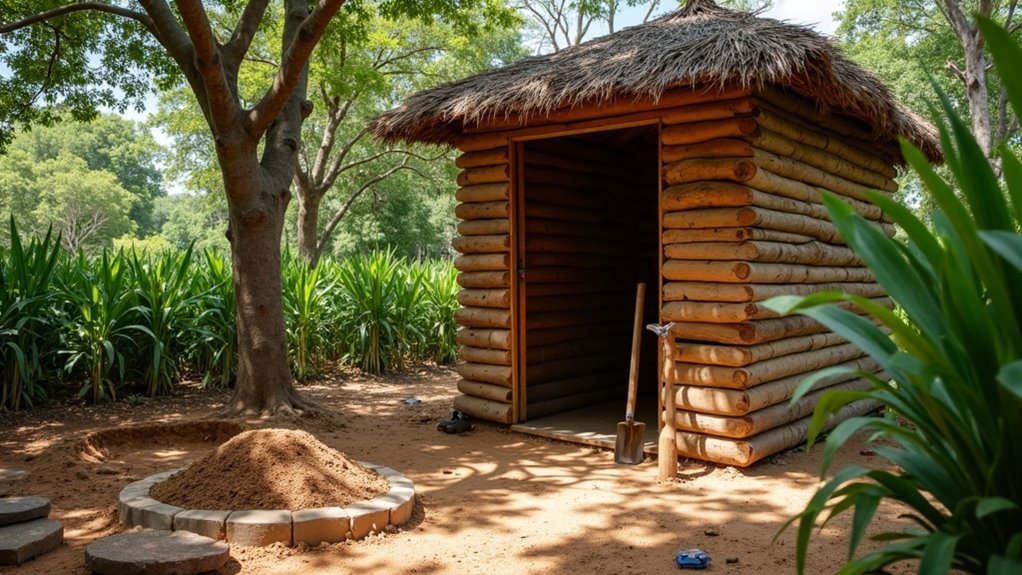
To build a simple latrine for survival situations, begin by digging a pit at least six feet deep, ensuring it is situated far from drinking water sources to prevent contamination. Utilize durable materials for a tight-fitting lid and a sturdy squatting plate. Construct a privacy shelter to maintain discretion and install ventilation pipes to minimize odors, which is crucial for comfort in a survival scenario. Regularly monitor and maintain the latrine, covering the pit when it reaches full capacity to prevent overflow. Educate your group on proper sanitation practices to ensure long-term maintenance and health, crucial for survival in any environment. Remember, effective sanitation solutions are an essential part of preparedness and can greatly enhance your chances of thriving in challenging situations.
Key Takeaways
- Select a strategic, dry location at least 50 feet away from any water sources to prevent contamination, and dig a hole that is at least six feet deep to ensure proper waste disposal.
- Reinforce the pit with durable materials such as bricks or concrete, and make sure to cover it securely to deter pests and maintain hygiene.
- Build a privacy structure using locally sourced materials like wood or palm fronds, ensuring it provides adequate shelter while remaining discreet.
- Add ventilation pipes to enhance airflow, which will help reduce odors and keep the latrine functional and comfortable.
- Regularly check sludge levels in the pit; once it is full, cover it with soil to maintain sanitation and prepare for future use, a crucial aspect of preparedness in survival situations.
Importance of Proper Sanitation
When it comes to survival and prepping, proper sanitation is crucial for maintaining health and hygiene in any emergency or survival situation. Access to reliable sanitation services is fundamental, especially in scenarios where resources may be limited.
Without adequate sanitation facilities, diseases can spread rapidly, posing a serious threat to survival. Millions of people still lack basic sanitation, which can exacerbate health crises during disasters or in off-grid living situations.
Inadequate sanitation facilities can lead to rapid disease spread, threatening survival and exacerbating health crises in emergencies.
Open defecation not only endangers health but also poses risks to personal safety and dignity, particularly for vulnerable populations. Emphasizing the need for effective sanitation solutions is vital for any preparedness plan.
Investing in proper sanitation methods and systems is essential for reducing the risk of disease and ensuring the well-being of individuals and communities during challenging times.
Materials Needed for Construction
To build an effective latrine for survival situations, you’ll need a range of durable materials that ensure both functionality and hygiene. Here’s a quick overview of essential materials that are vital for prepping:
| Material | Purpose | Additional Notes |
|---|---|---|
| Bricks or Concrete | Lining the pit | Ensures long-lasting durability |
| Wood or Reinforced Concrete | Squatting plate | Provides stability and support |
| Palm Fronds or Cloth | Privacy shelter | Cost-effective local option for concealment |
| Tightly Fitting Lid | Insect prevention | Enhances sanitation and hygiene |
Additionally, don’t forget essential digging tools like shovels and posthole diggers, as well as materials like sawdust or ashes to manage odors effectively in a survival scenario.
Step-by-Step Construction Process
Building a latrine is a crucial skill for survivalists and preppers, ensuring hygiene and functionality in any situation.
Begin by selecting a location and digging a hole at least six feet deep, ensuring it’s positioned 50 feet away from any drinking water sources to prevent contamination.
Use durable materials like wood or reinforced concrete to create a tight-fitting cover with an opening for the toilet seat.
Construct a superstructure using local resources like wood or palm fronds to provide privacy.
For added safety, incorporate ventilation pipes to promote airflow and reduce odors.
Lastly, regularly monitor the levels of sludge in the pit to determine when it requires emptying or covering.
Proper maintenance is vital for maintaining effective sanitation facilities, especially in a survival scenario.
Designing for Privacy and Shelter
When constructing a latrine in a survival situation, it’s essential to select locally available materials for the superstructure that ensure both privacy and protection from the elements.
Make sure the entrance is strategically placed to uphold user confidentiality while still allowing for easy access.
This careful design will enhance comfort and encourage acceptance within your community, making it a valuable addition to your preparedness efforts.
Materials for Superstructure
Creating a superstructure for your latrine is an essential skill for survivalists and preppers, requiring careful selection of materials to ensure privacy and shelter in a potentially challenging environment.
Utilize local materials such as wood, cloth, or palm fronds to construct a sturdy framework that meets your needs. It’s important to consider the design preferences and customs of your community, as this can enhance comfort and acceptance in a survival scenario.
Ensure the superstructure is tall enough—ideally 1.5 to 2 meters—to provide a secure feeling during use. Incorporating a secure door or curtain in your design is critical for maximizing privacy and preventing unintended encounters.
With thoughtful planning and material choices, you can create an effective and respectful latrine environment, contributing to overall hygiene and morale in your prepping efforts.
User-Friendly Access
When designing your latrine for survival situations, ensuring user-friendly access is crucial for comfort and privacy. Build a robust superstructure using locally sourced materials such as wood and palm fronds to create a durable shelter. Ensure the entry point is accessible for everyone, including children and individuals with disabilities, to accommodate all potential users in an emergency. Features like a tightly fitting lid are vital for maintaining hygiene and preventing insect infestations. Position the latrine away from common pathways to enhance privacy and include adequate ventilation to minimize odors, promoting a more pleasant experience.
| Feature | Purpose | Considerations |
|---|---|---|
| Stable Entry | Access for all users | Child-friendly, wheelchair-accessible |
| Ventilation | Reduce odors | Optimize positioning for airflow |
| Privacy Shelters | Enhance comfort | Respect local customs in design |
Maintenance and Care for Your Latrine
To ensure your latrine remains functional and hygienic in a survival situation, it’s crucial to regularly monitor sludge levels and remove excess waste.
When the latrine reaches capacity, consider using pumps or covering it with soil to promote decomposition and minimize health risks.
Always keep the lid closed to control odors and deter pests, creating a more pleasant environment in challenging circumstances.
Regular maintenance of your latrine is an essential part of preparedness and self-sufficiency.
Regular Sludge Removal
Regular sludge removal is a crucial aspect of maintaining an effective latrine, especially in survival situations where sanitation can significantly impact health and safety.
It’s imperative to routinely monitor sludge levels to determine the appropriate time to empty the pit; allowing it to become full could result in overflow and create unsanitary conditions that attract pests and spread disease.
For effective sludge removal, you can employ manual methods, such as scooping, or utilize motorized pumps if available.
After emptying, it’s important to cover the pit with soil, as this encourages decomposition through the action of bacteria and earthworms.
By implementing proper waste management through timely sludge removal, you can greatly extend the lifespan of your latrine, which can vary from five to thirty years, while also minimizing odors and mitigating health risks associated with pathogen buildup.
In a survival scenario, maintaining a clean and functional latrine is vital for the overall well-being of your group.
Odor Control Techniques
Effective odor control is crucial for maintaining a pleasant and sanitary latrine environment, especially in survival situations where hygiene can impact health and morale. Here are some techniques to keep odors at bay:
| Technique | Description | Benefits |
|---|---|---|
| Tightly Fitting Lid | Cover the hole when not in use | Minimizes smells, keeps insects and pests out |
| Ashes or Sawdust | Store in a small trash can | Absorbs moisture, neutralizes unpleasant scents |
| Compostable Materials | Add wood shavings or dried leaves | Facilitates decomposition, reduces odors, and supports soil health |
| Ventilation Pipe | Install to promote airflow | Dissipates odors, enhances comfort, and reduces the risk of harmful gas buildup |
| Regular Sludge Monitoring | Confirm timely removal or covering with soil | Prevents overflow, mitigates odor issues, and maintains a clean environment |
Implementing these methods will significantly improve your latrine’s odor control, ensuring a more sanitary and comfortable experience in survival situations.
Community Engagement and Sustainability
Engaging the community in sanitation initiatives isn’t just about improving hygiene; it’s also a crucial part of survivalism and prepping. By involving community members in assessing their sanitation needs, you foster a sense of responsibility and preparedness.
Educational exercises that highlight the health risks associated with poor sanitation can motivate proactive measures towards building and maintaining latrines. Collaborating with local builders ensures that the designs are practical, culturally appropriate, and resilient against potential disruptions.
Ongoing community involvement is key to ensuring long-term maintenance and reducing the risk of reverting to inadequate sanitation practices. Ultimately, this approach significantly enhances public health outcomes while reinforcing the principles of self-sufficiency and sustainability in a prepping mindset.