To create a first aid plan for survival situations, start by evaluating potential risks in your environment, such as natural disasters or outdoor emergencies, and identifying the specific first aid needs that may arise. Assemble a comprehensive first aid kit tailored to those needs, ensuring it includes supplies for treating injuries and illnesses that could occur during survival scenarios. Establish a clear communication plan for emergencies, including how to signal for help or communicate with team members in the field. Designate qualified first aid responders within your group and provide them with essential training, including wilderness first aid and CPR. Conduct regular drills to practice your response to various emergencies and review the plan annually to ensure it remains relevant and effective. Remember, preparedness is key to survival, and there’s much more to consider for effective readiness in a crisis.
Key Takeaways
- Conduct a comprehensive risk assessment to identify potential injuries and emergencies specific to your survival environment and activities, considering scenarios like natural disasters, accidents, or prolonged isolation.
- Assemble a well-stocked first aid kit tailored to the identified risks, including supplies for common survival injuries and ensuring it is easily accessible and regularly inventoried for expiration dates and completeness.
- Establish a clear communication plan detailing emergency contacts, methods of communication (including alternative methods like signal mirrors or radios), and protocols for crisis situations, especially in remote areas.
- Designate qualified first aid responders within your group and ensure they receive regular training in wilderness first aid and survival techniques to maintain their skills and knowledge in various scenarios.
- Schedule and conduct regular drills to practice emergency response procedures in different survival situations, reviewing the plan annually for updates, improvements, and adapting to new risks as necessary.
Assessing Potential Risks
When evaluating potential risks in your survivalist and prepping endeavors, it’s crucial to conduct a comprehensive assessment of all activities and roles that could lead to injuries or emergencies.
Engage fellow prepper enthusiasts in this process; their experiences can uncover hazards you might otherwise miss. Review past incidents from your community or network to identify common occurrences, such as injuries during outdoor activities or emergencies that may require first aid tactics.
Collaborate with fellow preppers to uncover hidden hazards and learn from past incidents to enhance your emergency preparedness.
Examine risks associated with equipment usage, physical challenges, and exposure to environmental hazards.
Finally, establish strategic locations for first aid kits and ensure that knowledgeable individuals are readily available, making it easier to respond effectively during emergencies.
Identifying First Aid Needs
How can you effectively identify your first aid needs for survival situations? Begin by conducting a thorough risk assessment of your environment. Here are four steps to guide you:
- Identify potential injuries or emergencies that are common in survival scenarios, such as cuts, burns, or wildlife encounters.
- Involve members of your prepping community in the assessment to uncover specific risks they may face based on their unique environments.
- Review historical data on past incidents in survival situations to spot recurring challenges and prepare accordingly.
- Determine the necessary level of first aid training for your group based on these risks, ensuring everyone is equipped to handle emergencies effectively.
Assembling a First Aid Kit
Assembling a First Aid Kit is crucial for effective emergency response in survival situations.
You’ll want to include essential components such as bandages, antiseptics, and trauma supplies. Regularly check and replenish your supplies to ensure readiness.
Make sure the kit is easily accessible and tailored to your specific needs based on your activities and environment, whether you’re in an urban setting or out in the wilderness.
This customization enhances your preparedness for any unexpected emergencies.
Essential Kit Components
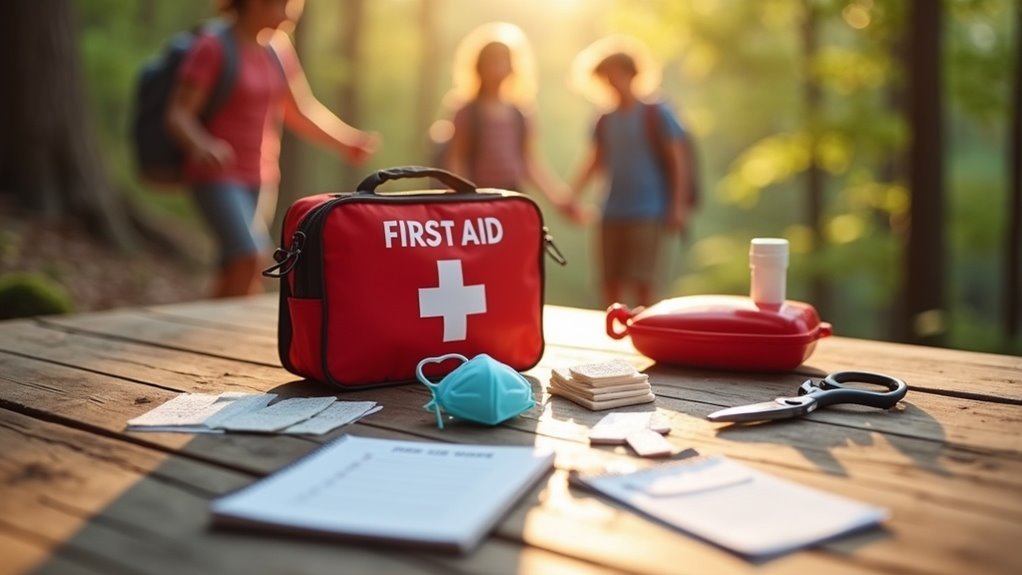
Creating a well-stocked First Aid Kit is essential for effectively managing minor injuries and emergencies, especially in survival situations. Ensure your kit includes these critical components:
- Adhesive bandages and gauze pads for wound coverage.
- Antiseptics and medical tape for cleaning and securing injuries.
- Scissors and disposable gloves for safe handling of medical situations.
- Emergency items such as a CPR face shield and a tourniquet for severe injuries.
Additionally, personalize your First Aid Kit with necessary medications, such as EpiPens for allergic reactions, and consider adding items like pain relievers, antihistamines, and antiseptic wipes.
Store your kit in a readily accessible location, and ensure that all members of your group know its whereabouts and contents. Regularly check and replenish supplies every six months to maintain readiness for any emergency or survival scenario.
Kit Maintenance Tips
Maintaining your first aid kit is crucial for survival preparedness and ensuring its effectiveness in emergencies.
It’s recommended to check your first aid kit every six months to confirm that all supplies are intact and not expired. Essential items to include are adhesive bandages, antiseptic wipes, gauze pads, medical tape, scissors, and a CPR mask.
Additionally, customize your first aid kit to cater to specific needs, such as including supplies for allergies or chronic conditions.
Keep a detailed inventory of your kit’s contents and update it whenever you use or replace items to ensure organization and completeness, which is vital for your overall readiness in any survival situation.
Accessibility and Placement
When it comes to accessibility and placement, a First Aid Kit is only effective if it’s easy to reach in an emergency. Here are key tips for ideal placement, especially for survivalists and preppers:
- Home: Store your kit in a central, visible area, like the kitchen, living room, or hallway. Consider having multiple kits in different locations for redundancy.
- Vehicle: Keep a well-stocked kit in your glove compartment or trunk for on-the-go access during travel or emergencies.
- Bug-Out Bag: Incorporate a compact first aid kit in your bug-out bag for immediate access during evacuation scenarios.
- Workplace: Position kits in break rooms or near high-traffic areas to ensure quick access in case of workplace injuries.
- Labeling: Clearly label your kit and include instructions or a checklist to enhance accessibility for everyone, especially in high-stress situations.
Regularly check your supplies to verify everything is usable and tailored to your environment, ensuring you’re always prepared for any situation.
Establishing a Communication Plan
To effectively manage emergencies in a survival situation, you need a robust communication plan in place.
Start by creating an emergency contact list that’s easily accessible to all members of your prepper group, and define clear communication methods to share critical information swiftly during crises.
Regularly reviewing and practicing this plan ensures that everyone knows their role and can act decisively when it matters most, whether it’s during a natural disaster, a societal collapse, or any other emergency scenario.
Emergency Contact List
How can you ensure rapid access to critical information during a survival or medical crisis? By assembling a comprehensive emergency contact list. This list is essential for an effective response in high-pressure situations.
Include the following:
- Names and phone numbers of vital contacts, including family, friends, and fellow preppers.
- Relationships to each contact (e.g., family, trusted allies).
- Local emergency services, including hospitals, poison control centers, and survival specialists.
- A designated individual or team responsible for regularly updating the list.
Make sure everyone in your preparedness group has both digital and printed versions of this list.
Regular drills on utilizing this resource can significantly improve readiness, enabling swift action when it counts the most. Stay prepared and ready to respond!
Communication Methods Defined
A well-defined communication plan is crucial for effective crisis management in survival situations, ensuring that all members of your preparedness team understand their roles and responsibilities.
Incorporate various communication methods in your emergency response plan, such as walkie-talkies, cell phones, and loudspeakers, to maintain reliable contact in diverse scenarios. Establish a clear communication hierarchy to prevent confusion during emergencies.
Keep an updated list of emergency contacts, including local services and critical resources, and distribute it to all stakeholders before any incident occurs. Conduct regular drills to familiarize everyone with procedures, while addressing the needs of participants—such as language barriers or hearing impairments—ensures effective communication when it matters most in survival situations.
Information Sharing Protocols
Establishing effective information sharing protocols is crucial for coordinating a successful first aid response during emergencies, especially in survival situations.
Follow these steps to enhance communication:
- Designate specific individuals within your survival group who are responsible for relaying information.
- Provide all members, including any visiting teams or guests, with copies of the emergency action plan (EAP) tailored for survival scenarios.
- Maintain an easily accessible list of emergency contact numbers, both in digital form and printed for quick reference.
- Implement regular training sessions to reinforce these protocols, ensuring everyone is prepared for emergencies.
Utilizing communication tools like walkie-talkies or specialized mobile apps guarantees real-time updates among first aid responders, fostering a coordinated response during any first aid emergency in a survival context.
Designating First Aid Responders
Identifying qualified individuals as designated first aid responders is crucial for survival situations, especially during emergencies. To ensure preparedness, involve community members in the selection process and maintain clear communication about their roles and locations. Regular training and refresher courses are essential for keeping their skills sharp and up-to-date. Establish a plan for rotation or reassessment to ensure compliance with preparedness protocols.
| Criteria | Importance |
|---|---|
| Official Training Completed | Ensures effective response |
| Easily Identifiable | Enhances accessibility in crises |
| Regular Skill Updates | Maintains readiness for emergencies |
In survivalism, having reliable first aid responders can make a significant difference in critical situations.
Providing Emergency Procedure Training
Effective emergency procedure training is crucial for ensuring that all individuals are equipped with the knowledge and skills necessary to respond effectively in survival situations.
To implement robust training, consider these steps:
- Incorporate emergency medical procedure training into the onboarding process for new members of your preparedness community.
- Ensure that designated first aid responders complete accredited first aid courses every three years to stay updated on the latest techniques.
- Conduct regular briefings and refresher courses to keep everyone informed about appropriate responses to medical emergencies and survival scenarios.
- Utilize hands-on training sessions to enhance skill retention, allowing individuals to practice techniques in realistic wilderness or survival scenarios.
Conducting Regular Drills
Regular drills are a crucial aspect of a comprehensive survival plan, building upon the skills and knowledge you’ve already acquired. Conducting these drills ensures that all participants are well-versed in emergency response procedures and can act swiftly during crises, significantly improving reaction times.
Aim to schedule these drills at least once a year to reinforce essential skills, identify any knowledge gaps, and nurture a culture of preparedness. Engage all members of your group, as this fosters a better understanding of everyone’s roles during emergencies.
Simulate a variety of scenarios to prepare everyone for real-world situations. After each drill, conduct debrief sessions to assess the drill’s effectiveness and pinpoint areas for improvement, thereby enhancing your overall readiness for any eventuality.
Reviewing and Updating the Plan
To ensure your first aid preparedness plan remains relevant and effective, it’s crucial to review and update it at least once a year.
Here’s how to approach this process in the context of survivalism and prepping:
- Regularly assess compliance with current survival regulations and any changes in potential threats or risks that may arise in your environment.
- Involve family members or group members in the review process to gather insights on perceived hazards and the effectiveness of your current procedures.
- Update your first aid supplies and resources based on feedback from your group and any incidents or near-misses since the last review.
- Conduct drills or training sessions to test the effectiveness of your plan and make any necessary adjustments to improve your readiness for emergencies.
Document all changes made to your plan and communicate these updates to ensure that everyone involved is informed and adequately prepared for any potential scenarios.