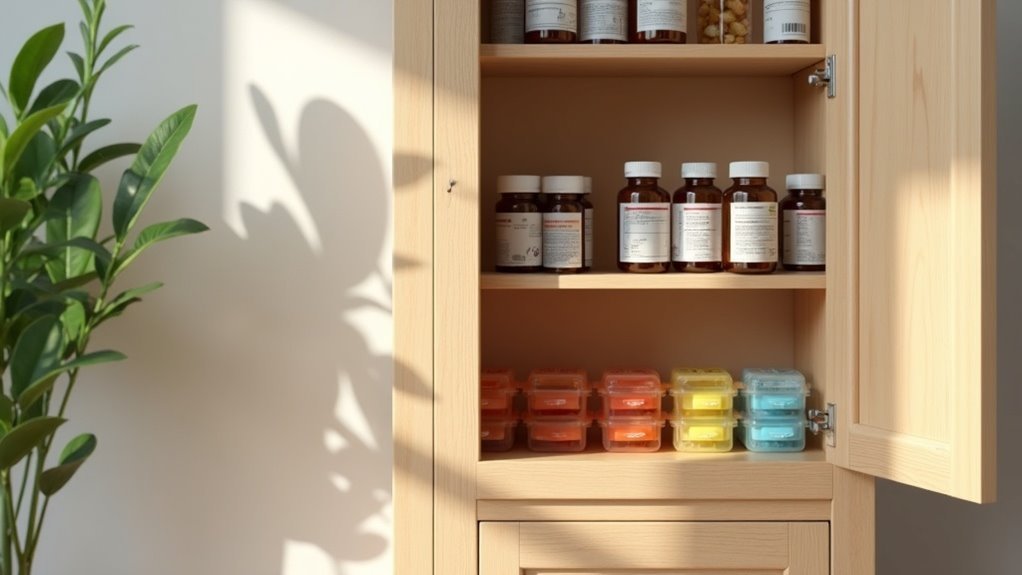
To store medications safely in a survivalist or prepping context, it’s essential to keep them in their original packaging and store them in a cool, dry location that is shielded from light and moisture. Aim to maintain a temperature range between 20°C and 25°C (68°F to 77°F) for general medications. For those requiring refrigeration, ensure they are kept between 2°C to 8°C (36°F to 46°F). Regularly check expiration dates and consider securing all medications in lockable cabinets to protect them from potential threats. By adhering to these guidelines, you can help ensure your medications remain effective when you need them most. Additionally, stay informed about further essential tips to ensure your medications are safe and effective in any situation.
Key Takeaways
- Store medications in their original packaging to shield them from light, moisture, and humidity, ensuring they remain effective for when you need them most in a survival situation.
- Maintain a cool, dry environment for your medications; the ideal temperatures are between 20°C to 25°C (68°F to 77°F) to prolong shelf life during uncertain times.
- Secure medications in locked cabinets or storage bins to prevent unauthorized access and accidental ingestion, especially important in survival scenarios where others may be around.
- Regularly check and replace expired medications to ensure their potency and safety, which is crucial when access to medical supplies may be limited.
- Utilize desiccants or silica gel packs to control humidity levels below 40%, preserving the quality of your medications and enhancing their reliability when needed for survival.
Importance of Proper Medication Storage
Proper medication storage is crucial for ensuring the effectiveness and safety of your survival supplies. Prescription medications should be kept in their original packaging to protect them from light, moisture, and humidity, which is especially important in survival situations.
Store them in a cool, dry place, away from direct sunlight, to maintain their potency over time. For medications that require refrigeration, make sure they’re kept at 2°C to 8°C (36°F to 46°F), and consider alternative methods to maintain this temperature during emergencies.
Regularly inspect your medication supply, as even well-stored medications have limited shelf lives, and replace any expired items as part of your preparedness plan.
Additionally, secure your medications in locked cabinets or boxes to prevent unauthorized access, ensuring the safety of your supplies, particularly in homes with children or pets.
Proper storage is a key component of effective prepping and survival readiness.
Recommended Storage Conditions
To ensure your medications remain effective during your survival preparations, it’s crucial to store them under the right conditions.
Keep them in a controlled environment, ideally between 20°C to 25°C (68°F to 77°F), and protect them from excessive moisture and light exposure.
Regularly monitoring these conditions will help maintain their quality and potency, which is vital in emergency situations.
Proper storage can make a significant difference in the effectiveness of your supplies when you need them most.
Ideal Temperature Ranges
Have you ever considered the crucial role temperature plays in storing your survival medications? For those preparing for emergencies, maintaining the right temperature is vital.
Medications designated for controlled room temperature should be kept between 20°C to 25°C (68°F to 77°F) to ensure their effectiveness. If you have medications that require refrigeration, it’s essential to store them at temperatures between 2°C to 8°C (36°F to 46°F) using medical-grade refrigerators.
For any frozen medications, make sure they remain between -25°C and -10°C (-13°F to 14°F). Regularly checking and recording temperatures is vital for refrigerated and frozen supplies, especially in a prepping scenario.
Always keep medications in their original packaging to help maintain their stability and effectiveness as specified by the manufacturer, ensuring you’re prepared for any situation.
Humidity Control Measures
Maintaining the right humidity levels is crucial for the safe storage of medications, especially in a survival or prepping scenario. Ideally, keep humidity below 40% to prevent degradation and loss of potency.
Store medications in a cool, dry place, avoiding areas with fluctuating humidity, such as bathrooms or near cooking appliances. To further safeguard your supplies, consider using desiccants or silica gel packs in your storage containers; they effectively absorb excess moisture.
Regularly check the humidity with a hygrometer to ensure it stays within recommended limits. By following these measures, you can enhance the quality and effectiveness of your medications, ensuring they’re ready when you need them most.
Light Exposure Considerations
While organizing your medication storage for survival situations, it’s crucial to consider light exposure, as it can significantly impact the potency of your medications.
Store them in a cool, dry place, away from direct sunlight, to prevent degradation and ensure they remain effective over time. Some medications require additional protection; keep them in their original opaque or amber containers to shield them from light damage.
Aim for a storage temperature between 20°C to 25°C (68°F to 77°F) with humidity levels below 40% to maintain optimal conditions. For light-sensitive medications, such as certain antibiotics and chemotherapy agents, ensure they’re stored in dark containers to prevent deterioration.
Regularly inspect your stockpile for any signs of fading or discoloration, which may indicate that light exposure has compromised the integrity of your medications. Being vigilant about these factors can help you prepare for any situation and ensure your medical supplies remain reliable when you need them most.
Safe Storage Practices at Home
Properly storing medications at home is crucial for survival preparedness and ensuring their effectiveness and safety during emergencies.
Always keep medications in their original containers with labels intact for proper identification and dosage instructions. Store them in a cool, dry place, away from sunlight and humidity, as moisture can degrade their effectiveness and could be detrimental in survival situations.
Keep medications in original containers, stored in a cool, dry place, away from sunlight to maintain their effectiveness.
Utilize lockable cabinets or boxes to keep medications out of reach of children and pets, minimizing the risk of accidental ingestion or misuse.
Regularly check expiration dates and safely discard any expired or unneeded medications to ensure your supplies remain viable.
Maintain an organized inventory, labeling each medication clearly with the intended recipient’s name and any special instructions, so you can easily access them when needed.
Being prepared with properly stored medications can be a vital aspect of your survival strategy.
Special Considerations for Refrigerated Medications
Storing medications safely at home is crucial for survival preparedness, particularly when it comes to refrigerated medications.
It’s essential to keep these medications between 2°C to 8°C (36°F to 46°F) to ensure their effectiveness. In the event of a power outage, your refrigerator can maintain a cold environment for 12-24 hours, so it’s important to monitor the temperature closely during this time.
For long-term storage in a survival scenario, consider investing in medical-grade refrigerators, which are designed to meet strict temperature and humidity standards.
Keeping a daily temperature log is also vital; this documentation will help you track the conditions of your medications, ensuring they remain effective and safe for use.
Proper management of refrigerated medications is a key aspect of being prepared for any situation that may arise.
Regular Supply Maintenance and Updates
To ensure your survival medications remain effective and safe, it’s crucial to regularly check expiration dates and replenish your supply every 1-2 years.
Maintaining an organized inventory allows you to quickly identify expired or soon-to-expire items, which is essential for preparedness.
Implementing a tracking system or scheduling reminders can further enhance this process, ensuring you’re always ready for any situation that may arise.
Stay vigilant and proactive in your supply management to enhance your survival readiness.
Expiry Date Monitoring
While medications can be effective for a time after their expiration dates, it’s crucial for survivalists to monitor these dates regularly to ensure safety and efficacy during emergencies.
Check expiration dates every 1-2 years to guarantee your medical supplies remain reliable. Replace any expired or soon-to-expire medications promptly, especially those critical for survival situations.
Although some medications might retain effectiveness for 1-2 years past their expiration if stored properly, this isn’t guaranteed for all, so caution is essential.
Keep an organized inventory that tracks these dates for easy updates, allowing for quick access to necessary supplies in a crisis.
Finally, dispose of expired medications properly to prevent accidental ingestion and maintain compliance with safety regulations, ensuring your preparedness remains uncompromised.
Inventory Organization Techniques
An organized medication inventory is crucial for ensuring that you have immediate access to necessary supplies during emergencies. Regularly audit your inventory every 1-2 years to confirm that all medications are effective and not expired.
Categorize your medications by purpose, frequency of use, or expiration dates to facilitate efficient tracking. Utilize a log or spreadsheet to document quantities and expiration dates, which will aid in effective management.
Promptly replace any expired or nearly expired medications, aiming for at least a three-day supply for emergencies and ideally a 30-day supply for longer-term situations.
Additionally, review your inventory before and after significant life changes to ensure it meets your evolving needs. This proactive approach will help you stay prepared and ready for any unforeseen circumstances.
Safe Disposal Methods for Unneeded Medications
When you have expired or unneeded medications, disposing of them safely is crucial to prevent accidental ingestion or misuse, especially in a survivalist context.
Consider participating in drug take-back days organized by local pharmacies or community groups for secure disposal. Many pharmacies also provide medicine disposal kiosks or mail-back programs, offering environmentally responsible options that align with sustainable preparedness practices.
If these services aren’t available, mix your medications with undesirable substances like coffee grounds or dirt, seal them in a container, and throw them in the trash.
Ensure this trash is inaccessible to people and pets to minimize any potential harm.