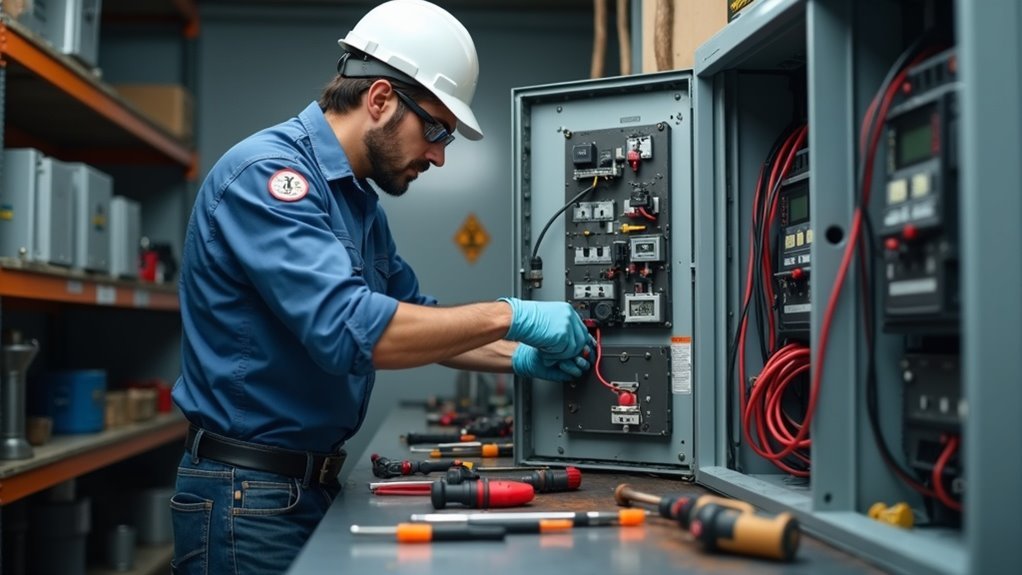
To install transfer switches safely in preparation for emergencies, always ensure the main power is turned off and verify its status with a voltage tester. It’s crucial to gather insulated tools and wear protective gear to safeguard yourself. Mount the transfer switch close to the main panel, connecting it to the selected circuits using the appropriate wire colors for clarity and safety. Additionally, install an outdoor-rated generator inlet box and make sure that all wiring is properly protected from environmental hazards. After installation, conduct thorough tests to ensure functionality and keep the surrounding area clear to prevent accidents. Remember, being well-prepared is key for successful installations in any survival situation.
Key Takeaways
- Always turn off the main power supply and use a voltage tester to confirm that electricity is not present before beginning your installation. This crucial step ensures your safety as you prepare for potential power outages.
- Mount the transfer switch in accordance with local codes, positioning it near the main electrical panel for easy access during emergencies. This strategic placement allows for quick adjustments when needed.
- Connect wires from the transfer switch to your selected circuits, ensuring that you match wire colors for secure and accurate attachments. Proper connections are vital for reliability when the power goes out.
- Install a generator inlet box outdoors, making sure it is weather-protected to safeguard against the elements. A well-installed inlet box is essential for a seamless connection to the transfer switch during a power failure.
- Regularly test the transfer switch and generator functionality—at least twice a year—to guarantee they are ready when you need them most. Preparedness is key in survival situations, and knowing your systems are operational can provide peace of mind.
Understanding Transfer Switches
When the power goes out, it’s crucial to have a dependable method to keep your home operational, and that’s where transfer switches come into play. A transfer switch securely connects your generator to your home’s electrical system, enabling you to switch between utility and generator power during outages—an essential capability for any survivalist or prepper.
You can opt for a manual transfer switch, which requires your intervention, or an automatic transfer switch, which detects outages and switches power without your input.
It’s vital to choose a switch that matches the wattage of your generator and to follow local electrical codes during installation. This helps prevent backfeeding, ensuring safety for utility workers and maintaining compliance with regulations—key considerations for those prepared for any situation.
Preparation and Safety Guidelines
Before starting the installation of a transfer switch, it’s crucial to prioritize safety and preparation to ensure a successful and secure process. First, confirm that the main power supply is turned off and use a voltage tester to verify that no electricity is present.
Gather all necessary tools and materials, including insulated tools, to minimize the risk of electrical shock during the installation. Familiarize yourself with local codes to ensure compliance, as this knowledge is vital for anyone focused on self-reliance and preparedness.
Remember to wear appropriate personal protective equipment, such as gloves and safety goggles, to protect yourself from potential hazards.
Lastly, maintain a clean workspace around the installation area to reduce the likelihood of accidents while working with electrical components. This attention to detail is essential for anyone committed to survivalism and prepping, as it enhances both safety and efficiency.
Installing the Transfer Switch
With safety measures in place, you’re ready to begin installing the transfer switch, a crucial step in ensuring energy resilience for your home during emergencies.
Follow these steps for a successful installation:
- Securely mount the transfer switch near the main electrical panel, ensuring compliance with local electrical codes for clear access and efficient operation during power outages.
- Carefully connect wires from the transfer switch to the selected circuits in the main panel, matching wire colors and using appropriate connectors for a secure attachment. This will ensure that your essential systems can be powered reliably in a crisis.
- Install a generator inlet box outside your home to facilitate a safe and efficient connection for power from the generator, allowing you to harness backup energy when the grid fails.
After completing the wiring procedure, test the system by starting the generator and confirming the power flow to ensure that your emergency preparedness measures are fully operational.
This proactive approach will enhance your survival readiness in any situation.
Connecting the Generator to the Transfer Switch
Connecting the generator to the transfer switch is a vital step in ensuring your home remains powered during an outage, a crucial consideration for any survivalist or prepper. To maintain safety, use the appropriate wiring, ensuring the gauge matches your generator’s output. An outdoor-rated inlet box is essential; it should be securely installed in a weather-protected area to withstand the elements.
Proper wire color coding is important for safe installation: use black or red for hot wires, white for neutral, and green or bare for ground. Additionally, installing conduit will protect the wiring from physical damage. Don’t forget to label the inlet clearly to avoid confusion in an emergency.
Once everything is connected, turn off the main breaker to prevent backfeeding into the grid, then start your generator. Finally, test the transfer switch by switching to the generator position to ensure your setup is functional and ready for when you need it most.
| Wire Color | Purpose | Connection Type |
|---|---|---|
| Black/Red | Hot Wire | Generator to Transfer Switch |
| White | Neutral | Generator to Transfer Switch |
| Green/Bare | Ground | Generator to Transfer Switch |
Maintenance Tips and Best Practices
Maintaining your transfer switch and generator is crucial for ensuring they operate effectively when you need them most, especially in a survival situation.
Regular maintenance of your transfer switch and generator is essential for reliable operation during emergencies.
Follow these essential maintenance tips to keep your electrical system reliable and ready for any emergency:
- Routine Inspections: Regularly check for signs of wear and ensure secure connections every few months. This will help you identify potential issues before they become major problems.
- Clear Debris: Keep the area around the transfer switch clear of debris to maintain proper airflow and prevent overheating, which is vital during extended power outages.
- Testing Functionality: Test both the transfer switch and generator at least twice a year, or more frequently if you’re in a high-risk area for power outages. This ensures they’ll function reliably when you need them the most.
Always turn off the main power before performing any maintenance to adhere to safety precautions and avoid the risk of electrical shock.
Keeping your equipment in top shape is a key part of being prepared for any emergency situation.