To set up a solar generator for your survival and prepping needs, start by gathering essential equipment: a portable power station, solar panels, and necessary accessories. Assess your energy requirements by considering both your monthly consumption and peak power needs, ensuring you have enough power for critical survival gear. Next, charge your power station using AC power or solar energy to keep your systems operational. Position your solar panels strategically for maximum sun exposure, which is crucial for reliability during emergencies. Connect all components following safety guidelines to avoid hazards. Lastly, perform regular maintenance and safety checks to ensure your setup remains functional when you need it most. Want to enhance your survival setup? There’s more to learn about improving efficiency and reliability in off-grid situations.
Key Takeaways
- Select a robust portable power station with sufficient battery capacity and inverter output to support your survival energy needs during emergencies or extended off-grid situations.
- Angle solar panels at approximately 30 degrees towards the south, ensuring they remain free from shade to capture maximum sunlight for reliable energy production.
- Securely connect the solar panels to the power station using compatible, heavy-duty cables, making sure to match the voltage correctly for safe operation.
- Implement a transfer switch or breaker interlock to safely integrate the power station into your home’s electrical system, allowing for seamless energy use during power outages.
- Conduct regular inspections and maintenance of solar panels, battery charge levels, and connections to ensure the system remains operational and dependable for your survival preparedness.
What Equipment Do You Need?
To set up a reliable solar generator for your survival and prepping needs, you’ll need a few essential components that work together to harness solar energy.
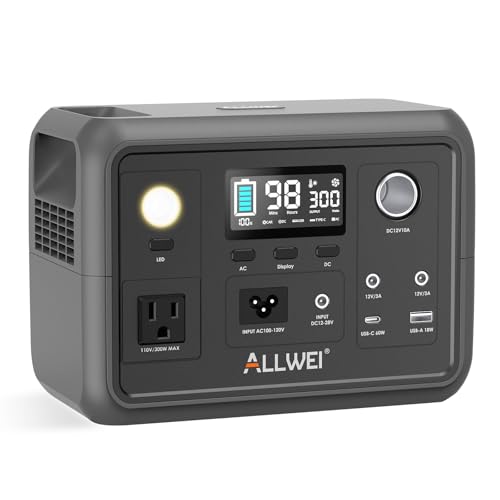
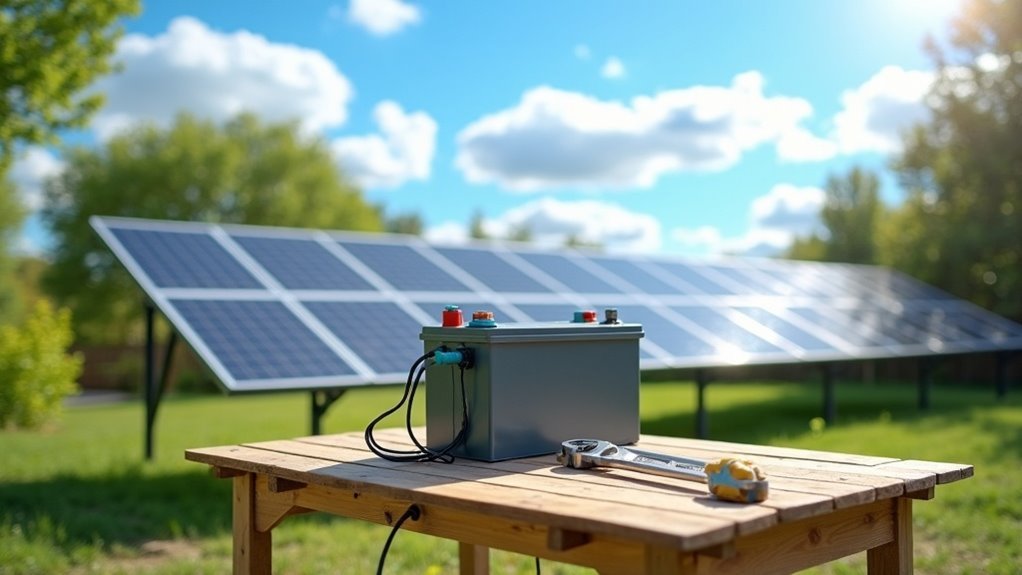
Start with a portable power station, which typically features a built-in inverter and charge controller, crucial for managing power distribution. Pair this with solar panels that meet your power station’s requirements; consider options like portable or rigid designs for versatility in different environments.
Assess battery capacity carefully, as portable power stations usually range from 1612 Wh to 3600 Wh, with expandable options available for greater energy needs.
Don’t overlook the importance of additional accessories, such as solar extension cables, to connect multiple panels. This setup ensures your solar generator can efficiently power essential devices, providing a reliable energy source during emergencies or off-grid situations.
Calculate Your Energy Needs
To effectively prepare your solar generator for survival situations, begin by assessing your monthly electricity consumption using your utility bill as a reference. This will help you understand your energy needs in case of a grid failure.
Next, identify the peak power requirements of your essential survival devices to ensure your generator can handle any surges during critical moments.
Lastly, calculate your daily energy usage to confirm that your solar generator can efficiently sustain your household demands and support your preparedness efforts in times of crisis.
Assess Monthly Consumption
Understanding your monthly energy consumption is crucial for effectively preparing your homestead with a solar generator.
Begin by analyzing your electricity bills to determine your average energy use in kilowatt-hours (kWh). To calculate your monthly consumption, divide your total annual kWh by 12, then divide by 30 to find your daily needs. This assessment will help you understand how much solar power you’ll need for self-sufficiency.
- Confirm the wattage of essential appliances that you rely on for survival.
- Keep your battery capacity in mind to ensure you have enough backup power.
- Note that average monthly usage is around 886 kWh, though this can vary based on your specific prepping needs and lifestyle.
Determine Peak Power Needs
With a clear understanding of your monthly energy consumption, the next crucial step in your preparedness journey is determining your peak power needs.
Begin by evaluating essential survival appliances, carefully noting their running and surge power requirements. For the average American household, the monthly energy usage is around 886 kWh, which breaks down to approximately 30 kWh daily.
Ensure that your solar generator’s output capacity exceeds these calculations, taking into account the momentary higher wattage demands of vital devices.
Leverage EcoFlow’s X-Boost technology to effectively manage surge power needs, ensuring your generator can handle these spikes and keep your essential survival equipment operational during outages.
Being prepared for power fluctuations can make a significant difference in critical situations.
Calculate Daily Energy Usage
Calculating your daily energy usage is crucial for effectively preparing a solar generator for survival situations.
Begin by examining your monthly electricity bills to ascertain your average energy consumption in kilowatt-hours (kWh).
- Divide your annual kWh by 12 to find your monthly usage.
- Further divide that number by 30 to estimate your daily energy needs.
- Assess the wattage of your essential devices, taking into account both their running and peak power consumption.
For typical households, the average daily energy usage is around 29.5 kWh.
Utilizing EcoFlow’s X-Boost technology can assist in managing surge power requirements for devices that demand higher initial wattage, ensuring you’re equipped for any emergency scenario.
Purchase Your Equipment
When you’re ready to secure your equipment for survival and prepping, choose a solar generator or portable power station that aligns with your energy requirements. Assess the capacity of solar panels to ensure optimal charging capabilities. If you prefer a modular setup, confirm compatibility between your portable power station, solar panels, and necessary accessories. Keep an eye out for promotions to enhance your savings while preparing for the unexpected.
| Equipment Type | Key Features | Recommended Brands |
|---|---|---|
| Portable Power Station | Built-in inverters, charge controllers | EcoFlow, Jackery |
| Solar Panels | Portable or rigid styles | Renogy, Goal Zero |
| Accessories | Extension cables, connectors | Various brands |
Charge Your Portable Power Station
To charge your portable power station effectively for survival situations, it’s crucial to understand the various charging methods available. Utilizing AC power from a standard outlet allows for quick recharges, ensuring you have power when you need it most.
Ideal charging conditions play a vital role in maintaining battery health, so keep a close watch on your station’s charge level. Regular maintenance, such as recharging every three months, will ensure your power station is always ready for emergencies.
Preparedness is key in survivalism, so make sure your portable power station is fully operational at all times.
Charging Methods Overview
Charging your portable power station effectively is essential for ensuring it’s ready during emergencies and power outages.
Understanding the charging methods overview is crucial for utilizing your unit efficiently in survival situations. You can charge your power station through:
- AC power from a home outlet, typically achieving a full charge in about an hour, which is ideal when you’re preparing in advance.
- Solar charging with panels, harnessing renewable energy that can provide 62 to 78 watts in full sunlight, a perfect solution for off-grid scenarios.
- Car’s 12V socket, allowing up to 100W input while traveling, ensuring you can keep your power station charged even on the go.
Regular maintenance is key to preparedness: check the charge level frequently and recharge every three months or when it drops to 60% capacity.
This practice guarantees your power station is always ready to provide essential power when you need it most.
Optimal Charging Conditions
Optimal Charging Conditions for Survival Preparedness
In the realm of survivalism and prepping, ideal charging conditions are crucial for maximizing the efficiency and longevity of your portable power station. To ensure you’re always prepared, fully charge your power station before use, ideally harnessing solar panels in direct sunlight.
Aim for a minimum output of 500 watts to reduce recharge time effectively. Remember that solar panel charging efficiency typically ranges from 50-75% of their rated capacity, which can influence how quickly your power station recharges.
Utilize the EcoFlow app to monitor live charging data, allowing you to maintain optimal charging conditions for effective power management and to ensure your portable power station is ready for any emergency situation.
Maintenance Tips Explained
While ensuring your portable power station is ready for use in your survival toolkit, regular maintenance is crucial for optimal performance.
Follow these essential maintenance tips to charge your power station effectively and sustain battery health for your prepping needs:
- Fully charge your battery before setting it up and recharge it every three months or when it reaches 60% capacity to ensure it’s always ready for emergencies.
- For the best charging results, use AC power from a home outlet, which typically takes about an hour, ensuring your power station is fully charged for when you need it most.
- Store your power station in a cool, dry place to prevent damage from extreme temperatures, ensuring it remains functional when disaster strikes.
Position Your Solar Panels
Positioning your solar panels correctly is crucial for maximizing energy capture, especially for those focused on survivalism and prepping.
Aim to position your solar panels at a 30-degree angle facing south to ensure optimal sun exposure, which is vital for off-grid energy needs. Choose a location that’s free from shading caused by trees or nearby structures, as even minimal shade can significantly decrease efficiency.
If you’re using portable panels for emergency situations, select a stable, flat surface to maintain their angle toward the sun for the best performance.
For fixed installations at your homestead, consider adjustable mounts to allow for angle adjustments with the changing seasons.
Lastly, regularly clean the solar panels to remove dirt and debris, as maintaining a clean surface can enhance energy output by up to 20%, ensuring you have reliable power when you need it most.
Set up the Portable Power Station
Setting up your portable power station is an essential step for ensuring you have a dependable energy source during emergencies or when you’re off the grid.
Begin by confirming that the unit is fully charged, which can typically be accomplished by connecting it to an AC outlet for about an hour. Following that, connect your solar panels using the appropriate cables, ensuring that the output voltage aligns with the station’s input range (usually between 11-30V).
Utilize the built-in inverter to convert DC power to AC, making it suitable for powering your essential appliances.
- Ensure the power station’s capacity aligns with the wattage requirements of your critical devices.
- Regularly recharge the unit every three months or when it drops to 60% capacity to maintain readiness.
- Conduct routine maintenance to ensure the power station remains operational and reliable during outages or emergency situations.
Connect to Your Home
Connecting your solar generator to your home is an essential step in ensuring you have a reliable power source during outages or emergencies, a key principle of survivalism and prepping.
To do this safely, it’s important to utilize a transfer switch or breaker interlock setup, ensuring compliance with local regulations. Aim for a power station with at least 5,000 watt-hours to adequately support the energy demands of your essential appliances during critical situations.
When connecting solar panels to the power station, ensure their output is between 500 to 1,000 watts for effective recharging.
Always prioritize safety by hiring a licensed electrician for any direct connections to your home’s electrical system, ensuring adherence to electrical codes and enhancing your preparedness for unforeseen circumstances.
Regular Maintenance and Safety Checks
To ensure your solar generator is ready for any survival situation and operates efficiently and safely, regular maintenance and safety checks are crucial. Here’s what you should do:
- Inspect solar panels for dirt, debris, or shading that can reduce their efficiency. Keeping them clean ensures maximum power generation when you need it most.
- Check the battery’s charge level monthly, ensuring it’s above 60%. Make it a priority to fully recharge the battery every three months to maintain optimal performance in emergencies.
- Examine cables and connections for signs of wear or corrosion. Tighten any loose connections and replace damaged cables to prevent failures during critical times.
Regular checks will help you stay prepared for any situation where reliable power is essential.