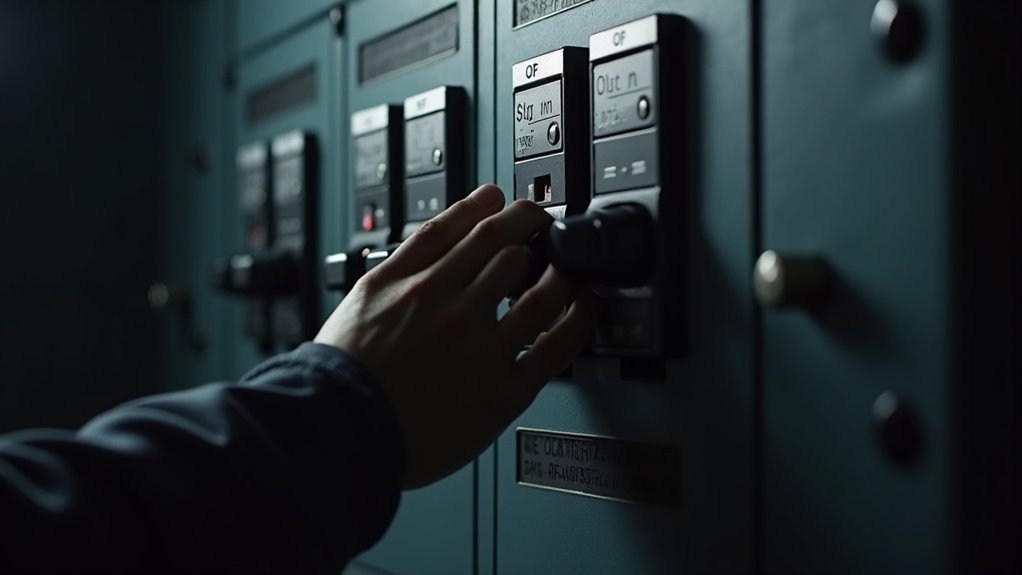
To reset breakers safely after outages, first, turn off all light switches and unplug affected appliances to prevent overloads. Locate your circuit breaker panel and identify any tripped breakers, which are often in the ‘off’ position. Ensure you are in a secure environment, free from any potential hazards. Turn the tripped breaker fully to ‘off’, then switch it back to ‘on’. If power doesn’t return, it may be wise to consult a qualified electrician, especially in a survival situation where reliable power is critical. Always have backup plans and additional safety measures in place for complete electrical reliability in any emergency scenario.
Key Takeaways
- Before attempting to reset the breaker, ensure all light switches are off and appliances unplugged in the affected area to prevent any surges that could damage your equipment.
- Locate the circuit breaker panel, which is often found in less trafficked areas like garages or basements, and identify the tripped breaker by looking for one that is in the ‘off’ position or is not aligned with the others.
- Carefully switch the tripped breaker fully to ‘off’ and then back to ‘on’ to reset it. This is crucial to ensure that the breaker functions correctly and doesn’t pose a risk to your electrical system.
- After resetting, check if power is restored and test individual outlets for functionality to ensure that everything is operating as it should. This is a key part of maintaining a safe and functional living environment during emergencies.
- If the breaker trips again or power isn’t restored, do not hesitate to contact a qualified electrician for further assistance. It’s important to address electrical issues promptly to ensure the safety of your home and preparedness for any situation.
Importance of Circuit Breakers
Although you may not think about them often, circuit breakers play an essential role in ensuring your home’s electrical safety, especially in a survivalist or prepping context.
These critical devices automatically cut off power during overloads or short circuits, preventing potential fires and electrocution—risks that can be particularly dangerous during emergencies. Each breaker is calibrated to handle a specific amperage; exceeding this limit leads to tripping, which protects your wiring and appliances from damage.
In a survival situation, having a reliable electrical system is crucial. Regularly functioning breakers indicate a well-maintained system, while tripped breakers can signal underlying issues that need immediate attention.
Initial Steps Before Resetting
Before you reset a breaker, it’s crucial to ensure your safety and readiness.
Begin by turning off all light switches and unplugging appliances in the affected areas to prevent overloads, which is particularly important in emergency scenarios.
Next, conduct a thorough assessment of your electrical environment: check for any signs of damage, burning, or other hazards, and make sure you aren’t standing in water, as this can pose additional risks.
This preparation is essential for creating a safer setting for the reset process and aligns with survivalist principles by ensuring you’re equipped to handle potential electrical issues in a crisis.
Turn Off Appliances
To ensure a safe and effective breaker reset, it’s crucial to take the necessary precautions, especially in a survival or prepping situation.
Begin by turning off all light switches and unplugging appliances in the affected rooms. This step helps prevent overload during the reset process and safeguards your devices from potential surges.
Here are some essential safety tips to consider:
- Unplug all devices to avoid complications and preserve your resources.
- Identify any specific appliances that may have caused the outage to prevent future issues.
- Ensure the area around the electrical panel is dry and free of hazards to avoid electrical shocks.
- Double-check that all light switches are off to maintain safety and conserve energy.
Assess Electrical Safety
When assessing electrical safety in a survival situation, it’s essential to ensure that the area around the breaker panel is dry and free from hazards. Before resetting breakers, turn off light switches and unplug any appliances in the affected rooms to prevent overloads. Inspect the breaker box for signs of heat or damage; if it feels warm, do not proceed, as this could indicate a serious issue. Familiarize yourself with the breaker positions and their corresponding circuits to aid in effective troubleshooting. Always use one hand while resetting a breaker to minimize the risk of electrical shock, which is critical in emergency preparedness.
| Action | Purpose | Notes |
|---|---|---|
| Turn off light switches | Prevent overloads | Essential for safety in a survival setting |
| Inspect breaker box | Identify potential hazards | Warmth indicates serious issues |
| Use one hand to reset breaker | Minimize shock risk | Keep the other hand away for safety |
Locating the Circuit Breaker
Finding the circuit breaker panel is essential for safely resetting breakers in your home, especially in emergency situations. Typically, you’ll find the breaker panel in garages, basements, or utility rooms.
Locating your circuit breaker panel is crucial for safely managing power outages and ensuring quick access during emergencies.
To locate it effectively, follow these tips:
- Ensure the panel is easily accessible and free from obstructions, allowing quick access during emergencies.
- Familiarize yourself with the panel layout; breakers might be labeled for specific rooms or critical appliances.
- Look for circuit breakers that are in the “off” or middle position, indicating a tripped breaker that may need attention.
- If there are multiple breaker panels, check all locations to identify the one controlling the affected circuits.
Being prepared and knowing how to reset your breakers can be crucial in maintaining power and safety during unexpected situations.
Resetting the Breaker
Resetting a tripped breaker is an essential skill for those prepared for emergencies and self-sufficiency. To safely restore power, begin by turning off all light switches and unplugging any appliances in the affected area to prevent electrical overload.
Next, locate the tripped breaker, which will typically be in the ‘off’ position. Switch it fully to ‘off’ before moving it back to ‘on.’ Pay attention for a click sound, indicating a successful reset.
Always use one hand when handling the breaker to minimize the risk of electrical arcing, and ensure your surroundings are dry and safe to avoid fire hazards and potential electrocution.
If power isn’t restored after the reset, it’s wise to contact a qualified electrician for further assistance, as maintaining functional electrical systems is crucial for effective preparedness in any survival situation.
Troubleshooting Persistent Issues
If your breaker keeps tripping after resetting, it’s crucial to assess your electrical setup, especially if you depend on it for survival preparations.
Start by checking for overloaded circuits; ensure that you’re not connecting too many devices to a single circuit, which can be particularly problematic when power is needed for essential survival equipment.
Inspect all cords and plugs for any signs of damage, as faulty equipment can jeopardize your preparedness efforts.
If these steps don’t resolve the issue, it’s advisable to consult a qualified electrician who can identify any underlying electrical faults and help ensure your setup is reliable for any emergency situation.
Overloaded Circuits Investigation
When you experience frequent tripping of breakers, it’s crucial to investigate potential overloaded circuits that might be causing the issue, especially in a survival situation where reliable power is essential.
Here are some steps to consider:
- Identify high-power appliances, such as heaters or air conditioners, which can drain resources quickly.
- Redistribute appliances across different circuits to balance the load, ensuring that critical devices have the power they need.
- Inspect cords and outlets for any damage that could lead to electrical hazards, which can compromise your safety and preparedness.
- If the breaker continues to trip, consult a qualified electrician to explore deeper electrical issues that could affect your entire survival setup.
Inspect Cords and Plugs
To ensure your electrical system remains safe and reliable in a survival situation, it’s crucial to regularly inspect cords and plugs for any signs of damage. Look for fraying, exposed wires, or burn marks, as these can signal a short-circuit or overload that may compromise your power supply. Make sure plugs are securely connected to outlets to prevent arcing and overheating, which can lead to tripped breakers or even fire hazards.
| Issue | Action Needed |
|---|---|
| Frayed or exposed wires | Replace the damaged cord immediately |
| Loose connections | Securely reconnect plugs |
| Unusual smells or sounds | Discontinue use and consult an electrician |
| Overheating appliances | Identify the issue and check the circuit |
Taking these precautionary measures not only ensures your safety but also helps maintain your readiness for any emergency situation.
Hire Qualified Electrician
Hiring a qualified electrician is crucial for ensuring the safety and reliability of your home’s electrical system, especially in a survivalist or prepping context.
When facing persistent electrical issues, a professional electrician can help you troubleshoot problems that could jeopardize your preparedness. Here’s why bringing in an expert is essential:
- Safe Inspection and Repair: Ensure that your electrical system is safe and operational, which is vital when preparing for emergencies.
- Compliance with Local Codes: Adhering to local codes minimizes fire hazards from faulty wiring, ensuring your home remains a safe haven during crises.
- Diagnostic Testing: Identify overloaded circuits, short circuits, or damaged equipment that could leave you vulnerable when you need power the most.
- System Upgrade Recommendations: A qualified electrician can suggest upgrades that enhance your electrical reliability, reducing the risk of outages during critical situations.
Don’t compromise your safety or preparedness—hire a qualified electrician to effectively address any electrical issues and ensure your home is ready for whatever challenges may arise.
Inspecting the Breaker Box
Inspecting the breaker box is an essential step in ensuring your home’s electrical system is safe and functional, particularly in a survival or prepping context.
First, locate the breaker box, which is typically found in garages, basements, or utility rooms. Before you inspect, be vigilant for signs of heat or burning smells, as these may indicate serious electrical issues that could compromise your safety and preparedness.
Open the breaker box cover carefully, ensuring the area is dry and free from moisture, as water and electricity don’t mix. Familiarize yourself with the layout of the breakers, as tripped breakers will often be in the “off” position or a middle position.
Always proceed with caution—never touch live components and consider turning off the main power supply before inspecting. Maintaining your safety during this inspection process is crucial, especially when preparing for emergencies.
Keeping your electrical system in check can help ensure that you’re prepared for any situation that may arise.
Testing Power Restoration
Once you’ve inspected the breaker box and reset any tripped breakers, it’s time to ensure that power has been restored, which is crucial for maintaining your survival readiness.
Follow these steps to guarantee all systems are functional:
- Check if lights and appliances are operational in the affected areas; this is essential for your everyday survival needs.
- Test individual outlets with a plug-in device, like a lamp or phone charger, to ensure you have reliable power sources for your gear.
- Monitor the breaker for signs of tripping again, as this could indicate underlying electrical issues that may compromise your safety.
- Document any anomalies, such as flickering lights or persistent outages, for future reporting to a professional electrician, ensuring your preparedness for any situation.
These actions help confirm successful power restoration after resetting breakers and strengthen the reliability of your electrical system, an important aspect of your overall prepping strategy.
Additional Checks
While checking your breakers can help restore power, it’s essential to conduct additional checks to ensure everything is functioning correctly in your survival setup.
First, inspect the outside breaker box near the electric meter for any tripped switches. Avoid touching these breakers during wet conditions to prevent electrical hazards.
Next, locate any GFCI outlets in your home; pressing their reset buttons can also restore power and is crucial when preparing for emergencies.
If a breaker trips again shortly after resetting, it may indicate overloaded circuits or faulty appliances, which could be detrimental during a crisis.
Document any anomalies for a qualified electrician’s review, ensuring your fuse box remains safe and operational to support your preparedness efforts.