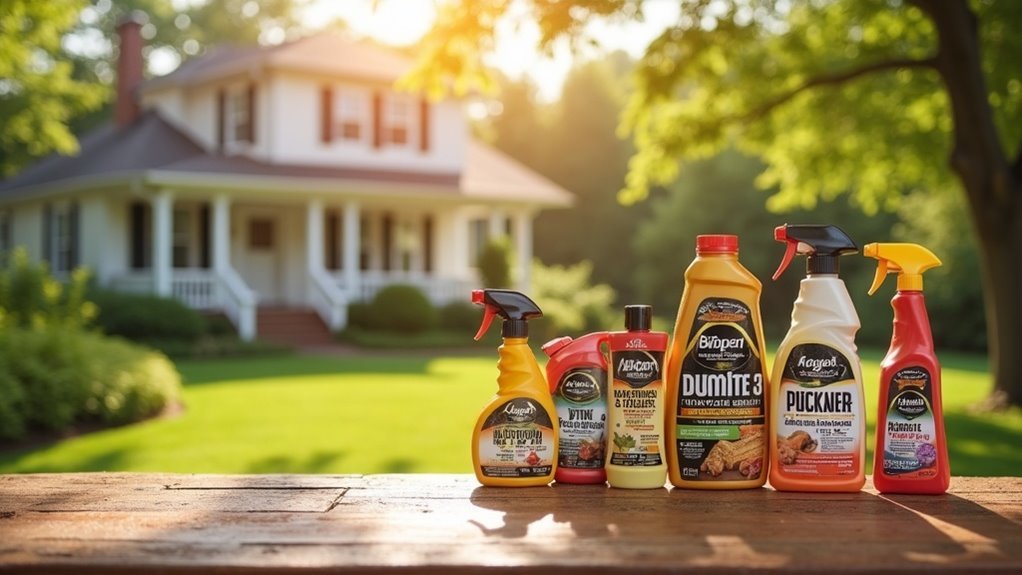
When it comes to preparing your home for potential termite threats in 2025, it’s crucial to have effective strategies in place.
Consider using Bifenthrin-Plus-C Insecticide for versatile pest control both indoors and outdoors, ensuring your living space remains protected.
Spectracide Terminate is an excellent choice for combating wood-destroying insects, providing you with peace of mind.
For ease of application, BioAdvanced Termite Killer Granules can be a valuable asset in your pest management toolkit.
Additionally, Spectracide Detection Stakes can help you monitor for infestations, allowing you to take action before damage occurs.
Don’t overlook BASF Termidor Foam for precise treatment of affected areas.
By selecting the right products and strategies, you can safeguard your home against termite destruction, ensuring a resilient and prepared living environment.
Keep researching and exploring more effective solutions to bolster your defenses!
Bifenthrin-Plus-C Insecticide (96 oz) – Roach Killer, Termite Treatment, Ant Control & Wasp Spray

If you’re looking for a versatile pest control solution that can help you maintain a self-sufficient homestead, Bifenthrin-Plus-C Insecticide (96 oz) is an excellent choice. This powerful liquid formula mixes easily with water, making it suitable for both indoor and outdoor applications, which is crucial for those preparing for any scenario. You can achieve professional-grade results without relying on an exterminator, allowing you to take control of your pest management. Users frequently report significant reductions in pest populations, with some experiencing a drastic drop in roach numbers. Plus, it’s safe for pets and families, although wearing PPE during application is advisable. Overall, it’s an effective and economical choice for thorough pest management in your prepping efforts.
Best For: Preppers and homeowners seeking an effective, versatile pest control solution for termites, roaches, ants, and wasps.
Pros:
- Highly effective in reducing pest populations, with many users reporting significant decreases, essential for maintaining a healthy living environment.
- Simple application process allows for professional-grade pest control without the need for outside help, promoting self-sufficiency.
- Safe for pets and families when used as directed, featuring a low-odor formula that’s suitable for various settings.
Cons:
- Can harm beneficial insects, so caution is necessary when applying in areas vital to pollinators, which is important for those cultivating their own food.
- Some users may face challenges with application techniques or product effectiveness, highlighting the need for proper prep and research.
- May require reapplication for ongoing prevention, particularly in the case of severe infestations, which is a consideration for long-term preparedness.
Spectracide Terminate Termite and Carpenter Ant Killer (1.33 Gallons)
Product not found or API error.
For survivalists and preppers dealing with termites and carpenter ants, the Spectracide Terminate Termite and Carpenter Ant Killer (1.33 Gallons) is an essential tool in your pest management arsenal. This product effectively targets wood-destroying insects on contact, including carpenter bees, which can compromise your emergency supplies and shelter. Its clear formula is non-staining and odorless, making it ideal for both indoor and outdoor applications, ensuring your living space remains undisturbed. Equipped with the AccuShot Sprayer, you can apply it with precision, ensuring thorough coverage in critical areas of your home or bug-out location. With up to nine months of control indoors, it offers reliable protection against these destructive pests, allowing you to focus on your preparedness plans. Be sure to follow the usage instructions for optimal safety and effectiveness, safeguarding your home from wood-destroying threats.
Best For: Preppers looking for a reliable solution to manage termites and carpenter ants in their living spaces and storage areas.
Pros:
- Clear, non-staining formula that leaves no odor, making it suitable for indoor use without attracting attention.
- Includes an AccuShot Sprayer for precise application and maximum coverage in targeted areas.
- Provides up to 9 months of control indoors against wood-destroying insects, critical for maintaining your emergency supplies.
Cons:
- Requires careful adherence to usage instructions for optimal safety and effectiveness, which is critical in a survival situation.
- May not be suitable for outdoor use in areas with heavy rain or moisture, which could diminish its effectiveness.
- Limited to specific pests, so it may not address all insect challenges you may encounter in a prepping scenario.
Spectracide Terminate Termite Detection & Killing Stakes (15 Count)
Product not found or API error.
Spectracide Terminate Termite Detection & Killing Stakes (15 Count) is an essential tool for survivalists and preppers aiming to safeguard their homes from termite infestations. This comprehensive kit includes 15 stakes, locator shields, and a practical digging tool, making installation straightforward even in challenging environments. Position the stakes 2 to 3 feet from your home, ensuring they are spaced no more than 10 feet apart for optimal coverage. The innovative two-in-one design features pop-up indicators that alert you to termite activity while the stakes actively eliminate foraging termites. Regularly monitor the stakes for activity to ensure your home remains fortified against these destructive pests.
Best For: Prepared individuals seeking an efficient and proactive method to detect and eradicate termite infestations.
Pros:
- Simple installation with the included digging tool and clear guidance.
- Dual functionality for both detection and elimination of termites.
- Regular monitoring capability with pop-up indicators for termite activity.
Cons:
- Requires routine checks of stakes to maintain effectiveness.
- Limited to foraging termites; may not resolve issues with established infestations.
- Placement around the home may necessitate digging in hard or rocky soil, which can be challenging in survival scenarios.
BioAdvanced Termite Killer Granules, 9 lb, 200 Linear Feet

BioAdvanced Termite Killer Granules provide a robust solution for survivalists and preppers looking to protect their homes from destructive termite infestations. With coverage extending up to 200 linear feet, these user-friendly granules contain 0.37% Imidacloprid, effectively targeting both visible and hidden termite colonies. Simply sprinkle the granules around your property, water them in, and let them take effect. The built-in applicator ensures efficient distribution around your home’s perimeter, fence posts, and wood storage areas. Many users have reported significant success in eliminating termite threats, making this a highly recommended choice for those focused on home defense. Remember to avoid disturbing the treated area for optimal results and consider annual applications for sustained protection.
Best For: Preppers and homeowners seeking an effective, easy-to-apply solution to safeguard their property against termite infestations.
Pros:
- Simple application with a built-in 6-inch applicator for efficient coverage.
- Effectively exterminates both visible and hidden subterranean termites.
- Highly rated by users, with numerous accounts of successful infestation elimination.
Cons:
- Environmental concerns regarding bee safety may restrict usage in certain regions.
- Requires careful application to prevent runoff into storm drains.
- Annual reapplication may be needed for continuous protection.
BioAdvanced Termite Killer, Granules, 9 LB
Product not found or API error.
If you’re preparing your home for potential pest invasions, the BioAdvanced Termite Killer Granules serve as an effective tool in your arsenal. With 0.05% Beta-Cyfluthrin, this product quickly eliminates termites, ants, and roaches upon contact. Covering an impressive area of up to 4,500 square feet, simply sprinkle the granules, water them in, and let them work for 30 days. While it holds a customer rating of 4.6 stars, it’s essential to note that this product acts as a short-term barrier and should not replace professional pest control services. For optimal results, consider integrating it with other pest management strategies to ensure comprehensive protection for your home.
Best For: Preppers and homeowners looking for a quick and effective measure for termite and pest control in outdoor spaces.
Pros:
- Fast-acting formula that neutralizes a variety of pests on contact.
- Covers a substantial area of up to 4,500 square feet, making it efficient for large properties.
- High customer rating of 4.6 out of 5 stars indicates strong user satisfaction.
Cons:
- Provides only temporary protection (30 days) and may not be sufficient for ongoing termite control.
- Should not be seen as a replacement for professional treatment of subterranean termites.
- Some users may find the application process cumbersome due to the weight and design of the container.
BASF Termidor Foam Termiticide Insecticide (20 oz)

BASF Termidor Foam Termiticide Insecticide (20 oz) is an essential tool for survivalists and preppers looking to protect their homes and resources from termites and other wood-destroying pests. This ready-to-use foam contains fipronil, a potent non-repellent that ensures deep penetration into hard-to-reach areas, expanding 30:1. With its thicker, stronger cell walls, the foam lasts up to six times longer than competitors, providing lasting protection for your shelter and supplies. You can apply it to wall voids, decks, and utility poles, effectively targeting various pests, including termites and carpenter ants. Be sure to follow safety instructions on the label for proper application and disposal to ensure your safety and that of your family.
Best For: Survivalists and preppers aiming to secure their living spaces against termite and wood-destroying pest threats.
Pros:
- Effective formulation with fipronil that penetrates hard-to-reach areas, providing enduring protection for your home.
- Versatile application suitable for various surfaces including wall voids, decks, and utility poles.
- Long-lasting foam that maintains integrity up to six times longer than competing products, crucial for long-term preparedness.
Cons:
- Requires strict adherence to safety instructions for proper application and disposal, which is vital in a survival situation.
- State restrictions may limit availability or usage in certain areas, impacting your preparedness plans.
- May not be suitable for all types of pest infestations, focusing primarily on wood-destroying species, which may require additional pest management strategies.
Spectracide Terminate Termite Killing Foam (16 fl Ounce)
Product not found or API error.
Spectracide Terminate Termite Killing Foam can be a valuable resource for survivalists and preppers facing active termite infestations in their homes. This 16 fl ounce foam spray is designed to kill exposed subterranean, drywood, and dampwood termites on contact, making it an effective tool for immediate pest control. Its non-staining formula allows for safe application in both indoor and outdoor settings, and the included extension tube is ideal for accessing hard-to-reach areas. While this product can help manage infestations, it’s important to note that it is not a long-term solution. Always take precautions—wear gloves during application, and consider consulting a professional for persistent infestations. Overall, it serves as a practical option for addressing localized termite challenges.
Best For: Survivalists and preppers who are dealing with active termite infestations and need a quick, localized treatment solution.
Pros:
- Effectively kills exposed subterranean, drywood, and dampwood termites on contact.
- Non-staining foaming formula suitable for use in various environments.
- Extension tube included for reaching difficult areas.
Cons:
- Mixed reviews on effectiveness; some users have noted that termites may return after a few months.
- Some complaints regarding spray consistency and potential issues during application.
- Not intended for long-term prevention; ongoing infestations may necessitate professional intervention.
Factors to Consider When Choosing Termite Treatment
When you’re preparing for a potential termite invasion, it’s crucial to consider several key factors in your treatment strategy. First, identify the type of termite threatening your preparedness efforts. Next, evaluate the treatment methodology that aligns with your survival needs and the specific areas of your shelter or supplies that require protection. Additionally, research the active ingredients in the treatments and assess their longevity to ensure your defenses remain effective over time.
Type of Termite
Choosing the right termite treatment is essential for anyone focused on survivalism and prepping, especially when it comes to protecting your home and supplies. Understanding the type of termites infesting your space is the first step. There are three main types: subterranean, drywood, and dampwood, each requiring different approaches to effectively combat and prevent infestations.
Subterranean termites live in the soil, making them particularly challenging. To protect your homestead, you’ll need to implement barrier treatments or direct applications to their colonies. For drywood termites, which infest wood directly, consider localized insecticides or fumigation to eliminate entire colonies and safeguard your wooden structures and supplies. Dampwood termites thrive in moist environments, so addressing moisture issues in addition to using targeted insecticides is crucial for long-term prevention.
Identifying the specific type of termite is vital for selecting the most effective treatment method. This knowledge ensures successful elimination and helps maintain a secure environment for your preparations, ultimately enhancing your home’s resilience against infestations.
Treatment Methodology
While you may feel overwhelmed by the variety of termite treatment options available, understanding the factors that influence your choice can simplify the decision-making process, especially in a survivalist context. Treatment methodologies vary widely, including liquid insecticides, granules, foams, and baiting systems, each with its own set of advantages.
Liquid treatments create a chemical barrier in the soil, preventing termites from reaching your home’s wood, which can be crucial in maintaining the integrity of your shelter. Granules can be strategically sprinkled into the soil and activated with water, providing effective protection against subterranean termites that may compromise your food storage or living area.
Foam applications are ideal for hard-to-reach areas, targeting spots that conventional methods can’t, ensuring no hidden entry points are left vulnerable. Meanwhile, baiting systems utilize monitoring stakes to detect termite activity and deploy insecticides that termites carry back to their colony, offering an environmentally friendly solution that aligns with sustainable prepping practices.
Ultimately, in a survivalist scenario, it’s essential to choose the approach that best fits your specific needs and circumstances, ensuring your shelter remains safe and secure from these pests.
Application Area
Understanding the application area for termite treatment is crucial for effectively safeguarding your survival space from infestation. It’s important to distinguish between indoor and outdoor treatments, as each serves specific environments vital for your preparedness. Indoor treatments often focus on areas like wall voids, crawl spaces, and wooden structures where termites are likely to thrive, potentially compromising your supplies and shelter. For outdoor applications, establishing a protective barrier around your homestead’s perimeter is essential, addressing potential entry points in the soil and landscaping that could lead to infestations. Evaluate moisture levels and wood-to-ground contact in your application area, as these factors significantly influence termite activity and can impact your long-term survival strategy. Furthermore, ensure that any treatments are installed at the recommended distances from your dwelling, strategically positioning stakes or barriers to enhance control and detection of termite activity, thereby securing your resources and ensuring your preparedness.
Active Ingredients
When selecting a termite treatment, it is essential to carefully evaluate the active ingredients, as they significantly influence the effectiveness of your defense against infestations in a survival situation. Common options like fipronil, imidacloprid, and beta-cyfluthrin each target different termite behaviors and life stages, making them essential tools for anyone focused on self-sufficiency and preparedness.
Fipronil affects the central nervous system of termites, leading to death upon contact or ingestion, which can swiftly reduce the threat of infestation. Imidacloprid, an insect growth regulator, disrupts the nervous system, making it particularly effective against subterranean termites, a common threat to stored supplies and structures in a survival setting. Meanwhile, beta-cyfluthrin provides a quick knockdown effect and is often utilized in granule form around structures, offering immediate protection.
Additionally, the concentration of these active ingredients plays a crucial role in the treatment’s efficacy and longevity. Higher concentrations generally provide more extended protection against infestations, which is vital for ensuring the integrity of your resources and living spaces in a prepping scenario. Always assess your options carefully to maintain a secure and sustainable environment.
Duration of Effectiveness
When selecting a termite treatment for your survival and prepping needs, it’s crucial to assess how long the chosen method will effectively protect your living space from infestations. The duration of effectiveness can differ significantly; some products provide short-term protection lasting only 30 to 90 days, while others can control termite activity indoors for up to 9 months. Granular treatments may require annual applications for subterranean termites, while foam treatments focus on specific infestations without ensuring long-term prevention. Certain liquid insecticides deliver immediate results but may necessitate reapplication for sustained control. For those prioritizing lasting protection, barrier treatments can establish a continuous defense zone around your home, potentially enduring several months to years depending on environmental factors. Always consult product specifications for recommended reapplication intervals to ensure your home remains fortified against termites, particularly in times of uncertainty.
Safety Considerations
Safety should be a paramount consideration when addressing termite treatments for your home, especially for those invested in survivalism and prepping. Always equip yourself with personal protective equipment (PPE) such as gloves, masks, and goggles to guard against skin irritation and the inhalation of potentially harmful chemicals. Exercise caution, as some treatments can adversely affect beneficial insects, including bees, which are crucial for pollination in your area. Ensure adequate ventilation indoors during and after application to reduce exposure to harmful fumes. Adhere to the manufacturer’s safety guidelines for the storage and disposal of these products to prevent accidental exposure. Finally, be aware of the active ingredients in your chosen treatment, as some may face restrictions in certain states due to safety concerns regarding human health. By taking these precautions, you can effectively protect your home while emphasizing safety in your preparedness efforts.
Environmental Impact
When dealing with termite infestations, it’s crucial to consider the environmental impact of the treatments you select, especially in a survivalist or prepping context. Many pesticides contain active ingredients that can endanger non-target species, including beneficial insects and aquatic life, which are vital to a balanced ecosystem. Improper application can lead to soil and water contamination, making it essential to diligently follow application guidelines to minimize runoff and protect your long-term resource availability.
Be particularly cautious of treatments that may harm pollinators like bees, which play a critical role in food production and ecosystem health. Furthermore, some chemical treatments may leave persistent residues that accumulate over time, potentially compromising your self-sufficiency goals. Exploring organic or less toxic alternatives can help mitigate environmental risks, but ensure these methods are effective for pest control in your specific situation. Your choices not only impact your immediate living environment but also the broader ecosystem that supports survival and sustainability.