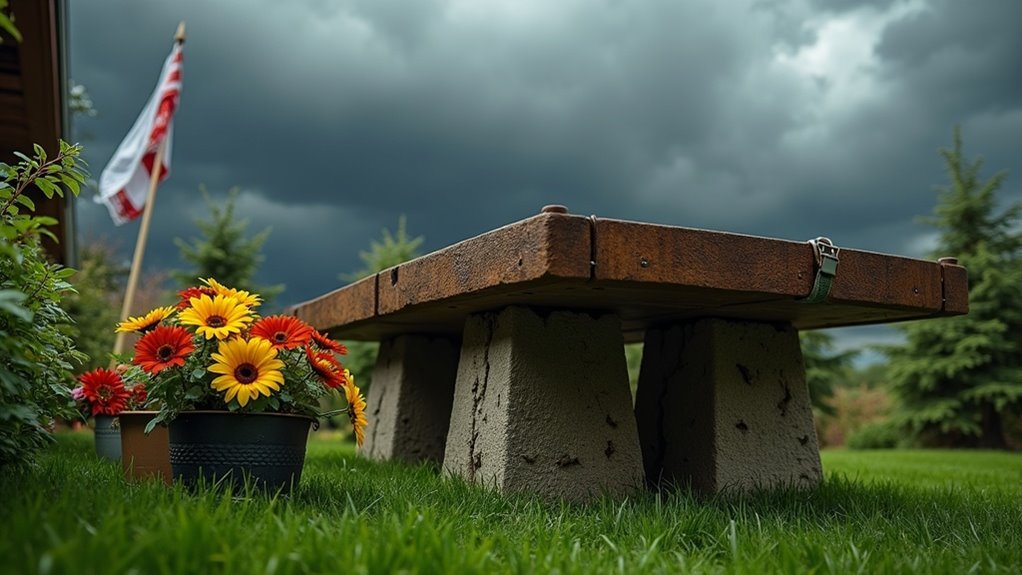
To effectively anchor outdoor items before storms in a survivalist context, begin by assessing your property for areas that are particularly susceptible to high winds. Select a durable anchoring system that matches the weight and structure of your outdoor furniture and gear. Use high tensile strength rope, heavy-duty straps, or stakes to securely tie down these items, ensuring they are fastened to immovable objects like trees or heavy structures. Regularly inspect your anchoring setup for any wear or looseness, and make necessary adjustments. Additionally, bring smaller loose items indoors to prevent them from becoming projectiles. For enhanced protection, consider using weights or tarps to shield your equipment. Taking these precautions is essential for maintaining the integrity of your outdoor space and preparedness for adverse weather conditions.
Key Takeaways
- Assess the size and weight of outdoor items to determine the most effective anchoring systems and methods for survival preparedness.
- Utilize high tensile strength ropes or heavy-duty straps to securely tether furniture to immovable structures, ensuring they won’t become projectiles during severe weather.
- Weigh down lighter items with sandbags or concrete blocks to mitigate the risk of them becoming airborne and causing damage.
- Conduct regular inspections of anchoring setups to ensure their integrity, replacing worn materials promptly after storms to maintain readiness.
- Consolidate lightweight items together to reduce wind exposure and secure them under durable, weather-resistant tarps for added protection.
Identify Wind-Prone Areas in Your Yard
To effectively secure your outdoor items before storms, it’s crucial to identify the wind-prone areas in your yard, especially from a survivalist perspective.
Begin by examining open corners, spots near fences, and areas with limited windbreaks, as these locations are particularly susceptible to high winds. Pay close attention to prevailing wind directions to prioritize these zones for storm preparations.
Low-lying vegetation can exacerbate wind speeds, making it essential to reinforce outdoor furniture in these spots. Conduct a wind test by observing how lightweight objects respond during breezy conditions; this will help you identify areas that require extra attention.
Regularly assess these locations, as seasonal changes in vegetation can shift wind patterns, impacting your preparedness strategy. Staying vigilant in these assessments is key to maintaining the integrity of your outdoor gear and enhancing your overall survival readiness.
Choose the Right Anchoring System
Choosing the right anchoring system is crucial for protecting your outdoor survival gear and supplies from storm damage. Assess the size and weight of your equipment to select appropriate anchoring systems, such as heavy-duty straps, chains, or stakes.
For a reliable hold, use high tensile strength rope, like Solid Braid Polypropylene Utility Rope, which resists rot and is durable in harsh conditions. Anchor larger items, like tables and outdoor storage containers, to permanent structures to prevent them from being lifted or damaged in high winds.
Position sturdy stakes at an angle away from the equipment to minimize movement and secure them firmly in the ground. Regularly check your anchoring system’s integrity, ensuring all ties are tight and free from wear to maintain maximum effectiveness in your preparedness efforts.
Securely Tie Down Outdoor Furniture
To securely tie down your outdoor furniture in preparation for unpredictable weather, begin by selecting robust anchoring systems designed to endure strong winds.
Consider weighing down lighter items with heavy objects or securing them in a sheltered area to enhance stability.
It’s crucial to conduct regular inspections of your anchoring setups to ensure they remain effective during severe storms.
Choose Proper Anchoring Systems
When storms approach, selecting the right anchoring systems for your outdoor furniture is crucial for preventing damage and ensuring stability in your survival preparations.
Heavy-duty straps, cables, or stakes can effectively secure outdoor furniture against strong winds, which is vital for maintaining a safe and functional living space. For larger items like tables and umbrellas, use strong ropes or chains to tie them to permanent structures, guaranteeing they remain stable during severe weather.
Lightweight furniture should be weighed down with sandbags or concrete blocks to minimize the risk of them becoming airborne and posing a threat to your property and safety.
Regularly inspect your anchoring systems for wear or damage to ensure their reliability, and consider using weather-resistant padlocks for added security, especially in areas prone to theft during storms.
Prioritizing these measures is an integral part of your preparedness strategy.
Use Weights for Stability
Securing outdoor furniture with weights is crucial for enhancing stability during storms, especially for lightweight items that can easily be displaced.
Utilizing sandbags or concrete blocks at the base lowers the center of gravity and improves resistance to strong winds. Here are some effective survival strategies:
- Place a single heavy weight on grouped items to minimize their exposure to wind, reducing the risk of them being blown away.
- Use heavy-duty covers secured with weights to protect your gear from rain and movement, ensuring your supplies stay dry and intact.
- Regularly check and adjust weights to maintain their effectiveness, especially before storm seasons.
- Confirm that all weights are securely positioned to prevent them from becoming airborne projectiles during severe weather events.
Regularly Inspect and Maintain
Regular inspections of your outdoor furniture are crucial for ensuring its stability during storms, especially in a survival or prepping context.
Loose components can significantly compromise resilience against high winds, making it vital to check for wobbly legs, bolts, or screws. Reinforce these with additional fasteners or braces to enhance durability.
Securely tie down furniture using high tensile strength ropes to immovable objects like decks or trees, minimizing the risk of displacement during severe weather.
After each storm, inspect your anchoring systems for any damage and promptly replace worn materials to maintain effectiveness. Ensure all ties are tight, as loose connections can fail under extreme conditions, leaving your furniture—and potentially your survival supplies—vulnerable to the elements.
Regular maintenance not only protects your investments but also contributes to your overall preparedness.
Bring Loose Items Indoors
Before a storm hits, it’s crucial to assess the size and weight of your outdoor items to prioritize what needs to be brought indoors for optimal protection.
Start with smaller, lighter objects such as cushions and decorations, as these can easily be blown away or become projectiles, posing a risk to your safety and property.
Once those items are secured, shift your focus to larger, more substantial items to ensure everything is safeguarded effectively.
Being proactive in these preparations is a key aspect of survivalism and prepping, helping to minimize damage and maintain a secure environment during severe weather events.
Assess Item Size
When preparing for an impending storm, it’s essential to assess the size and weight of your outdoor items to determine which ones should be brought indoors for safety and preparedness.
Start with smaller, lighter items that are more likely to be displaced by strong winds and heavy rain. Be sure to move:
- Cushions
- Decorations
- Planters
- Small tables
For larger furniture, if bringing them indoors isn’t feasible, ensure they’re securely anchored with protective covers to minimize damage.
Always conduct a thorough check for any overlooked loose items, as even small objects can become hazardous in severe weather conditions.
Properly securing and storing your outdoor items is a critical step in safeguarding your property and ensuring your preparedness plan is effective when the storm arrives.
Secure Smaller Items
Having assessed the size and weight of your outdoor items, the next step is to secure smaller items by bringing loose pieces indoors.
Start with cushions, planters, and lightweight decorations that can easily become airborne projectiles during storms or emergencies.
Don’t forget to roll up and store patio umbrellas and outdoor rugs, as they’re susceptible to water damage and can hinder your escape route.
Additionally, place smaller outdoor furniture, like patio chairs and tables, in a garage or shed for protection against high winds and to maintain a clear area for potential survival activities.
Regularly check your outdoor space to ensure all loose items are accounted for, minimizing potential hazards and keeping your survival environment safe and prepared.
Use Weights and Sandbags for Stability
To ensure your lightweight outdoor gear remains stable during storms, it’s crucial to incorporate weights and sandbags into your preparedness strategy.
These tools effectively stabilize outdoor equipment, preventing them from being lifted or blown away by strong winds. Here are some tips for using weights and sandbags in your survival setup:
- Utilize at least 10-20 pounds of weight per item to enhance stability.
- Strategically place sandbags around chairs and tables to add resistance against strong gusts.
- Group lightweight items together to minimize their exposure to wind and potential damage.
- Fill sandbags with sand or gravel to create a weather-resistant barrier, ensuring your gear remains secure during inclement weather.
Cover Furniture With Weather-Resistant Tarps
Weather-resistant tarps are a vital tool for survivalists and preppers looking to protect outdoor furniture and gear from harsh weather conditions.
During storms, it’s crucial to safeguard your possessions from rain, wind, and flying debris. Heavy-duty, UV-resistant tarps are designed for durability and can withstand the elements, making them an essential part of your outdoor prep kit.
Safeguard your belongings from storms with heavy-duty, UV-resistant tarps that ensure durability and protection against the elements.
To ensure the tarps stay in place during strong winds, secure them with ropes or bungee cords. For optimal efficiency, consider grouping multiple items together and covering them with a single tarp.
Before storms hit, regularly inspect your tarps for any signs of wear or damage, and replace them as necessary. This proactive approach will help ensure that your outdoor furniture remains protected and retains its longevity, reinforcing your resilience in the face of unpredictable weather.
Trim Nearby Trees and Shrubs
While you may not think much about the trees and shrubs surrounding your outdoor space, they can pose a significant risk during storms, especially when you rely on your preparedness for survival.
To minimize the risk of damage and protect your essential gear, it’s crucial to trim nearby trees and shrubs. Focus on these key actions:
- Prune overhanging branches that could fall during high winds, as they can damage your shelter or supplies.
- Remove dead or weakened parts that are more likely to break and become hazards.
- Inspect trees near your survival areas, such as food storage or emergency exits, for vulnerability.
- Maintain healthy tree care practices to reduce storm-related hazards that could disrupt your preparedness efforts.
Taking these steps not only ensures a safer environment but also enhances the overall resilience of your survival landscape.
Test Your Anchoring Setup Before the Storm
After ensuring your outdoor space is clear of potential hazards like overhanging branches, it’s crucial to focus on your anchoring setup. Test the strength of your anchors by applying pressure to your items. This not only guarantees stability but also helps prevent valuable gear from becoming projectiles during severe weather. Regularly check the tension of your anchors and practice securing them to bolster your preparedness against strong winds. Document any adjustments or issues encountered to enhance your setup for future storms and ensure your survival gear remains intact.
| Task | Purpose |
|---|---|
| Inspect straps and ropes | Verify no wear or damage |
| Apply pressure to items | Test anchor strength |
| Check tension regularly | Secure against powerful wind gusts |
| Document adjustments | Improve future setups and readiness |