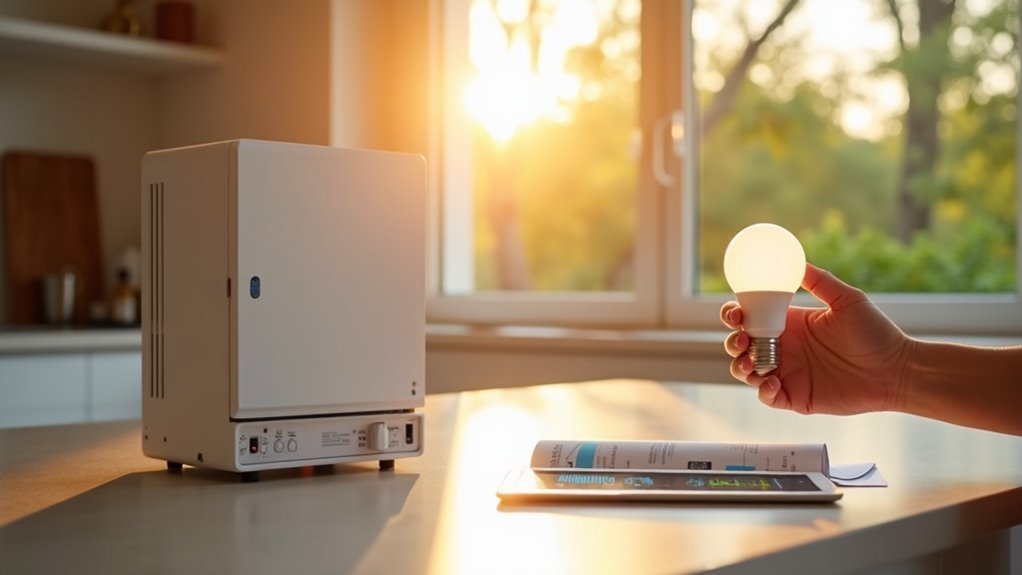
To choose an inverter for home use, especially in a survival or prepping context, begin by assessing your energy needs and calculating the total wattage of essential appliances that you rely on during emergencies. It’s crucial to include a safety margin of 20-25% to accommodate surge requirements, which can occur when devices are first powered on.
Next, determine the appropriate type and number of batteries based on your daily watt-hour requirements, ensuring that your backup power system can sustain you during extended outages. Select an inverter size that exceeds your total wattage needs, but also consider the sensitivity of your devices, as some electronics require a pure sine wave output for optimal performance.
Additionally, look for features like multiple outlets for efficient operation and portability, as these can enhance your preparedness. Understanding these factors will enable you to make informed choices as you prepare for various scenarios that may arise.
Key Takeaways
- Calculate the total wattage of essential survival appliances, taking into account surge capacity and adding a 20-25% safety margin to ensure your inverter can handle unexpected demands.
- Opt for a pure sine wave inverter, as it provides safe operation for sensitive electronics vital for prepping, ensuring compatibility with all your critical devices.
- Assess the inverter’s continuous output rating to ensure it exceeds your total wattage calculations, including the peak startup requirements of essential appliances like refrigerators and medical equipment.
- Consider inverter/charger combinations that ensure an uninterrupted power supply during emergencies, providing automatic switching features for seamless operation when the grid goes down.
- Look for inverters with multiple outlets and USB ports to accommodate various devices, along with effective cooling mechanisms to maintain performance during extended use in critical situations.
Understanding Your Home’s Energy Needs
How do you accurately assess your home’s energy needs for survival and prepping?
Start by compiling a list of all electrical appliances you rely on, noting their wattage from labels or manuals. Calculate the total wattage by multiplying each appliance’s wattage by daily usage hours.
Compile a list of your essential electrical appliances, noting their wattage and calculating total daily usage for accurate energy assessment.
Be vigilant about peak wattage, especially for critical devices like refrigerators or air conditioners, which may require double their running wattage during startup.
To ensure your energy supply is reliable in times of uncertainty, incorporate a safety margin of 20-25% over your total wattage.
This thorough assessment allows you to choose an inverter with a continuous output rating that exceeds these calculations, ensuring your household has sufficient power to meet its energy demands during emergencies.
Calculating the Total Wattage of Your Home’s Devices
Once you’ve assessed your preparedness needs, calculating the total wattage of your devices is the next crucial step.
Start by listing all essential appliances and their wattages, checking labels or manuals for accurate information. Multiply each appliance’s wattage by its daily usage in hours to determine daily consumption in watt-hours (WH).
Be sure to account for surge capacity, particularly for critical devices like air conditioners that may require double their running wattage during startup.
Finally, add a safety margin of 20-25% to the total wattage to accommodate unexpected surges, ensuring your power supply can handle fluctuations in demand effectively during emergencies.
Determining the Type and Number of Batteries You Will Need
When selecting the type and number of batteries for your off-grid or emergency preparedness system, it’s crucial to evaluate several factors that impact both performance and longevity.
Consider the following:
- Battery chemistries: Choose between lead-acid, lithium-ion, or more advanced technologies based on your specific needs and resources.
- Calculate daily watt-hour requirements: Determine how much energy you’ll need on a daily basis to ensure your battery capacity meets your survival requirements.
- Factor in depth of discharge (DoD): This helps you optimize battery lifespan, allowing for greater reliability during critical situations.
- Assess desired autonomy days: Plan for how many days you want your system to supply power without recharging, ensuring you have sufficient backup during emergencies.
- Use an inverter battery calculator: For accurate estimates of amp-hours (Ah), this tool will help you make informed decisions about battery selection and quantity.
Choosing the Right Inverter Size
Selecting the right inverter size is crucial for ensuring the effectiveness and dependability of your power system, especially in survival and prepping scenarios. To determine the appropriate inverter size, first calculate the total wattage of your essential appliances. Ensure that the inverter’s continuous wattage exceeds this total. It’s also wise to include a safety margin of 20-25% for surge wattage, particularly for devices with significant starting requirements, as these can be vital during emergencies.
| Appliance | Running Wattage | Surge Wattage | Total Wattage |
|---|---|---|---|
| Refrigerator | 200 W | 600 W | 800 W |
| Air Conditioner | 800 W | 1600 W | 2400 W |
| Microwave | 1000 W | 2000 W | 3000 W |
| Laptop | 50 W | 100 W | 150 W |
In prepping for uncertain situations, having the right inverter size can make all the difference in maintaining power for critical appliances.
What Is the Difference Between an Inverter and Inverter/Charger?
What distinguishes an inverter from an inverter/charger in the context of survivalism and prepping? An inverter solely converts low-voltage DC power from batteries into AC power, which is essential for powering various devices.
In contrast, an inverter/charger combines this function with the ability to charge batteries, making it a crucial tool for off-grid living and emergency preparedness.
Here are some key differences:
- Backup power during outages with automatic switching, ensuring you remain powered during critical times.
- Quiet operation, eliminating the disruptive noise of conventional generators—important for stealth during emergencies.
- Ability to connect to AC sources for recharging, allowing for versatility in energy sources when prepping for extended periods without grid access.
- Flexibility for various applications, including medical equipment, which may be vital during a crisis or emergency situation.
- Enhanced functionality through features like automatic transfer switches, facilitating a seamless transition between power sources.
When preparing for unforeseen circumstances, choosing the right system is essential.
If you require reliable, seamless power during outages and want to ensure your survival equipment remains functional, an inverter/charger is typically the better choice for your prepping needs.
Types of Power Inverters
When selecting a power inverter for your survival and prepping needs, you’ll encounter three main types: pure sine wave, modified sine wave, and square wave.
Each type serves different applications that are crucial in a survival scenario. Pure sine wave inverters deliver clean power, making them ideal for sensitive electronics like medical devices or communication equipment that you may rely on during emergencies.
Modified sine wave inverters provide a more economical option, but they come with the risk of inefficiencies, which could be a concern when resources are limited.
Square wave inverters, on the other hand, are generally unsuitable for anything other than basic tools due to their inconsistent output, making them less reliable for prepping purposes.
Choose wisely to ensure you have the right power source for your survival strategy.
Sine Wave Inverters
Sine wave inverters are crucial for survivalists and preppers who need reliable power for sensitive electronics and essential appliances during emergencies or off-grid situations.
These inverters produce a smooth wave of electricity that closely resembles utility power, ensuring your devices operate safely.
When selecting a sine wave inverter for your prepping needs, consider the following:
- Total power requirements of your critical devices
- Compatibility with medical equipment and communication devices
- Efficiency in minimizing energy losses for long-term use
- Capability to support high-performance tools for survival tasks
- Preference for pure sine wave inverters for optimal performance
Choosing the right inverter is vital for guaranteeing dependable sine wave power delivery, protecting your valuable electronics, and effectively meeting both continuous and surge power demands during critical situations.
Modified Sine Wave
Modified sine wave inverters can be a valuable tool for survivalists and preppers looking for a cost-effective solution to power essential appliances during emergencies or off-grid living. While these inverters produce a waveform that approximates a square wave, they work well for basic devices like lights and televisions but may struggle with more sensitive electronics. It is crucial to ensure that the inverter’s output power aligns with the wattage requirements of your survival gear, particularly during peak usage times. Below is a comparison of modified sine wave inverter applications relevant to prepping:
| Application | Efficiency | Suitable Appliances |
|---|---|---|
| Job Site Tools | Moderate | Drills, Saws |
| RV Appliances | Good | Refrigerators, Lights |
| Basic Household Backup | Fair | TVs, Fans |
When preparing for potential power outages or living off the grid, understanding the limitations and applications of modified sine wave inverters can help ensure you have reliable energy for your critical appliances.
Square Wave Inverters
Square wave inverters are the most fundamental form of power inverter technology, providing a straightforward and cost-effective solution for specific survival applications.
However, they aren’t well-suited for sensitive electronics that may be crucial during emergencies. Here’s what you should know for your prepping needs:
- Produce a simple square wave output
- Ideal for powering basic tools with universal motors
- Not recommended for electronic timers or sensitive devices
- May cause motors to run hotter, which could be a concern in critical situations
- Availability is diminishing due to the emergence of more advanced options
While square wave inverters can handle basic power consumption for essential equipment, they pose risks of inefficiency and possible malfunction in more advanced appliances.
Carefully assess your survival needs and the devices you intend to use before opting for this type of inverter for your emergency power supply.
Key Features to Look for When Buying an Inverter
When selecting an inverter for your survival and prepping needs, there are essential features to prioritize for optimal performance.
First, evaluate the capacity in watts; it should exceed the total wattage of your crucial devices, including a safety margin of 20-25% to handle power surges.
Opt for a pure sine wave inverter to ensure safe operation of sensitive electronics and essential appliances.
Look for multiple outlets and USB ports to facilitate versatile charging, as well as GFCI outlets for use in wet or outdoor environments.
If you anticipate frequent outages or need a reliable backup power source, consider an inverter/charger combination for uninterrupted power supply.
Lastly, ensure the inverter has sufficient cooling mechanisms, such as multi-speed fans, to sustain performance during prolonged use, especially in emergency situations.
Why Buy From Eaton?
Choosing Eaton for your inverter needs offers several advantages that can significantly enhance your preparedness and survival strategy. Here’s why you should consider Eaton:
- Industry-leading warranties provide peace of mind during emergencies.
- Responsive customer service ensures your inquiries are addressed promptly, helping you stay informed.
- UL-certified products meet stringent safety standards, crucial for reliable operation in critical situations.
- Versatile inverters offer emergency backup power, outdoor solutions for camping or off-grid living, and renewable energy options to support sustainable prepping efforts.
- Innovative technology guarantees efficiency and compatibility with modern devices, ensuring you’re always ready for any situation.