To choose the right micron rating for filters in a survival or prepping context, assess the size of contaminants in your water supply. If you’re looking to eliminate harmful bacteria and smaller particles that could jeopardize your health during a crisis, opt for filters with lower micron ratings (1-5 microns). These are crucial for ensuring safe drinking water. For visible debris, which may include larger sediment and particulates, higher ratings (25-50 microns) will suffice. Additionally, consider the flow rate of your water source and determine whether you need nominal or absolute filters based on your efficiency needs during emergencies. Regular maintenance is vital; monitor pressure drop and replace filters as necessary to ensure your water supply remains clean and safe. Be prepared for various scenarios by understanding different filter types and their applications.
Key Takeaways
- Evaluate the size of contaminants in your water source to determine the appropriate micron rating for effective filtration, ensuring your survival water supply is safe and clean.
- Choose between nominal and absolute filters based on your specific prepping needs for efficiency and the thorough removal of harmful contaminants.
- Take into account the flow rate requirements of your water supply when selecting a micron rating to ensure your filtration system performs optimally during emergencies.
- Regularly monitor pressure drop to identify potential clogging issues and maintain consistent water flow; replace filters promptly to ensure your survival strategy remains effective.
- Implement a multi-stage filtration system that incorporates different micron ratings for comprehensive particle removal and enhanced filtration efficiency, crucial for sustainable prepping.
Understanding Micron Ratings
When preparing for survival situations, understanding micron ratings in filters is crucial, as they play a significant role in ensuring clean water and air by effectively capturing contaminants.
The micron rating signifies the smallest particle size a filter can trap, with lower ratings providing enhanced filtration efficiency. For instance, a 5-micron filter will eliminate particles that are 5 microns and larger, allowing smaller impurities to pass through.
Filters come in various micron ratings, including nominal filters, which may allow some particles to slip through, and absolute filters, which are designed to retain all specified particles.
The Importance of Micron Size in Filtration
Understanding the significance of micron size in filtration is crucial for survivalists and preppers looking to optimize their water and air purification systems in emergency situations.
The micron rating directly influences your filter’s ability to capture specific contaminants; smaller ratings (1-5 microns) are essential for effectively removing harmful bacteria and fine sediments that can pose health risks, while larger ratings (25-50 microns) are better suited for filtering out visible debris.
For example, a 5-micron filter can capture particles down to its rating, making it imperative to choose a filter size smaller than the contaminants you aim to eliminate.
Additionally, filters rated below 5 microns may clog more quickly, which means regular maintenance is essential to ensure consistent flow rates and to maintain high-quality water.
Types of Micron Filters
When selecting micron filters for your survival and prepping needs, understanding the various types available is essential for optimizing performance in your specific applications.
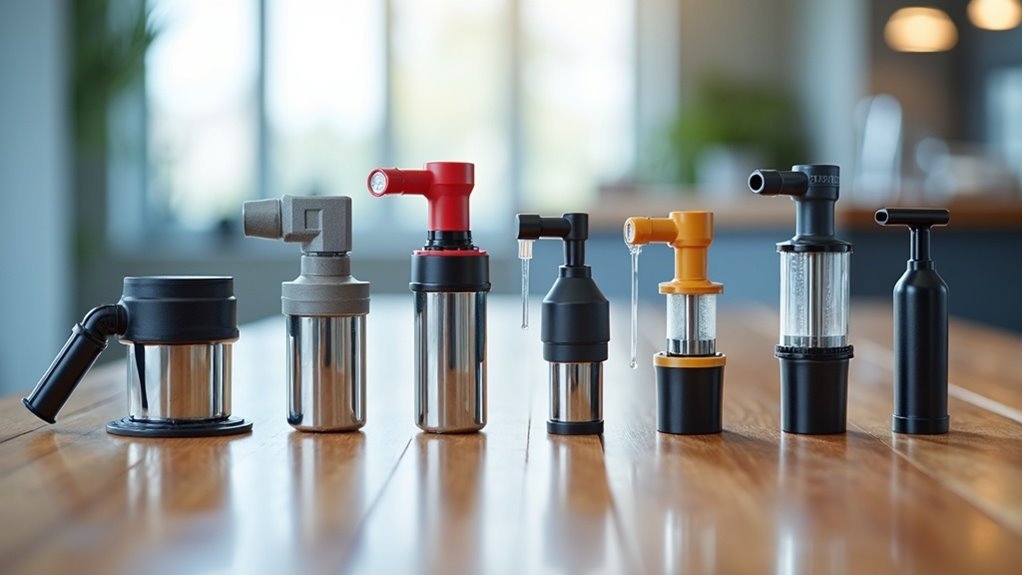
Each filter type—pleated, melt-blown, string-wound, bag, and spin-down—offers distinct advantages tailored to different filtration needs and particle sizes, which can be crucial in emergency situations or when sourcing water from natural resources.
Filter Types Overview
Micron filters are crucial tools in survivalism and prepping, as they effectively capture contaminants based on size and flow rate, ensuring access to clean water.
Key filter types include pleated filters, which provide a larger surface area for higher flow rates and longer lifespan—essential for emergency situations.
Melt-blown filters, made from thermally bonded fibers, excel in dirt-holding capacity, making them ideal for water purification in survival scenarios.
String-wound filters, constructed from twisted fiber strands, are versatile and efficiently trap larger particles, ensuring safe drinking water.
Lastly, bag filters are designed for filtering large volumes, capable of handling significant debris loads, which is vital in industrial and survival settings where filtration efficiency is critical.
Understanding these options helps you choose the right micron ratings for your prepping needs.
Applications of Filters
Selecting the right micron filter for survival and prepping applications requires an understanding of their specific capabilities and limitations. Micron ratings play a crucial role in determining the effectiveness of your water filtration systems.
For instance, 5-micron filters are ideal for filtering out silt and bacteria in emergency food and water supplies, but they can clog quickly under heavy use. In comparison, 10-micron filters are better suited for larger debris in industrial contexts, though they may not effectively remove harmful microbes.
A 25-micron filter can capture particles larger than a white blood cell, reducing the chances of clogging, while 50-micron filters are effective at eliminating visible debris across various survival scenarios.
When preparing for emergencies, it’s essential to consider your specific needs and select the appropriate filter bags to ensure optimal performance of your water filtration system.
Selecting Filter Materials
Choosing the right filter material is essential for optimizing filtration performance, especially in survival situations where clean water and air are critical.
Understanding the types of filter materials available can greatly enhance your preparedness efforts. Here are four common types relevant to survivalism:
- Pleated filters: These filters provide a larger surface area, allowing for higher dirt-holding capacity, making them useful for filtering water from natural sources.
- Melt-blown filters: Made from thermally bonded fibers, these filters are ideal for fine filtration, ensuring that even the smallest contaminants are removed from your water supply.
- String-wound filters: Featuring twisted fibers around a core, these filters effectively remove larger particles, making them a great choice for pre-filtration before more delicate systems.
- Bag filters: Versatile and capable of handling high flow rates, bag filters can accommodate various micron ratings, making them suitable for different survival scenarios.
Selecting the appropriate filter material guarantees you meet specific particle size and flow rate requirements, ensuring that you’re prepared for any emergency situation.
How to Select the Right Micron Rating
When selecting the right micron rating for your survival and prepping needs, start by evaluating the size of the contaminants you need to filter out, ensuring your chosen filter can effectively capture harmful particles like bacteria, protozoa, and sediment.
Next, consider your water supply’s flow rate requirements, as finer filters may impede performance and lead to quicker clogging, especially in emergency situations.
Finally, review industry standards and guidelines for water filtration to confirm compliance and ensure optimal filtration performance tailored to your specific survival scenarios.
Assess Particle Size
Understanding particle size is crucial for survivalists and preppers when selecting the appropriate micron rating for water filters. Proper filtration can mean the difference between clean, safe water and potential illness. Here are some key points to consider:
- Identify contaminant size: Know the particle sizes present in your water source that need filtration.
- Common micron ratings: A 5-micron filter is effective for capturing silt and bacteria, while a 50-micron filter can remove larger debris, which is essential for maintaining clean water in emergency situations.
- Smaller particles: For filtering out pathogens, opt for a 1-micron filter; a 10-micron filter is suitable for larger dirt particles.
- Filtration needs: Align the micron rating with the specific contaminants in your water supply. For particles smaller than 10 microns, choose a filter rated at 5 microns or lower to ensure effective filtration for survival scenarios.
This preparation can help safeguard your health and ensure access to safe drinking water when it matters most.
Consider Flow Rate
Selecting the right micron rating for water filtration in a survival situation involves balancing effective filtration with maintaining an adequate flow rate. While finer filters offer superior removal of harmful particles, they can clog quickly, leading to increased pressure drops and reduced flow rates—critical factors when clean water is essential for survival.
If high flow rates are crucial, using coarser filters (like 50 microns) can effectively capture larger debris, although they may not remove smaller contaminants. It’s important to monitor pressure drops across your filtration system; significant increases can indicate clogging, which requires immediate maintenance.
For optimal performance in prepping scenarios, consider a multi-stage filtration system that combines both coarse and fine filters. This approach ensures robust particle removal while preserving flow efficiency, essential for sustaining life in emergency situations.
Evaluate Industry Standards
To effectively evaluate industry standards for selecting the right micron rating in the context of survivalism and prepping, you must first identify the specific contaminants you might encounter in emergency situations.
Consider these key factors:
- Contaminant Types: Understand if you need to filter out silt, bacteria, or parasites that could pose health risks during a crisis.
- Industry Compliance: While certain sectors, like food and beverage, have mandated micron ratings, in survival situations, it’s crucial to ensure your filters meet safety standards for potable water.
- Filtration Types: Decide between nominal (60-98% efficiency) and absolute (100% efficiency) filters, depending on your specific needs and the quality of the water source.
- Maintenance Implications: Remember, lower micron ratings require more frequent replacements, which can impact your preparedness resources and operational readiness.
Balancing these factors ensures that you’re well-equipped to meet your filtration needs, enhancing your survival capabilities in challenging situations.
Nominal Vs Absolute Micron Filters
How well do you understand the differences between nominal and absolute micron filters in the context of survivalism and prepping?
Nominal filters capture 60-98% of particles at a specified micron rating, allowing smaller contaminants to pass, which can vary based on concentration. While these filters may suffice for basic water filtration during emergencies, they mightn’t provide the level of safety you need in critical situations.
On the other hand, absolute filters guarantee 100% particle retention at that same micron size under defined conditions, making them essential for ensuring clean drinking water in high-purity scenarios like wilderness survival or long-term preparedness.
When preparing for potential disasters, your choice of filter should align with your specific needs, taking into account operational conditions and the types of contaminants you might encounter to optimize your survival strategy and ensure safety.
Impact of Pressure Drop on Filter Performance
While you might prioritize micron ratings when choosing filters for your survival gear, understanding the impact of pressure drop on filter performance is equally essential for effective prepping. A higher pressure drop can indicate clogging issues, which can compromise your filtration system’s efficiency when you need it most.
Key points to contemplate include:
Consider the pressure drop in filters; it’s crucial for maintaining effective water flow during emergencies.
- Pressure drop measures resistance between the inlet and outlet, crucial for assessing filter effectiveness in emergency situations.
- Increased debris accumulation raises pressure drop, leading to reduced flow rates—something to consider during a crisis when water supply is critical.
- Fine filters (≤5 microns) tend to clog faster than coarser filters, so choose based on your environment and potential contaminants.
- Regularly monitoring pressure drop can prompt timely filter replacement, ensuring you’re always prepared with clean water.
Staying aware of these factors can make a significant difference in your survival preparations.
Common Applications for Different Micron Ratings
Understanding the specific applications for different micron ratings is crucial when selecting filters for survival situations and prepping.
1 Micron Filters** are essential for eliminating bacteria and parasites, making them ideal for emergency water purification**.
5 Micron Filters are useful for ensuring safe drinking water in the food and beverage sector, effectively removing silt and mold.
In industrial or off-grid settings, 10 Micron Filters capture larger dirt particles that could compromise water quality, while 25 Micron Filters are effective at targeting sediment in chemical processing or when filtering water from natural sources.
Ultimately, 50 Micron Filters are perfect for general-purpose filtration, efficiently capturing visible debris without significant clogging.
Each rating offers unique benefits tailored to specific survival needs, ensuring maximum filtration performance for those prepared for any situation.
Maintenance and Replacement of Filters
Selecting the right micron rating for your filters is just the beginning; maintaining their effectiveness is crucial for survival situations.
To ensure optimal performance of your filtration system, follow these essential maintenance guidelines:
- Regularly monitor pressure drop; this is a key indicator of clogging levels that can compromise water safety.
- Replace filters when the pressure drop exceeds 10-15 psi to ensure you maintain filtration efficiency and access to clean water.
- Consider implementing a multi-stage filtration system to extend the lifespan of individual filters, which can be vital in emergency scenarios.
- Establish a maintenance schedule based on your water usage and local water quality to ensure timely filter replacements, keeping your preparedness plans intact.