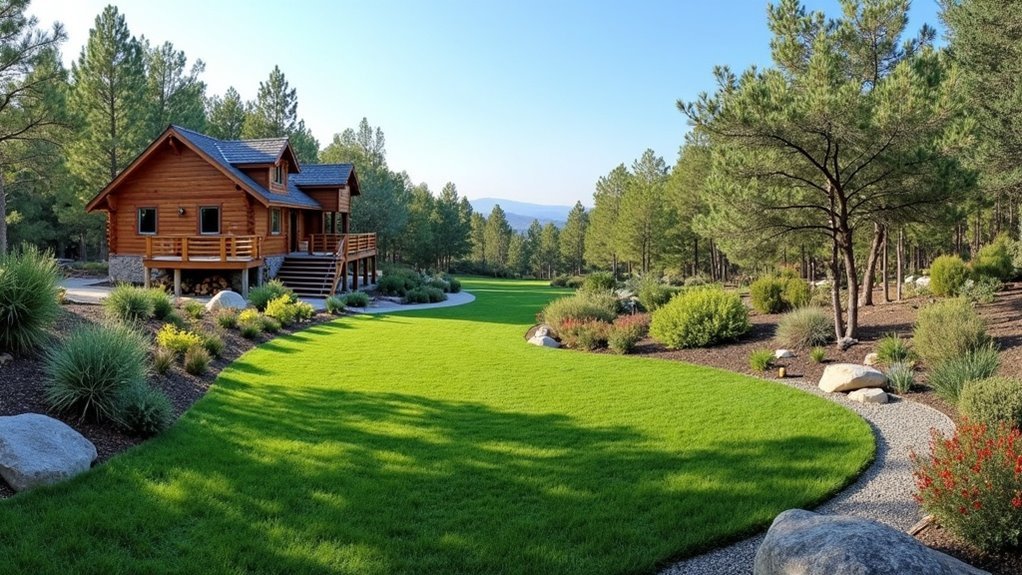
To create a robust defensible space around your homestead, begin by eliminating flammable materials in the immediate zone (0-5 feet) and implementing non-combustible landscaping elements. In the intermediate zone (5-30 feet), maintain grass at a maximum height of 4 inches and regularly prune trees to minimize fuel that could feed a wildfire. In the extended zone (30-100 feet), systematically remove dead vegetation and ensure adequate spacing between trees to reduce fire spread potential. Additionally, it’s crucial to maintain clear access routes for emergency responders, as this can be vital during a wildfire crisis. By following these strategies, you can enhance your preparedness for wildfires and bolster the safety of your survival retreat.
Key Takeaways
- Create a defensible space by establishing a buffer zone of up to 100 feet around your home. This includes immediate, intermediate, and extended zones to bolster your wildfire defense strategy.
- In the immediate zone (0-5 feet), utilize non-combustible materials and eliminate all flammable items to safeguard against ignition from embers, a crucial step for survival preparedness.
- For the intermediate zone (5-30 feet), regularly mow grass to a height of 4 inches and prune trees to reduce available fuel, ensuring that your property remains defensible in the event of a wildfire.
- In the extended zone (30-100 feet), clear away dead vegetation and maintain proper tree spacing to minimize the potential for fire spread, enhancing the safety of your homestead.
- Improve access for emergency responders by keeping clear lanes, ensuring visible signage, and making sure roads are accessible for large fire trucks, which is essential for effective response in emergency situations.
Your Home’s Wildfire Safety Buffer
Creating a defensible space around your home is vital for ensuring safety from wildfires, especially for those who prioritize survivalism and preparedness. This essential buffer zone extends up to 100 feet and encompasses your home ignition zone.
The immediate area (0-5 feet) must be constructed as a non-combustible zone, free from any flammable materials that could easily ignite. Beyond this proximity, it’s crucial to manage vegetation in both the intermediate (5-30 feet) and extended zones (30-100 feet) to significantly reduce potential fire fuel.
Remove any firewood piles and aim to establish a lean, clean, and green landscape, thereby minimizing the risk of ignition from embers carried by the wind. Effectively managing your defensible space not only enhances safety but also contributes to a more appealing and practical property for those invested in survivalism and emergency preparedness.
About Defensible Space Zones
Understanding the three defensible space zones is crucial for improving your home’s wildfire safety as part of your broader survivalism and prepping strategy.
Each zone has specific vegetation management guidelines aimed at effectively reducing fire risk.
Zone Overview and Importance
When it comes to preparing your home for wildfires, understanding the three distinct zones of defensible space is essential for survivalists and preppers.
The Immediate Zone (0-5 feet) requires rigorous vegetation management, focusing on ember-resistant measures to shield your home from potential fire threats.
In the Intermediate Zone (5-30 feet), it’s crucial to maintain a ‘lean, clean, and green’ landscape to reduce the presence of flammable materials that could fuel a fire.
The Extended Zone (30-100 feet) calls for significant efforts to lower fuel loads by clearing dead vegetation and ensuring there’s adequate spacing between taller trees.
Grasping these zones and their specific guidelines is vital for crafting an effective defensible space, significantly bolstering your home’s defenses against wildfires and enhancing your overall preparedness strategy.
Vegetation Management Guidelines
Effective vegetation management is essential for survivalism and prepping, especially in creating a defensible space around your home. Each zone has specific guidelines to enhance safety against wildfires, which are crucial for those preparing for emergencies.
| Zone | Guidelines |
|---|---|
| Immediate Zone | Clear flammable materials and utilize non-combustible landscaping to minimize fire risk. |
| Intermediate Zone | Adopt a “lean, clean, and green” strategy; mow grass to a height of 4 inches and prune trees to limit fire fuel. |
| Extended Zone | Remove all dead vegetation and ensure proper spacing between trees to reduce fire spread. |
| Spacing | Increase horizontal clearance for larger plants on slopes to prevent fire escalation. |
| Goal | Establish a defensible space that can effectively slow or stop wildfires, enhancing your preparedness for emergencies. |
Defensible Zone Guide
In the Defensible Zone Guide for survivalism and prepping, you’ll focus on two critical areas: Zone 0 and Zone 1.
Zone 0 emphasizes the importance of using non-combustible materials and ensuring that roofs and gutters are kept clean to prevent ember ignition during wildfires.
Meanwhile, Zone 1 promotes a ‘lean, clean, and green’ approach by maintaining your landscape, including proper tree spacing and the removal of potential fuel sources, to minimize fire risks and enhance your overall preparedness.
Zone 0 Guidelines
Creating a defensible space around your home is crucial for survivalism and prepping, starting with Zone 0, which extends 0-5 feet from your structure.
This Immediate Zone must consist of non-combustible materials and be free of flammable items to prevent fire ignition, a key aspect of preparedness. Regularly clean roofs and gutters to eliminate debris that could ignite from embers, ensuring your home remains secure.
Repair loose or missing shingles and make sure window screens are intact to block ember infiltration. Additionally, install 1/8 inch metal mesh screening over vents to reduce the risk of embers entering your home.
Remove flammable materials from exterior walls and under decks to maintain a safe buffer against wildfires, enhancing your overall survival strategy.
Zone 1 Practices
Zone 1 extends from 5 to 30 feet around your home and focuses on maintaining a “lean, clean, and green” landscape to mitigate fire risks.
In the context of survivalism and prepping, enhancing your defensible space is crucial for protecting your homestead.
Consider these practices:
- Prune trees up to 6 feet from the ground to eliminate ladder fuels that could carry fire to higher branches.
- Mow lawns to a height of four inches to improve fire resistance and create a manageable area.
- Clear any flammable plants around propane tanks and outbuildings to prevent potential ignition sources.
- Establish fuel breaks using non-flammable materials like driveways or patios to slow the spread of fire.
- Regularly remove dead plant material and ensure fire hydrants are accessible for quick response in case of an emergency.
Implementing these steps is essential for effective fire defense in Zone 1, enhancing your preparedness and safety in the face of potential threats.
Immediate Zone
The Immediate Zone, extending from 0 to 5 feet around your home, is a critical area that requires diligent preparation and maintenance to ensure your safety against wildfires.
This zone should be established as a non-combustible space, eliminating flammable materials such as mulch and firewood.
Regularly inspect and clean your roof and gutters to remove any debris that could ignite from embers. Ensure that any loose or missing shingles are repaired promptly, and consider installing 1/8 inch metal mesh screening on vents to prevent ember intrusion.
Additionally, check that damaged window screens and broken windows are repaired or replaced, as these measures significantly enhance your home’s defense against wildfires.
Intermediate Zone
While preparing your property for potential emergencies, focusing on the Intermediate Zone—extending 5 to 30 feet from your home—is crucial for creating a defensible space against wildfires.
Here are some essential actions to take:
- Prune trees up to 6 feet from the ground to eliminate ladder fuels, reducing the risk of fire spreading to taller vegetation.
- Keep grass mowed to a height of four inches to minimize fire hazards and prevent rapid fire spread.
- Create effective fuel breaks using driveways, patios, or flower beds to disrupt fire progression.
- Clear vegetation around propane tanks and outbuildings to protect these critical resources from fire exposure.
- Maintain proper spacing between vegetation under trees to reduce the likelihood of fire jumping from plant to plant.
Implementing these strategies will significantly enhance your property’s resilience against wildfires and contribute to your overall preparedness in the face of potential emergencies.
Extended Zone
Creating a defensible space in the Extended Zone, which spans 30 to 100 feet (and sometimes up to 200 feet) from your home, is crucial for enhancing your survival capabilities and protecting your property from wildfires.
This zone serves as a barrier to disrupt a fire’s advance and shield your home from intense flames. Start by clearing away dead or decaying plant materials and heavy ground litter to eliminate potential ignition sources.
Proper spacing between trees is also essential, as it prevents fire from easily spreading from one tree to another.
For personalized vegetation management strategies in the Extended Zone, consider consulting local forestry experts to bolster your home’s fire resilience and overall preparedness.
Improving Access for Emergency Responders
Ensuring that your property is accessible to emergency responders during a wildfire is crucial for effective fire management and overall safety.
Here are essential steps to enhance access:
- Maintain clear access lanes that are at least 20 feet wide to accommodate larger fire trucks.
- Install clear and visible signage to assist emergency responders in navigating your property quickly.
- Design and maintain turnaround areas for dead-end streets and long driveways to facilitate easy maneuvering.
- Ensure that all roads and driveways can support a load capacity of at least 75,000 pounds for heavy emergency vehicles.
- Clear away obstacles such as low-hanging branches and debris to ensure unimpeded access.
Implementing these measures not only improves safety but also significantly enhances response time during wildfire events, which is vital for survival in emergency situations.
Fire-Smart Landscaping
Access improvements for emergency responders lay the groundwork for effective wildfire management, but safeguarding your landscape is equally crucial for survivalists and preppers.
Fire-smart landscaping focuses on selecting fire-resistant plants that are drought-tolerant, low in resin, and rich in moisture content to sustain life during dry spells. Regular upkeep, such as pruning and clearing debris, is vital to eliminate potential ignition sources and enhance your preparedness.
Proper spacing of plants—both horizontally and vertically—can help slow fire spread, particularly on slopes, which is essential for creating a defensible position. Integrating hardscape elements like gravel pathways or patios serves as effective fuel breaks, bolstering your defensive space.