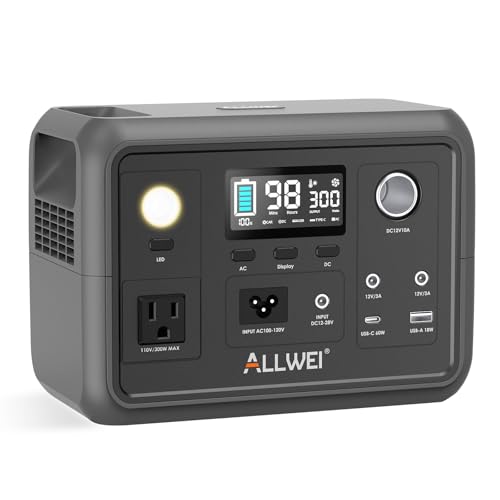
To estimate your appliance wattage needs for survival preparedness, start by checking the data plates for running and surge watts. Use the formula Watts = Amps x Volts if needed. A wattage meter can provide accurate real-time measurements, which is essential for ensuring your backup power systems can handle your needs. Prioritize identifying essential appliances for your survival setup and calculations, such as refrigeration, lighting, and communication devices. Sum total daily usage values for a monthly forecast to ensure you can stockpile enough fuel or energy sources. Understanding these wattage estimates is vital for effective energy management in a survival scenario. Continue on to discover more about maximizing energy efficiency and reducing consumption to enhance your preparedness.
Key Takeaways
- Check the appliance data plate for wattage, amps, and volts to determine the power requirements essential for your survival setup.
- Use the formula Watts = Amps x Volts to calculate wattage if it’s not directly listed, ensuring you have a clear understanding of your energy needs.
- Utilize a wattage meter for real-time measurement of power consumption, helping you monitor energy usage in critical situations.
- Distinguish between running watts and surge watts for essential appliances like refrigerators and generators, as this knowledge is crucial for efficient energy management during emergencies.
- Input the watt ratings, quantity, and daily runtime into an appliance wattage calculator to obtain accurate estimates, aiding in your preparedness planning.
Understanding Appliance Wattage
Understanding appliance wattage is crucial for effective energy management in a survivalist context, as it directly influences your electricity costs and the readiness of your devices during emergencies.
Appliance wattage measures the electrical power required, which is typically found on a label on the unit. For example, a refrigerator may use around 500 running watts, while a water heater can consume about 4,000 watts.
Appliance wattage indicates the electrical power needed, with labels on units revealing critical information for energy management.
It’s essential to distinguish between running watts and surge watts, especially for motorized appliances, as this knowledge can help you prepare for power outages or resource scarcity.
By applying the formula Watts = Amps x Volts, you can calculate wattage when it’s not listed, enabling you to monitor usage and identify high-consumption devices.
This awareness allows for improved energy management, ensuring that you have the power needed for essential appliances during critical times.
Methods for Calculating Wattage
To calculate the wattage of an appliance while prepping for survival situations, begin by checking the data plate for specifics on watts, amps, and volts.
If this information isn’t available, you can determine the wattage by multiplying the amps by the volts.
Additionally, using a wattage meter can help you measure the actual power consumption of your devices, offering more precise results.
This knowledge is crucial for managing energy resources effectively in a survival scenario.
Appliance Data Plate Method
The appliance data plate serves as a crucial tool for survivalists and preppers in determining wattage needs for essential devices. Typically found on the back or bottom of the appliance, it provides vital information about electricity consumption that can be critical in off-grid situations or during emergencies.
Key details to look for include:
- Wattage (if listed)
- Amps and volts (to calculate wattage)
- Running watts (energy required for operation)
- Surge watts (energy needed to start)
If wattage isn’t directly specified, it can be calculated using the formula: Watts = Amps x Volts.
Keep in mind that appliance wattage can fluctuate based on age and settings, so it’s wise to regularly check the data plate for the most accurate and up-to-date information.
Being aware of these details can help ensure that your power management strategies are effective during critical times.
Wattage Meter Usage
How can you accurately assess your appliances’ wattage needs for your survivalist preparations? A wattage meter is an invaluable tool for this purpose.
Simply plug it into an outlet, then connect your appliance to the meter. It will provide real-time readings in watts, kilowatts, and kilowatt-hours, offering you a clear understanding of both immediate and total energy consumption.
This is particularly important for identifying running and surge watts in essential devices like refrigerators and generators, which are vital for long-term preparedness.
Many wattage meters also allow for cost estimation based on local electricity rates, assisting you in budgeting for your off-grid energy needs.
Just ensure that the meter’s rating exceeds your appliance’s maximum wattage to avoid any mishaps.
Importance of Wattage Estimation
Understanding the wattage needs of your appliances is crucial for survivalists and preppers, as it directly impacts your choice of generator and overall energy management during emergencies.
Accurate wattage estimation enables you to assess your electricity consumption, which can lead to significant savings and improved preparedness. Consider the following points:
Accurate wattage estimation helps you evaluate electricity use, driving savings and enhancing your preparedness for emergencies.
- Ensures your generator can handle both running and surge watts, vital for sustaining operations during a power outage.
- Aids in comprehending monthly energy bills and consumption patterns, allowing for better budgeting and resource allocation.
- Promotes efficient energy management, helping you develop proactive cost-reduction strategies that are essential in times of crisis.
- Encourages informed choices about energy-efficient appliances, contributing to a sustainable and self-reliant lifestyle in your prepping efforts.
Using the Appliance Wattage Calculator
To effectively utilize the Appliance Wattage Calculator in the context of survivalism and prepping, begin by selecting the essential appliances you plan to include in your emergency setup.
Next, input the power ratings in watts for each appliance, as well as the quantity and daily runtime you expect during a crisis.
This information will help you calculate accurate estimates of your energy consumption and costs, ensuring you’re well-prepared for any situation.
Selecting Appliances for Calculation
When utilizing the Appliance Wattage Calculator, it’s crucial to select the right appliances from the provided list to ensure accurate energy consumption estimates for your survival and prepping needs.
To effectively evaluate your power consumption during emergencies or extended off-grid living, keep the following in mind:
- Check the boxes next to each appliance you rely on for self-sufficiency.
- Input the power rating (in watts) for each selected device to understand their energy demands.
- Specify the quantity of each appliance you have on hand to prepare adequately.
- Fill in the daily runtime to estimate your operational hours during critical situations.
This careful assessment will help you plan for energy needs and ensure you’re well-prepared for any scenario.
Inputting Power Ratings
Selecting the right appliances is just the beginning; accurately inputting their power ratings is crucial for evaluating your energy needs, especially when preparing for emergencies or self-sufficiency. First, locate the power rating in watts—often found on the appliance’s back or bottom. Input the quantity used, daily runtime, and unit electricity cost to assess total power consumption. Keep in mind that actual wattage can vary based on age and settings, so adjust as necessary for precision in your energy planning.
| Appliance | Power Rating (Watts) |
|---|---|
| Refrigerator | 150 |
| Microwave | 1000 |
| Washing Machine | 500 |
| Dishwasher | 1200 |
| Air Conditioner | 2000 |
In survival scenarios, understanding your power needs ensures you have the necessary resources to sustain your household.
Calculating Daily Usage
Calculating daily electricity usage for your survival and prepping needs becomes straightforward once you understand how to utilize the Appliance Wattage Calculator effectively.
Follow these steps for accurate estimations to ensure you maintain your energy independence:
- Identify the essential appliances you rely on for survival and input their watt ratings.
- Specify the quantity of each appliance in your prepper inventory.
- Determine the daily runtime in hours for each appliance based on your expected usage during emergencies.
- Multiply the watt rating by daily runtime, then divide by 1000 to convert to kilowatt-hours (kWh).
After calculating daily usage for all your critical appliances, sum the values for total daily consumption.
To estimate monthly usage, multiply this total by the number of days in a month, then use your electricity cost to forecast your monthly bill, allowing you to budget effectively for your preparedness efforts.
Examples of Appliance Wattage
Understanding the wattage needs of various appliances is crucial for survivalists and preppers who aim to manage energy consumption effectively during emergencies.
For instance, a water heater can consume about 4 kWh daily, operating at 4000 watts for one hour, which may be essential for sanitation and hygiene in a survival situation.
A ceiling fan, using around 0.6 kWh per day while running at 75 watts for 8 hours, can help maintain airflow in a shelter.
An ENERGY STAR-rated refrigerator may consume between 28 to 50 kWh monthly, costing you $4.23 to $7.55, but having a reliable source of refrigeration for perishable food can be critical in a long-term survival scenario.
Switching to LED bulbs can save significant energy, as they use only 8 watts compared to incandescent bulbs’ 60 watts, allowing you to extend your power supply.
To prepare effectively, consider these specific wattage figures when planning your power needs for various survival situations.
Tips for Reducing Energy Consumption
As you prepare for survival situations and seek to optimize your energy consumption, implementing effective strategies to reduce usage can significantly extend your power supply.
Here are some practical tips tailored for those focused on survivalism:
- Switch to LED light bulbs, which can reduce your lighting energy use by up to 75%, a critical consideration when conserving resources.
- Set your thermostat to 68°F in winter and 78°F in summer for maximum efficiency, ensuring your shelter remains comfortable without excessive energy expenditure.
- Regularly maintain your HVAC systems to improve their efficiency, potentially reducing energy use by as much as 30%—vital for sustainable living during long-term survival scenarios.
- Unplug unused electronics and utilize power strips to eliminate phantom loads, which contribute to about 10% of residential energy use. This practice is especially important when every watt counts.