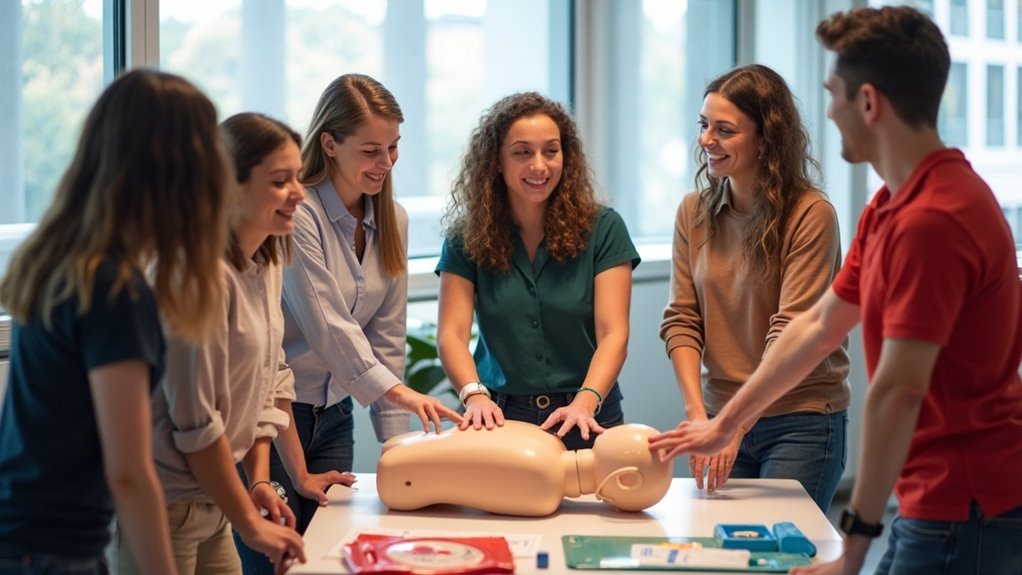
To learn CPR and First Aid skills as part of your survivalism and prepping education, start by selecting a certification course that aligns with OSHA and AHA standards. Engage in practical, hands-on training to build confidence in your abilities, which is crucial in emergency situations. Explore online resources from reputable organizations like the Red Cross or AHA for supplemental knowledge that can prepare you for a variety of scenarios. Once you complete the course, be sure to take the certification test to validate your skills. Regularly refreshing your knowledge is essential to staying ready for real-life emergencies, especially in preparedness situations. There’s always more to learn that can enhance your survival skills!
Key Takeaways
- Enroll in CPR and First Aid courses that align with survivalist principles and best practices for emergency preparedness.
- Utilize online resources, such as instructional videos and free materials from survival organizations, to enhance your self-paced learning experience.
- Engage in interactive modules and hands-on practice to reinforce skills, ensuring you can effectively respond in high-pressure emergency situations.
- Schedule regular refresher courses or practice drills every six months to maintain proficiency and stay updated on the latest techniques in first aid and CPR.
- Familiarize yourself with Good Samaritan Laws to understand your legal protections when providing emergency assistance in survival scenarios.
Understanding CPR and First Aid Basics
When it comes to survival situations, having knowledge of CPR and First Aid is crucial.
CPR, or Cardiopulmonary Resuscitation, is a lifesaving technique essential when someone’s breathing or heartbeat has stopped, significantly increasing their chances of survival in critical moments.
CPR is a vital lifesaving technique that boosts survival chances when breathing or heartbeat ceases.
First Aid provides immediate assistance to those who are injured or ill, addressing everything from minor wounds to life-threatening emergencies.
The importance of mastering these skills can’t be overstated, especially for those preparing for unpredictable scenarios.
By obtaining certification in CPR and First Aid, you equip yourself with vital training and skills that can make a lifesaving difference when it matters most.
Don’t hesitate—prepare yourself to handle emergencies effectively today!
Choosing the Right Certification Course
How do you choose the right certification course for CPR and First Aid in the context of survivalism and prepping?
Start by looking for programs that comply with OSHA and AHA guidelines, ensuring they meet industry standards essential for emergency preparedness.
Consider courses that offer both in-person and online options, allowing for flexibility in your training schedule.
Make sure the certification is valid for at least two years and includes a digital certificate and wallet card for easy access.
Hands-on skills practice is crucial for retaining CPR and First Aid techniques, so prioritize courses that provide practical training in realistic scenarios.
Research reputable providers like the American Red Cross, renowned for their high participant satisfaction and a long-standing history of training millions of individuals annually, which is invaluable in a survival situation.
Engaging With Interactive Learning Modules
Engaging with interactive learning modules can significantly enhance your understanding of CPR and First Aid techniques, especially in the context of survivalism and prepping. These modules often incorporate hands-on practice, allowing you to apply essential skills in realistic scenarios that could arise during emergencies, thereby boosting retention.
By utilizing multimedia resources like videos and animations, you’ll find the learning process more engaging and accessible, crucial for preparedness. Quizzes and assessments provide immediate feedback, reinforcing your knowledge and pinpointing areas for improvement, which is vital when every second counts in a survival situation.
Real-time simulations help you practice critical decision-making skills during emergencies, preparing you to act confidently and effectively when faced with unexpected challenges. Additionally, peer-to-peer interaction fosters a supportive community, enriching your overall learning experience in CPR and First Aid—key components of any prepper’s skill set.
Practicing Skills Regularly
Regularly practicing your CPR and First Aid skills is vital for maintaining their effectiveness in survival situations.
Engaging in group practice sessions not only reinforces your techniques but also enhances your confidence when faced with real-life emergencies.
Incorporate this into your routine training to ensure you’re always prepared for any crisis that may arise!
Consistent Skill Reinforcement
While knowledge of CPR and First Aid is crucial for survival situations, the key difference is in the frequency of practice. Engaging in hands-on skills sessions every six months significantly enhances your muscle memory, enabling swift, confident responses in emergencies.
Utilize resources like practice manikins and AED trainers to simulate real-life scenarios, helping you become more familiar with essential techniques. Refresher courses or online skills assessments can pinpoint areas for improvement, ensuring your skills remain sharp and aligned with the latest guidelines.
Additionally, communities and preparedness groups can organize regular drills to reinforce training and cultivate a culture of readiness among individuals equipped to handle crises.
Group Practice Sessions
Regular group practice sessions play a crucial role in reinforcing your survival skills, including CPR and First Aid. These sessions provide hands-on experience, enhancing your ability to retain techniques and build confidence in emergency situations.
Engaging in peer-to-peer learning allows you to exchange valuable tips and deepen your understanding of essential procedures. Scheduling practice at least once every few months is vital, as proficiency can decline without regular application.
Participating in realistic scenarios prepares you to respond effectively in emergencies, whether at home or while on the go. Furthermore, group sessions present opportunities to refresh your knowledge and stay updated on the latest CPR techniques, ensuring you remain aligned with current lifesaving standards in the context of survivalism and prepping.
Utilizing Online Resources for Study
When it comes to mastering CPR and First Aid, online resources can be invaluable for survivalists and preppers.
You can tap into a wealth of free materials, including dynamic interactive videos that make learning both effective and enjoyable.
These tools not only deepen your understanding but also equip you with essential skills for real-life emergencies, ensuring you’re prepared to save a life when it matters most.
Accessing Free Resources
Accessing free resources online is a fantastic way to learn CPR and First Aid skills at your own pace, especially for those interested in survivalism and prepping. Here are some valuable options to explore:
- Red Cross: Check out their instructional videos and guidelines for CPR and First Aid, available anytime, which can be crucial in emergency survival situations.
- American Heart Association: Download free materials and infographics summarizing essential techniques and emergency protocols, integral for any prepper’s knowledge base.
- Online Platforms: Immerse yourself in YouTube channels featuring certified instructors demonstrating CPR and First Aid, which can be extremely beneficial when planning for emergencies.
Additionally, explore mobile apps for step-by-step guides that can be accessed offline in survival scenarios.
Don’t forget about community organizations offering free workshops and webinars to enhance your learning experience and prepare you for real-world situations!
Engaging Interactive Videos
Engaging interactive videos make learning essential survival skills, including CPR and First Aid, not just informative but also enjoyable. These online survival resources provide dynamic visual instruction and help you grasp critical skills through real-life scenarios that you might encounter in emergency situations. Accredited courses often include quizzes, allowing you to assess your understanding in real-time while preparing for potential disasters.
| Benefits of Interactive Videos | Features |
|---|---|
| Visual instruction | Step-by-step survival techniques |
| Engaging content | Scenarios for practical application in crisis situations |
| Quizzes for assessment | Immediate feedback on knowledge retention |
| Accessible complex concepts | Clear explanations of safety laws and procedures |
With this approach, survival training becomes accessible and effective, enhancing your ability to respond in emergencies and ensuring you’re well-prepared for any situation that may arise.
Completing the Certification Test
Before you dive into the certification test for CPR and First Aid, it’s crucial to complete all thirteen course modules. This ensures you’re well-prepared for the 12-question test, where you’ll need at least 9 correct answers to pass.
Here are some important points to consider:
It’s essential to understand key points before taking the CPR and First Aid certification test.
- Unlimited retries are available for the test, providing you with ample opportunity to achieve certification.
- First-time learners should complete all modules, while those recertifying can skip directly to the final exam.
- Your certification signifies adherence to essential survival skills and first aid principles, equipping you for emergencies in any situation.
Maintaining Your Certification
While maintaining your CPR and First Aid certification might seem like a straightforward task, it’s crucial for ensuring that your skills remain sharp and effective in emergency survival situations.
Certifications are valid for two years, so it’s wise to plan for recertification well in advance. You can opt for abbreviated classes or even bypass to the final exam if you’ve previously undergone training.
Regularly refreshing your skills through quick refresher courses is a sensible strategy for those who prioritize preparedness. With unlimited retries for the certification test, you can easily achieve the required score.
Staying current not only aligns with safety guidelines but also enhances your readiness for unexpected challenges in survival scenarios.
Applying Skills in Real-Life Situations
Having a valid CPR and First Aid certification is just the beginning; applying those skills in real-life survival situations can save lives during emergencies. Here’s how to effectively respond in a crisis:
- Practice through hands-on training: Simulating real-life scenarios, such as wilderness first aid or emergency response drills, boosts your confidence and skill retention, preparing you for unexpected situations in survival scenarios.
- Refresh your knowledge: Regular recertification and staying updated on the latest survival techniques keep your skills sharp and ensure you’re ready to handle urgent situations effectively.
- Know your rights: Understanding the Good Samaritan Law allows you to provide emergency assistance confidently, knowing you’re protected from legal repercussions while aiding others in distress.