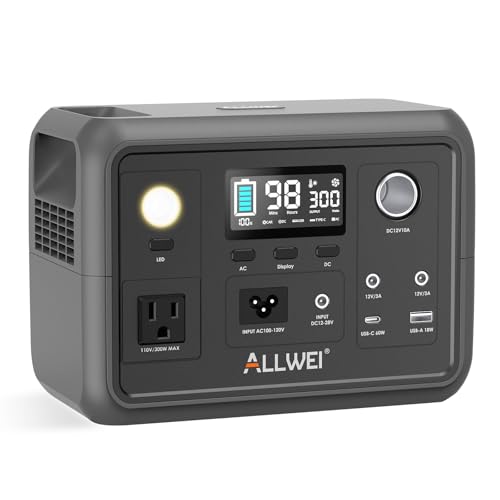
To maintain your radio batteries for survival situations, always initialize new batteries by charging them overnight to ensure maximum capacity. Use the manufacturer’s recommended charger and avoid charging while in use to prevent overheating, which can lead to failure when you need your radio the most. Store batteries in a cool, dry place at room temperature to prolong their life, and consider charging or discharging them to about 50% before long-term storage to maintain their health. Regularly inspect and clean battery contacts to ensure solid connections, as a reliable power source is critical in emergencies. Keep a vigilant eye on battery indicators to monitor performance and prevent premature degradation. Proper battery care can be a lifesaver in a crisis.
Key Takeaways
- Charge new batteries overnight to ensure they are fully conditioned and ready for optimal performance in survival situations.
- Store batteries in a cool, dry place, ideally at room temperature and below 50% humidity, to prolong their shelf life and readiness for emergencies.
- Regularly inspect and clean battery contacts to maintain strong connections, which is crucial for reliable operation during critical times.
- Avoid deep discharges by recharging batteries when levels are low, as this practice enhances longevity and ensures you’re always prepared.
- Rotate and replace batteries that show significant performance drops to maintain reliability, ensuring your devices are operational when you need them most.
Importance of Battery Initialization
When you acquire new radio batteries for your survival gear, it’s crucial to initialize them properly to ensure optimal performance in critical situations.
New batteries typically arrive with only a partial charge, so it’s essential to charge them overnight to achieve a full charge. This initialization process conditions the batteries, enhancing their performance and longevity, while also mitigating memory effects, especially in NiCad batteries.
By managing your batteries effectively, you can extend their lifespan up to 18 months, which is vital for emergency preparedness.
Regular battery maintenance, such as charging only when depleted, helps maintain their functionality and prevents premature degradation, ensuring your radio remains operational when you need it most in a survival scenario.
Best Practices for Charging
To ensure optimal charging conditions for your radio batteries, always utilize the manufacturer’s recommended charger.
Regular monitoring of the battery indicator is crucial; recharge when levels are low to prevent deep discharges, which can compromise battery life.
Furthermore, avoid charging the radio while in use to enhance efficiency and prevent overheating, especially in survival situations where reliable communication is essential.
Optimal Charging Conditions
Maintaining optimal charging conditions is crucial for ensuring the longevity and efficiency of your radio batteries, especially in survival and prepping scenarios.
Always utilize the official manufacturer’s charger to ensure compatibility and avoid potential damage. Charge your batteries when they’re nearly depleted, ideally around 0%, to reduce the memory effect and extend battery life.
Keep the charging environment at a stable room temperature, ideally between 20°C to 25°C (68°F to 77°F), to achieve the best performance. Avoid charging while the radio is in use, as this can compromise charging efficiency.
Additionally, regularly clean the battery contacts to ensure a reliable connection and enhance charging performance during extended storage, which is particularly important for those preparing for emergencies.
Charge Frequency Guidelines
Though it may be tempting to charge your radio batteries frequently, adhering to specific charge frequency guidelines is crucial for survival situations, enhancing both their lifespan and performance. Only charge batteries when they’re near 0% to minimize capacity loss and ensure full utilization during emergencies or extended work shifts. New rechargeable batteries should be charged overnight to guarantee they’re fully charged and conditioned for immediate use. Avoid leaving fully charged batteries in the charger, as this can diminish their capacity when you need them most. Always use the manufacturer’s recommended charger and charge batteries at room temperature, ideally between 20°C and 25°C, to maintain optimal performance.
| Charge Level | Recommended Action | Notes |
|---|---|---|
| 0% | Charge immediately | Promotes battery longevity for critical situations |
| 20-30% | Charge soon | Prevents deep discharge, ensuring readiness |
| 80-100% | Avoid overcharging | Protects battery capacity for future emergencies |
| Fully Charged | Remove from charger | Prevents capacity loss, keeping batteries at their best for when you need them |
Proper Battery Storage Techniques
When you store batteries properly, you significantly enhance their performance and longevity—essential for any survivalist or prepper.
Keep batteries in a cool, dry environment at room temperature, ideally between 20 to 30 degrees Celsius, to optimize their shelf life. Maintaining humidity below 50% is crucial to prevent moisture damage and ensure functionality for over eighteen months, which can be vital during emergencies.
Store batteries in a cool, dry place at 20 to 30 degrees Celsius to maximize their lifespan and ensure readiness during emergencies.
Avoid outdoor sheds or portable offices, as these can expose batteries to temperature extremes and rapid charge loss, undermining your preparedness efforts.
Before storage, charge or discharge used batteries to around 50% capacity to extend their overall useful life.
Implementing proper battery storage techniques is essential for preventing degradation and ensuring your batteries perform reliably when you need them most.
Regular Maintenance and Cleaning
To ensure optimal performance of your communication equipment, it’s essential to regularly clean your radio and batteries, removing dust and debris that can hinder functionality.
Establish a routine inspection schedule to assess battery health, particularly for batteries older than 18 months, as they may require replacement.
Cleaning Techniques
Maintaining the cleanliness of your radio and its batteries is crucial for ensuring reliable communication during emergencies and extending their lifespan.
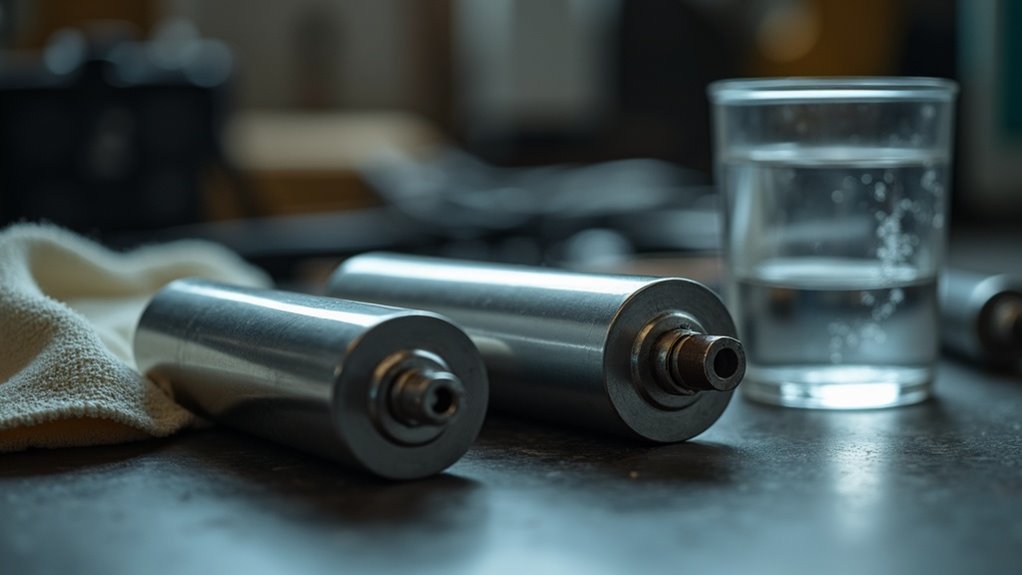
Regularly use a soft towel to wipe down your radios and batteries, effectively removing dust and debris that can interfere with performance. For tougher stains, apply at least 70% isopropyl alcohol to clean the surfaces without causing damage.
As part of your survival preparedness routine, make sure to clean battery contacts frequently to maintain a strong connection, preventing power loss when you need it most.
Lastly, when disposing of old batteries, follow Environmental Protection Agency (EPA) guidelines to ensure safe disposal and avoid environmental hazards.
Keeping your devices clean not only enhances their efficiency but also ensures they’re ready for any situation.
Regular Inspection Schedule
Regular inspections are crucial for ensuring your radio batteries are ready for any emergency situation. Establish a monthly inspection schedule to evaluate battery health and performance.
During these checks, use a towel to wipe away dust and debris, which can disrupt connection quality. Clean battery contacts regularly to maintain optimal connectivity and prevent power loss.
Employ battery analyzers to assess capacity and identify when to replace older batteries, particularly those that are over 18 months old.
This proactive strategy not only enhances communication reliability but also reduces the risk of unexpected downtime, ensuring your equipment is dependable when you need it most in critical situations.
Understanding Battery Indicators
How can you accurately interpret battery indicators to ensure your survival gear remains effective? A green light may indicate that the battery is fully charged, but it doesn’t guarantee its actual performance or state-of-health.
Keep in mind that battery capacity alone isn’t a definitive measure of a battery’s condition; even batteries that show a full charge can be weak and lack usable capacity. Performance degradation often becomes evident after a year, which can be critical during emergencies or survival situations.
Regular checks are essential to monitor these variations, especially for nickel-based batteries, as memory formation can significantly reduce capacity. Manufacturers stress the importance of consistent testing and maintenance to ensure the reliability and peak performance of batteries in your survival equipment.
Managing Battery Performance
To ensure your radio batteries are always ready for emergencies, it’s essential to adopt a proactive management strategy. Regularly assess battery performance, as weak batteries can show signs of degradation after just one year.
Utilize battery analyzers to rejuvenate those weak batteries, extending their life and reliability when you need them most. Establish a maintenance program to identify and remove non-performing batteries, which can provide a return on investment within a year by improving overall battery performance.
Organize batteries by service date and cycle stored ones to maintain their capacity. Finally, pay close attention to battery charging practices, particularly with nickel-based batteries, to prevent memory effect and significant capacity loss over time—critical factors for preparedness in any survival situation.
Common Battery Issues and Solutions
While you may rely on rechargeable batteries for your communication devices, common issues can compromise their performance if left unaddressed, especially in survival situations where reliable equipment is crucial.
Two-way radio batteries, particularly lithium-ion types, gradually weaken after about 18 months without proper maintenance, which can be detrimental in an emergency. The memory effect in nickel-based batteries can lead to capacity loss, but using conditioning chargers may help mitigate this issue.
Moreover, inaccurate fuel gauges can result in poor battery performance, leading to unexpected failures when you need your equipment most. Regular checks and cleaning are essential for identifying non-performing batteries, ensuring your gear functions when it matters.
Store spare batteries at around 50% charge in a controlled environment to prevent rapid charge loss and extend their overall lifespan, keeping you prepared for any situation that arises.
Tips for Extending Battery Lifespan
Properly maintaining your radio batteries is crucial for survival situations, as it can significantly extend their lifespan and ensure reliable performance when you need it most.
To minimize capacity loss, charge batteries only when they’re near 0%. Store them at 40-50% charge in a cool, dry environment to reduce degradation, which is particularly important in prepping scenarios where every resource counts.
Charge batteries near 0% and store at 40-50% in a cool, dry place to minimize capacity loss.
For nickel cadmium batteries, use conditioning chargers to counteract memory effects and maintain efficiency, ensuring your gear is always ready for action.
Implement a maintenance program that includes regular checks and cleaning to identify any non-performing batteries, which could be a liability during critical times.
Rotate through multiple batteries to facilitate even usage, helping to prolong their lifespan and ensure you have reliable power when it matters.
Always replace any batteries that show significant performance drops to maintain peak functionality, as preparedness relies on dependable equipment.