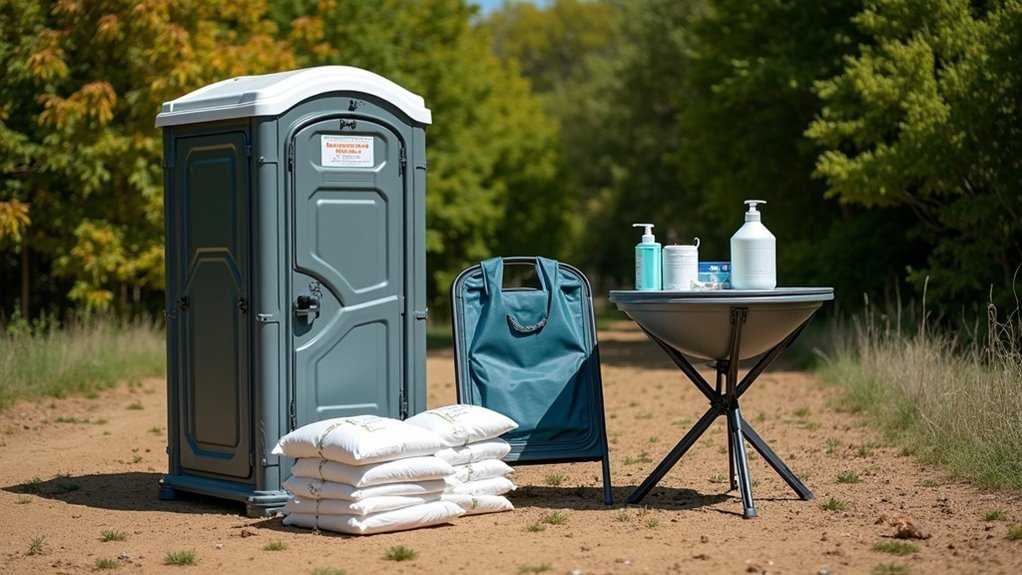
To plan emergency sanitation effectively, it’s crucial to recognize its role in survival and public health during crises. Begin by establishing a twin-bucket toilet system to ensure proper separation of waste, which is vital for preventing disease outbreaks. Ensure that handwashing stations are readily available, equipped with soap and clean water, to maintain hygiene standards.
Implement robust waste disposal strategies using lined buckets and designated trash containers to manage refuse safely. Be proactive in stocking essential supplies such as toilet paper, hand sanitizer, and feminine hygiene products, as these are critical in maintaining personal hygiene in emergency situations. By taking these steps, you will significantly enhance community resilience and preparedness during emergencies. Explore additional strategies to fortify your sanitation plan for a more comprehensive approach to survivalism.
Key Takeaways
- Evaluate the community’s sanitation needs to determine effective waste management solutions, such as the twin-bucket toilet system, which allows for the separation of urine and feces for better waste management.
- Establish easily accessible handwashing stations equipped with clean water, soap, and towels near food preparation and toilet areas to promote hygiene and prevent illness.
- Ensure a stockpile of essential sanitation supplies, including toilet paper, plastic garbage bags, and feminine hygiene products, to maintain adequate resources for emergencies.
- Create and enforce regular waste disposal protocols, making certain that human waste is securely contained and disposed of in designated areas to minimize contamination risks during a crisis.
- Uphold cleanliness by routinely sanitizing disposal areas and handwashing stations, which is vital to reducing the likelihood of disease transmission in survival situations.
Importance of Emergency Sanitation
When disaster strikes, sanitation may not be the first thing on your mind, but it’s a vital aspect of survival and preparedness.
Emergency sanitation is crucial for protecting public health and preventing disease outbreaks, as inadequate waste management can contaminate water sources. Proper disposal of human waste is essential to ensure the safety of groundwater and to discourage disease-carrying insects from thriving.
Emergency sanitation is vital for public health, preventing disease outbreaks, and ensuring safe water sources through proper waste management.
Furthermore, maintaining clean water sources and practicing good hygiene significantly diminish the risk of health threats, including pathogens like E. Coli and Salmonella enterica.
In a survival situation, neglecting effective sanitation measures can leave communities vulnerable to health crises, making emergency sanitation an indispensable element of disaster preparedness and response.
Setting Up a Twin-Bucket Toilet System
A twin-bucket toilet system is an essential component for any survivalist or prepper looking to manage human waste efficiently during emergencies. This system consists of two 5-gallon buckets—one dedicated to urine and the other for feces—allowing you to separate waste effectively, which helps reduce both volume and pathogen load.
To set up, line the feces bucket with a heavy-duty plastic garbage bag and add carbon material, such as sawdust or wood shavings, to control odors and facilitate decomposition.
It’s important to empty the urine bucket when it reaches one-quarter full, diluting the contents with water before disposal to minimize environmental impact. Change the feces bucket when it’s half-full, ensuring it remains manageable and sanitary.
Always wear disposable gloves to maintain personal hygiene throughout the process. Once you have disposed of the feces, securely bag it to ensure safe and effective waste management.
Implementing a twin-bucket toilet system can enhance your preparedness and sanitation measures during any emergency situation.
Handwashing Stations and Personal Hygiene
Effective sanitation is a critical aspect of survivalism that goes beyond mere waste management; it includes maintaining personal hygiene through proper handwashing.
In a prepping scenario, it’s essential to set up handwashing stations equipped with clean water, soap, and towels, particularly near food preparation and toilet areas. This encourages regular hygiene practices, especially during emergencies.
Establishing handwashing stations with clean water and soap is vital for hygiene during emergencies, especially near food and toilet areas.
Utilize a water jug with a spigot for quick and easy access, ensuring you also have a catch basin in place to prevent any contamination. Regularly sanitize the spigot handles to mitigate the spread of pathogens.
Always remember to wash your hands before, during, and after food preparation, as well as after using the toilet.
Additionally, maintain a supply of disposable diapers and menstrual products, and ensure proper disposal in heavy-duty bags to minimize hygiene risks in your survival setup.
Waste Disposal and Management Strategies
Proper waste disposal and management are crucial for survivalists and preppers, especially in emergency situations where health hazards are a concern.
Implementing a “twin bucket” system allows you to effectively separate urine and feces, significantly reducing odor and pathogen load. Line each bucket with heavy-duty plastic bags, securing them tightly after each use. Dispose of human waste in designated trash containers that have tight lids to prevent contamination.
Regularly add carbon materials like sawdust to help manage odors and support decomposition. Never dispose of waste on open ground; instead, opt for deep trenches or latrines that can be safely maintained.
Keep your disposal areas clean by disinfecting them regularly and closely monitoring sanitation facilities to ensure they remain safe and effective during emergencies.
Adopting these practices not only enhances your preparedness but also contributes to the overall health and safety of your survival group.
Essential Emergency Sanitation Supplies
When prepping for emergencies, having the right sanitation supplies on hand is crucial for maintaining hygiene and preventing health risks.
Your emergency sanitation kit should include essential items such as toilet paper, towelettes, soap, and liquid hand sanitizer to ensure personal hygiene is prioritized.
An emergency sanitation kit must have toilet paper, towelettes, soap, and liquid hand sanitizer to prioritize personal hygiene.
Stock up on plastic garbage bags for waste disposal, and consider using five-gallon buckets with tight lids as makeshift toilets for effective waste management.
Don’t overlook the importance of feminine hygiene supplies, and establish handwashing stations equipped with soap and clean water or hand sanitizer.
Include disinfectants and heavy-duty plastic bags to manage human waste effectively.