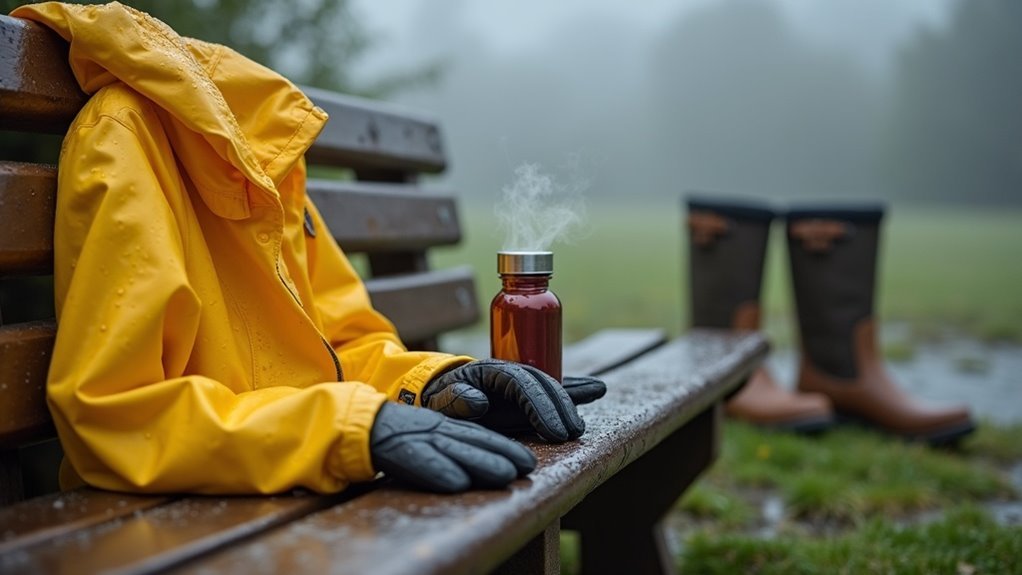
To prevent hypothermia in wet weather while embracing survivalism and prepping principles, it’s crucial to prioritize staying dry and warm. Opt for moisture-wicking base layers and avoid cotton, as it retains moisture and can lead to rapid heat loss. Layering with insulating materials such as fleece or down is essential, followed by a robust waterproof outer layer to shield against the elements. Keep active to generate body heat and consume high-calorie foods for sustained energy. It’s also vital to stay hydrated with warm, non-caffeinated beverages, which can aid in maintaining core temperature. Being aware of the early signs of hypothermia is key for effective safety measures, and thorough preparation is essential for optimal prevention in adverse weather conditions.
Key Takeaways
- Wear moisture-wicking base layers to keep sweat away from your skin, helping you maintain body heat during survival situations.
- Layer with insulating materials such as fleece or down, and finish with a waterproof and breathable outer layer to protect against the elements.
- Avoid cotton clothing; it retains moisture and significantly raises the risk of hypothermia in survival scenarios.
- Stay hydrated with warm, non-caffeinated beverages and consume high-calorie foods to sustain energy levels while prepping for outdoor activities.
- Regularly inspect your clothing for wet spots and change immediately to retain body heat and ensure your survival in wet conditions.
Understanding Hypothermia and Its Risks
When you’re navigating cold and wet environments, it’s essential to be aware of the serious risks of hypothermia. This dangerous condition sets in when your body temperature drops below 95°F (35°C).
Wet clothing significantly accelerates heat loss, as water removes heat from your body 25 times more efficiently than air. Even when temperatures are above 40°F, you can still be at risk for hypothermia, particularly when wind chill is a factor.
Prolonged exposure to wetness, whether due to rain or perspiration, can sap your energy and even inhibit shivering, which is an early warning sign of severe hypothermia.
To effectively prevent hypothermia, prioritize staying dry and warm, and remain vigilant about factors like exhaustion and dehydration that can elevate your risk.
In survival situations, being prepared and knowledgeable can make all the difference in protecting yourself from the dangers of hypothermia.
Essential Clothing Choices for Wet Weather
When preparing for wet weather in a survival situation, your clothing choices are crucial for maintaining warmth and dryness.
Begin with moisture-wicking base layers to keep sweat away from your skin and prevent chilling. Layer these with waterproof, breathable outer garments to ensure insulation while allowing sweat to escape, preventing overheating.
Additionally, insulated gloves and hats are essential for protecting your extremities, as they significantly contribute to heat retention.
Being properly equipped can make a vital difference in survival scenarios, so choose your attire wisely to withstand the elements.
Layering Techniques for Insulation
To stay warm and dry in wet weather while prepping for survival situations, mastering layering techniques for insulation is essential.
Begin with moisture-wicking base layers made from synthetic materials or merino wool, which effectively pull sweat away from your skin and minimize cooling caused by wet clothing.
Next, incorporate insulating mid-layers such as fleece or down, which trap heat while allowing moisture to escape, ensuring you remain warm even in tough conditions.
Finally, complete your outfit with a waterproof and breathable outer layer, like a durable rain jacket, to protect against rain and wind.
Steer clear of cotton, as it retains moisture and significantly increases the risk of hypothermia due to rapid heat loss.
And remember, a proper fit is crucial for maximum effectiveness!
Waterproof Material Selection
Choosing the right waterproof materials is critical for survival and preparedness in wet weather. Look for options like Gore-Tex, which provide waterproofing while allowing moisture vapor to escape, thus reducing your risk of hypothermia in survival situations.
Opt for synthetic or wool blend clothing over cotton, as these materials retain warmth even when damp, making them ideal for unpredictable conditions. Ensure your garments have sealed seams to prevent water penetration, keeping you dry and capable in emergencies.
Insulated waterproof jackets and pants are essential for adding an extra layer of protection against wind and rain.
Additionally, don’t overlook your footwear and gloves; they should also be waterproof to maintain body heat and prevent cold-related injuries in challenging environments.
The Importance of Staying Dry
Staying dry is crucial for survivalists and preppers, especially in preventing hypothermia. In wet conditions, your body loses heat significantly faster than it does in dry environments. Moisture from rain or sweat can rapidly lower your body temperature, heightening the risk of cold-related injuries.
To effectively combat this danger, it’s vital to wear high-quality waterproof and moisture-wicking clothing during outdoor activities and survival scenarios. If you find yourself wet, change into dry clothing immediately to preserve your body heat.
Employing a strategic layering system with waterproof gear minimizes exposure to cold elements. Regularly inspect your clothing for wet spots and address any issues promptly to reduce the likelihood of developing hypothermia, particularly in adverse weather conditions.
Nutritional Strategies to Maintain Body Heat
When navigating cold and wet conditions, your ability to generate heat is crucial for survival. To maintain core body temperature, prioritize high-calorie foods such as nuts, chocolate, and energy bars; these are essential for fueling your body’s heat production.
It’s important to incorporate a balanced mix of carbohydrates, proteins, and fats in your diet, with fats being particularly valuable for their high caloric content and sustained energy release. Regular meal consumption is vital; skipping meals can compromise your energy reserves, putting you at risk in survival situations.
Hydration should also be a priority, as dehydration can hinder circulation and heat distribution. Opt for warm, non-caffeinated beverages to stay hydrated and provide internal warmth.
Avoid alcohol, as it can lead to a decrease in body temperature, which is detrimental in survival scenarios.
Staying Active: The Role of Movement
Movement is a critical component in survival situations, particularly for preventing hypothermia in cold and wet environments. Staying active not only generates body heat through increased metabolism but also counteracts the heat loss that can jeopardize your survival.
Engaging in physical activity enhances blood flow, which is essential for keeping your extremities warm and maintaining your core temperature during adverse conditions. Simple movements like walking or light jogging can significantly reduce your risk of cooling down.
However, it’s crucial to be mindful of excessive sweating, as this can lead to moisture build-up and increase heat loss once you stop moving. Always monitor your energy levels and adjust the intensity of your activities accordingly to maintain body heat without pushing yourself to the brink of exhaustion or dehydration.
In survival scenarios, staying warm and mobile is key to enduring harsh conditions and ensuring your safety.
Emergency Preparedness and Supplies
To effectively combat hypothermia in survival situations, having a comprehensive emergency preparedness plan and the right supplies is crucial.
Always carry a well-stocked emergency kit that includes:
- Thermal blankets for essential warmth
- Waterproof matches for reliable fire-starting
- High-energy snacks to maintain energy levels
- Moisture-wicking base layers to stay dry and comfortable
In addition, ensure you have waterproof outer layers and a complete first aid kit.
It’s vital to inform a trusted individual about your outdoor plans and carry a dependable means of communication, such as a fully charged portable charger.
Regularly inspect and refresh your supplies to ensure everything is functional and ready to withstand unexpected wet weather conditions.
Recognizing the Signs of Hypothermia
To effectively prevent hypothermia during outdoor survival situations, it’s crucial to recognize its signs early.
Stay vigilant for common symptoms such as shivering, slurred speech, and difficulty coordinating movements.
As conditions worsen, you may encounter more severe indicators, including confusion, extreme fatigue, and a significant drop in heart and respiratory rates.
Being prepared and knowledgeable about these signs can be the difference between life and death in a survival scenario.
Common Symptoms to Observe
How can you determine if someone is suffering from hypothermia? Recognizing the symptoms early is crucial for survival. Keep an eye out for the following signs:
- Intense shivering, which may cease as the person’s condition deteriorates
- Slurred speech or mumbling, signaling cognitive impairment
- Clumsiness, lack of coordination, or drowsiness, which can lead to decreased energy levels
- Bright red, cold skin and lethargy in infants
If you observe these symptoms, it’s vital to act quickly. Remove any wet clothing, provide dry layers, and utilize a hypothermia wrap to help warm the individual.
Severe Signs of Hypothermia
Recognizing the severe signs of hypothermia is crucial for effective survival strategies, especially as the condition advances.
If someone’s core body temperature drops below 82°F (28°C), they may stop shivering, which is a critical indicator of severe hypothermia. Be alert for confusion, memory loss, or even loss of consciousness, as these can be signs of deteriorating mental function due to the cold.
Physical symptoms to monitor include muscular rigidity, a weak or irregular pulse, and slow, shallow breathing. In cases of severe hypothermia, exposed skin may appear bright red and cold, particularly in infants.
If you observe these alarming signs, it’s imperative to seek medical assistance without delay. Remember, cold air and low water temperatures can significantly worsen these symptoms, posing serious risks to life.
Stay vigilant, be prepared, and act swiftly to ensure safety in cold environments.