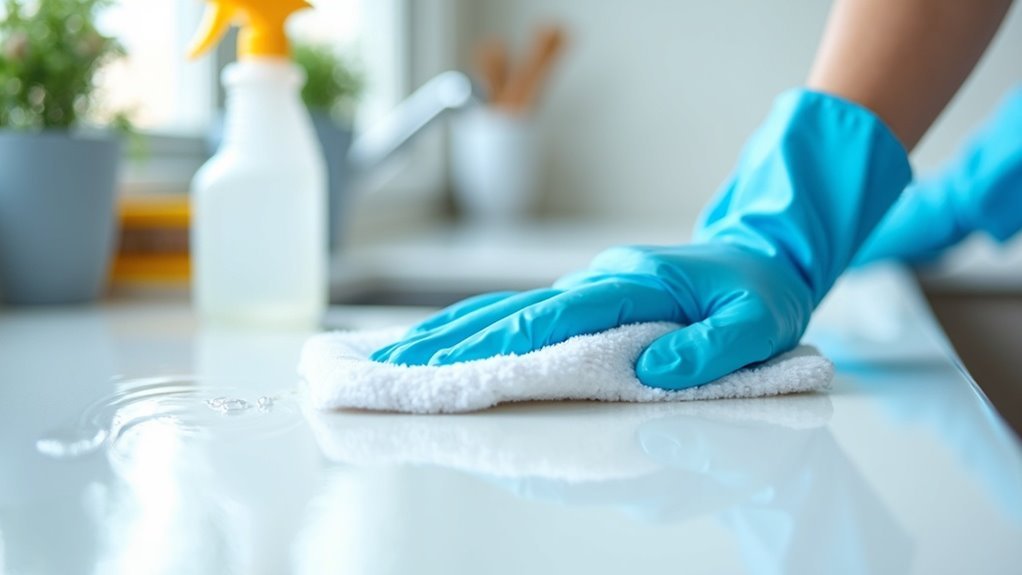
To effectively sanitize surfaces in a survivalist context, focus on high-touch areas such as doorknobs, light switches, and other frequently used items in your shelter or bug-out location. Utilize EPA-approved disinfectants that you can stockpile and follow the manufacturer’s instructions for optimal effectiveness. For hard surfaces, ensure they are cleaned thoroughly before applying disinfectant to remove any dirt or organic material. For soft surfaces like carpets, consider steam cleaning at temperatures of 158°F for five minutes to effectively eliminate germs, which can be crucial in preventing illness during challenging times. Regular maintenance of your living environment is essential for sustaining health and preventing the spread of illness. For further insights on the challenges and methods for effective sanitization in survival situations, continue exploring essential cleaning and preparedness practices.
Key Takeaways
- In survival situations, consistently clean high-touch surfaces like doorknobs and light switches to limit germ transmission and sustain a healthy living space.
- Utilize EPA-approved disinfectants, adhering strictly to the manufacturer’s guidelines for effective use and safety precautions.
- For soft surfaces, employ steam cleaning at 158°F for five minutes to effectively sanitize and mitigate allergens, which is crucial in a survival environment.
- Prioritize thorough sanitization methods for hard surfaces, particularly in communal settings or during emergencies where hygiene is paramount.
- Share knowledge about effective cleaning techniques with fellow preppers to bolster overall sanitization efforts and promote health awareness in your community.
Understanding the Importance of Sanitizing Surfaces
When you think about the environments you inhabit, whether it’s your home, a community shelter, or a bug-out location, it becomes evident that sanitizing surfaces is vital for preventing the spread of harmful viruses and bacteria.
To effectively clean and disinfect in a survival situation, begin by removing dirt and debris, then apply appropriate sanitizing chemicals that target germs. Focus especially on high-touch surfaces like doorknobs and light switches, as these areas can easily become hotspots for germ accumulation.
Regular sanitization is essential for maintaining a safe living space, particularly in crowded or shared environments. Always adhere to manufacturer instructions to ensure maximum effectiveness and safety in your efforts to minimize the spread of germs during emergencies.
Differentiating Between Hard and Soft Surfaces
Sanitizing surfaces effectively in a survival situation requires an understanding of the types of materials you’re dealing with. Hard surfaces, like countertops and light switches, are easier to clean and disinfect because chemicals can directly target germs, which is crucial when resources may be limited.
In contrast, soft surfaces, such as carpets and fabric furniture, present challenges since germs can hide within fibers, making them harder to sanitize in a pinch. Regular cleaning is often enough for soft surfaces to limit germ spread, but in a survival scenario, hard surfaces may need more rigorous sanitization to ensure safety.
For soft surfaces, consider methods like steam cleaning at 158°F for five minutes to guarantee effective sanitization, as maintaining hygiene is essential when preparing for prolonged situations.
Effective Cleaning Techniques for Hard Surfaces
When maintaining hard surfaces in a survivalist or prepping context, it’s crucial to select cleaning products that not only remove dirt but also enhance your preparedness for any situation.
Utilize effective techniques, such as applying disinfectants and allowing them to sit for the recommended time, to ensure maximum germ elimination.
Cleaning Products Selection
Choosing the right cleaning products for hard surfaces is crucial in a survivalist setting to ensure effective germ elimination, especially in uncertain environments. Opt for EPA-approved disinfectants that are proven to kill viruses like COVID-19, as maintaining health is vital during emergencies.
Confirm your cleaning product is suitable for the type of surface you’re dealing with, as harsh chemicals can damage essential gear or supplies. Always adhere to the manufacturer’s instructions regarding dilution and application to maximize effectiveness.
For general cleaning in a survival situation, soap and water are effective in removing dirt and debris, which can enhance the efficacy of subsequent disinfection.
Pay special attention to high-touch areas, such as doorknobs and light switches, using targeted cleaning products to reduce the risk of illness. This careful selection of cleaning products not only helps prevent the spread of germs but also ensures a safer and healthier environment for you and your family during challenging times.
Disinfection Techniques Overview
When preparing for potential emergencies, effective cleaning techniques are crucial to ensure that surfaces remain germ-free and safe. Focus on high-touch areas like door handles, countertops, and other frequently used items. Start by cleaning with soap and water to remove dirt and debris, then apply an EPA-approved disinfectant, ensuring it remains wet for the recommended contact time to maximize its effectiveness. Regular disinfection is vital in preventing the spread of harmful pathogens, especially in survival situations. Always maintain good ventilation during the cleaning process. After cleaning, dispose of gloves properly and wash your hands thoroughly to prevent cross-contamination.
| Step | Action | Purpose |
|---|---|---|
| 1 | Clean with soap and water | Remove dirt and grime |
| 2 | Apply disinfectant | Eliminate remaining germs |
| 3 | Allow to sit for specified time | Ensure disinfectant effectiveness |
| 4 | Dispose of gloves and wash hands | Uphold hygiene standards |
Challenges of Sanitizing Soft Surfaces
Sanitizing soft surfaces poses distinct challenges that can complicate your preparedness efforts. Unlike hard surfaces, germs can become embedded in fibers, making effective sanitization difficult in survival situations.
Here are some critical considerations for the prepper mindset:
- Soft surfaces may require specialized cleaning methods to ensure effectiveness.
- Regular cleaning is vital to prevent the spread of illness but may not achieve full sanitization.
- Utilizing a vacuum with a HEPA filter can significantly improve cleaning outcomes, especially in austere environments.
- Steam cleaning at high temperatures is a reliable method for sanitizing when resources are available.
- In extreme situations, it may be necessary to dispose of contaminated soft surfaces if they can’t be thoroughly cleaned.
Understanding these challenges is crucial for maintaining a healthy living space and minimizing the risk of illness in emergency scenarios.
Recommended Methods for Soft Surface Maintenance
While maintaining soft surfaces can be challenging, especially in a survival or prepping context, implementing a few key methods can significantly enhance their cleanliness and safety.
Regularly vacuum carpets and rugs with a HEPA-filter vacuum to remove dirt and minimize the presence of viruses and bacteria, which is crucial in a survival situation.
Launder soft items like towels and linens according to care instructions to ensure thorough cleaning and drying, as these items can be vital for hygiene.
For items that can’t be laundered, use fabric-appropriate cleaners, adhering to the manufacturer’s guidelines to avoid damaging them.
Additionally, consider steam cleaning at temperatures of at least 158°F for five minutes to effectively sanitize carpets and upholstery, especially before long-term storage.
Tailor your sanitization approach based on specific survival scenarios for optimal results, ensuring that your soft surfaces remain safe and functional.
The Role of Steam Cleaning in Sanitization
Steam cleaning is an essential tool for survivalists and preppers looking to maintain a clean and sanitized environment in their homes or during outdoor activities.
Utilizing high temperatures, steam cleaning effectively eliminates harmful germs and pathogens that could compromise health and safety. By adhering to best practices, such as achieving and sustaining temperatures of 158°F for at least five minutes, you can treat soft surfaces that traditional cleaning methods may overlook.
This not only ensures thorough cleaning but also helps reduce allergens, making steam cleaning a vital strategy for anyone preparing for emergencies or seeking to uphold a healthy living space in any situation.
Benefits of Steam Cleaning
When preparing for the challenges of self-sufficiency and survival, steam cleaning emerges as an effective solution that surpasses traditional cleaning methods. This technique not only sanitizes soft surfaces but also contributes to a healthier living environment, essential for long-term preparedness.
- Kills germs and bacteria with high-temperature steam, reducing the risk of illness in survival situations.
- Penetrates deep into fabric fibers for thorough disinfection, ensuring your gear is safe and clean.
- Endorsed by health authorities, reinforcing public health safety in communal preparedness efforts.
- Reduces the presence of highly contagious infections, vital for maintaining a healthy group during emergencies.
- Extends the lifespan of carpets and upholstery, preserving resources for a sustainable lifestyle.
Integrating steam cleaning into your prepping routine can enhance your home’s hygiene and contribute to your overall survival strategy.
Recommended Steam Cleaning Practices
To effectively prepare your living spaces for emergencies, adopting recommended steam cleaning practices is essential.
Use a steam cleaner that reaches at least 158°F for five minutes or 212°F for one minute, as suggested by health authorities. This high temperature helps eliminate embedded germs from carpets and upholstery, making it a valuable tool for maintaining hygiene in your survival environment.
Regular steam cleaning plays a crucial role in infection control, especially in situations where illness may be a concern.
Communicating With Customers About Sanitization Limitations
While it’s crucial to maintain a clean environment, it’s equally important to understand the limitations of sanitizing soft materials like carpets and upholstery in a survival or prepping context. Educating yourself and others can help manage expectations and encourage effective cleaning practices in uncertain times.
- Germs can hide within fabric fibers, making thorough sanitization challenging in survival situations.
- Steam cleaning can be a useful technique to mitigate the spread of certain pathogens when performed correctly.
- Regular cleaning and maintenance of your living space is critical for reducing germ transmission and maintaining overall health.
- Be aware that some surfaces may be beyond adequate sanitization, especially in prolonged survival scenarios.
- Using appropriate cleaners is essential, and heavily contaminated materials may need to be disposed of to prevent health risks.
Understanding these factors can help you better prepare for sanitation challenges in a survival situation.