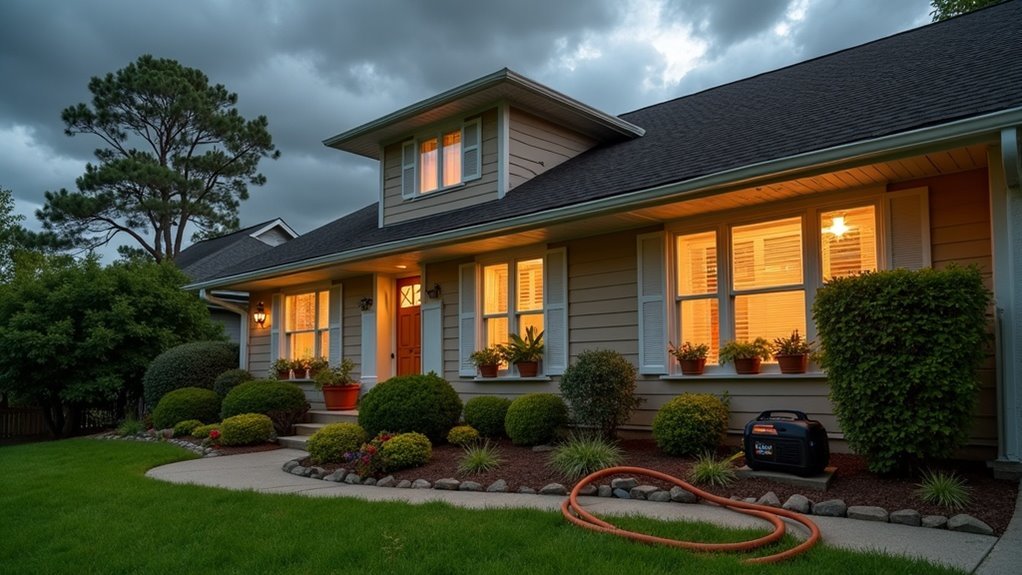
To secure your home against storms, begin by assessing your insurance coverage to ensure you have adequate protection for potential damages. Fortify your windows with impact-resistant materials or install storm shutters that can withstand high winds. Reinforce your roof by utilizing hurricane straps and ensuring shingles are securely fastened. Don’t overlook outdoor items; bring them inside and stake down larger structures to prevent them from becoming projectiles. Maintain your landscape by trimming trees and bushes, and enhance entry points with solid doors and reinforced frames to deter intruders and withstand storm pressure. For further strategies on boosting your home’s storm preparedness, delve into more survivalism and prepping resources.
Key Takeaways
- Install permanent storm shutters or impact-resistant windows to ensure your home can withstand high winds and flying debris, essential for any survivalist preparing for severe weather.
- Reinforce your roof using hurricane straps and fortified materials to protect your shelter from damage during extreme storms, reinforcing your overall preparedness strategy.
- Secure outdoor items by bringing them indoors or staking them down to reduce potential hazards that could compromise your safety and survival during a storm.
- Strengthen entry points with solid doors, heavy-duty hinges, and high-quality locks to enhance security and protect your resources from looting or damage.
- Regularly inspect and maintain your home’s exterior, including windows and doors, for any gaps or wear, ensuring that your shelter remains a stronghold in any survival scenario.
Assess Your Insurance Coverage
Have you evaluated your insurance coverage recently? In the world of survivalism and prepping, it’s crucial to scrutinize your insurance policies. Standard home insurance may not cover essential risks, such as natural disasters like floods or hurricanes, which can disrupt your preparedness plans.
To ensure you’re ready for any storm-related damages, consult with an independent insurance agent who can elucidate your coverage details.
Moreover, consider documenting your supplies and belongings with detailed lists or videos; this can significantly assist in the claims process in the event of damage. Regularly reassess your property’s value and update your policies to reflect any improvements or changes in your prepping supplies.
Be vigilant about exclusions, particularly concerning wind damage, to prevent unexpected financial burdens that could hinder your survival efforts after a storm strikes. Prioritizing your insurance coverage is an essential aspect of being prepared for any emergency.
Strengthen Your Windows
When preparing for a storm, fortifying your windows should be a top priority, as they represent vulnerable points in your home’s defense against wind and debris.
Consider installing permanent storm shutters made from reinforced materials for quick closure, or invest in impact-resistant windows that can withstand high winds up to 200 mph, effectively preventing shattering.
Regularly inspect window frames for cracks and seal any gaps to protect against water intrusion. If storm shutters aren’t an option, utilize plywood boards, ensuring they overlap the window by at least four inches for maximum protection.
Lastly, ensure all windows are securely closed and locked to minimize damage from destructive winds.
Prioritizing window reinforcement is an essential part of a comprehensive survival and preparedness strategy.
Reinforce Your Roof
To effectively safeguard your homestead against storms, reinforcing your roof is crucial, as it acts as the first line of defense against fierce winds and flying debris. Implement hurricane straps or clips to securely anchor your roof, reducing the risk of lift and damage during severe weather events. Regularly inspect shingles for signs of wear and consider upgrading to fortified materials designed to withstand winds up to 250 mph. Here’s a quick overview of key reinforcement strategies for your preparedness plan:
| Action | Purpose | Benefit |
|---|---|---|
| Install hurricane straps | Secure roof to structure | Reduces lift risk |
| Fasten shingles | Prevents lifting | Minimizes storm damage |
| Upgrade materials | Enhance storm resilience | Withstands 250 mph winds |
| Inspect regularly | Identify wear | Maintain roof integrity |
| Ensure proper overhang | Prevent wind catch | Protects shingle edges |
Secure Outdoor Items
Securing outdoor items is a crucial aspect of prepping for severe weather and protecting your homestead. Before a storm approaches, gather and bring in lawn furniture, trash cans, and decorative ornaments to prevent them from becoming hazardous projectiles in high winds.
For waterproof items like pool furniture, a practical survival tactic is to submerge them in your pool, using tennis balls on chair bottoms to safeguard pool liners. Additionally, it’s wise to stake down larger outdoor structures, such as sheds and playhouses, with ropes or straps for added stability against strong gusts.
If securing or relocating larger items indoors isn’t feasible, consider renting a storage space to ensure your belongings are safe and minimize potential damage to your property during storms. Being prepared and proactive can make all the difference in your survival strategy.
Maintain Your Landscape
Maintaining your landscape is crucial for enhancing your preparedness against severe weather and ensuring the safety of your home. Regularly trimming trees and shrubbery not only reduces wind resistance but also minimizes the risk of branches becoming dangerous projectiles during storms.
Be vigilant in removing any dead limbs that could pose a threat to your property. It’s important to maintain a safe distance between trees and power lines, so don’t hesitate to contact local utility companies for necessary trimming.
Avoid placing debris near streets or drains, as this can obstruct water flow and lead to flooding, which could hinder your emergency plans.
Additionally, consider replacing gravel landscaping with mulch or dirt; mulch has the added benefit of absorbing water, which can help prevent erosion during severe weather events.
Prepare Your Home’s Entry Points
After ensuring your landscape is fortified, it’s crucial to focus on your home’s entry points to enhance security and resilience. Start by installing solid exterior doors equipped with at least three heavy-duty hinges and high-quality deadbolt locks. Reinforce door frames to withstand extreme weather conditions and potential intrusions. Protect your home’s vulnerable points by using impact-resistant windows and installing storm shutters to guard against flying debris during severe weather events. Be diligent about sealing around windows and doors with high-grade caulk, eliminating any gaps that could compromise your home’s integrity. Regular inspections and maintenance of these entry points are essential to ensure they remain functional and secure.
| Entry Point | Recommended Action | Frequency |
|---|---|---|
| Exterior Doors | Install solid doors and high-security deadbolt locks | Annually |
| Windows | Use impact-resistant materials | Every storm season |
| Storm Shutters | Install and verify functionality | Before storms |
| Seals | Inspect and reapply caulk | Twice a year |
| Door Frames | Reinforce for enhanced security | Annually |
Create a Safe Room
Creating a safe room is a fundamental aspect of survivalism and prepping, particularly for protecting your family during severe storm events where high winds and flying debris can pose life-threatening risks.
Construct your safe room in accordance with Federal Emergency Management Agency (FEMA) or International Code Council (ICC) standards, emphasizing reinforced walls and a robust, secure door to ensure maximum structural integrity.
Stock your safe room with essential survival supplies such as non-perishable food, ample water, a comprehensive first aid kit, and communication tools like a battery-operated radio.
Regularly assess the condition of your safe room, ensuring that all supplies aren’t only present but also regularly updated to meet current needs.
Make the safe room accessible to all household members and conduct regular drills, especially in hurricane-prone areas, to ensure that everyone is familiar with its location and how to use it effectively.
Preparing in advance is key to ensuring your family’s safety during emergencies.