To shut off utilities safely in a survival situation, first locate the gas shut-off valve near your meter and turn it clockwise to prevent any leaks or hazards. For water, find the main shut-off valve where the line enters your home and turn it clockwise to stop the flow. Identify your electrical panel and turn off individual circuits before shutting off the main breaker to ensure safety from electrical hazards. Always use protective gear and tools, and ensure that all family members are aware of these critical locations for emergencies. Regular maintenance of these valves is essential for preparedness. For those interested in enhancing their utility management skills, there are effective strategies to explore to ensure you are always ready in case of an emergency.
Key Takeaways
- In a survival situation, locate the gas shut-off valve near the meter and turn it clockwise to shut off, ensuring your safety from potential leaks.
- Identify the main water shut-off valve and rotate it clockwise to close during emergencies, preserving your water supply for critical needs.
- Access the main electrical circuit box and flip the main breaker to the “off” position safely to prevent electrical hazards in your shelter.
- Always use insulated tools and wear protective gear when handling electrical components to prevent electrocution and ensure your survivalist preparedness.
- Educate all household members on utility shut-off locations and procedures to facilitate quick action during emergencies, enhancing your survival readiness.
Identifying Utility Shut-Off Locations
In the context of survivalism and prepping, being prepared for emergencies includes knowing how to shut off utilities quickly and efficiently. In a crisis, understanding the shut-off locations can be crucial for ensuring your safety and maintaining control over your environment.
For gas, locate the shut-off valve, which is typically positioned near your gas meter and can be identified by its metal lever or wheel.
Locate the gas shut-off valve near your meter, identifiable by its metal lever or wheel for quick access.
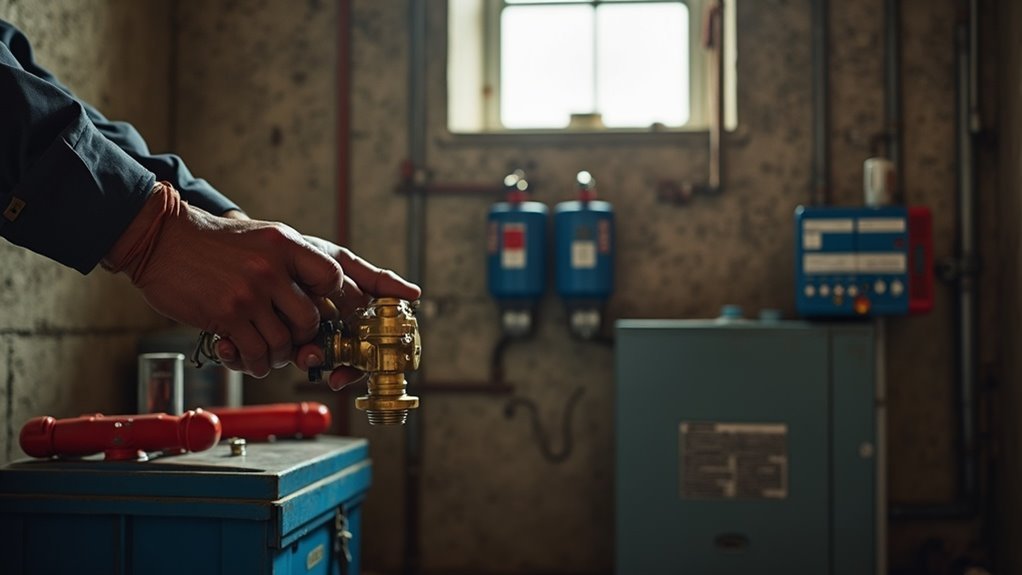
For water, it’s important to find the main water shut-off valve, usually located where the water line enters your home—commonly in the basement or close to the water heater.
The electrical panel, often found in utility rooms or basements, contains the main circuit breaker, which is usually the largest switch.
Additionally, familiarize yourself with individual shut-off valves under sinks or toilets for more precise control over specific areas in your home.
Being well-acquainted with these utility shut-offs will enable you to act swiftly in an emergency, enhancing your preparedness and survival strategy.
Shutting Off Gas Safely
Knowing how to shut off your gas supply is crucial for survivalists and preppers, especially during emergencies.
Start by locating the gas shut-off valve near the meter, and ensure that everyone in your household is familiar with its location.
In the event of a gas leak, prioritize safety by evacuating immediately and refraining from using any electrical devices or flames.
To shut off the gas, turn the valve clockwise using a wrench if necessary; it’s wise to keep a dedicated tool nearby for such emergencies.
Never try to restore the gas supply on your own—always wait for a qualified technician to conduct an inspection first.
Regularly inspect the valve’s condition and educate your family on these vital safety procedures, as preparedness is key in any survival situation.
Shutting Off Water Supply
Shutting off your water supply is crucial during plumbing emergencies, especially for those invested in survivalism and prepping, as it can prevent extensive damage to your shelter.
First, locate your main shut-off valve, typically found where the water line enters your home or survival structure. To shut off the water supply, turn the valve clockwise until it’s completely closed.
For specific leaks, utilize individual fixture shut-off valves located under sinks and toilets. It’s important to familiarize yourself with the valve’s design—whether it features a round handle or a lever—so you can act quickly when needed.
Regularly inspect and test these valves for rust or corrosion, as well-maintained valves are essential for reliable operation during plumbing emergencies, ensuring your preparedness for any situation.
Turning Off Electricity
Turning off your electricity is a critical survival skill during emergencies to ensure safety and mitigate potential hazards. Follow these essential steps to effectively shut off the power:
Turning off your electricity is vital for safety in emergencies, helping to prevent hazards and protect your home.
- Identify the location of the main electrical circuit box, which is typically found in the garage or basement.
- Before accessing the main circuit breaker, turn off individual circuits to prevent surges and further complications.
- Flip the main circuit breaker, the largest switch, to the “off” position to cut power to the entire house and safeguard your environment.
- Always use insulated tools and wear protective gear to minimize the risk of electrocution while handling electrical components.
In the event of fire or burning smells, act swiftly to shut off the power; this critical step can be the difference between disaster and safety.
Safety Precautions During Utility Shut-Off
When shutting off utilities as part of your survival preparedness, your safety is paramount.
Always utilize the appropriate emergency equipment and don protective gear to minimize potential hazards.
Ensure that every member of your household is familiar with the safety protocols to follow during an emergency, which will facilitate a swift and secure response.
In a survival situation, being well-prepared can make all the difference.
Emergency Equipment Usage
During utility shut-off procedures, safety precautions are essential to prevent accidents and injuries, especially for those who prioritize survivalism and prepping.
To ensure effective emergency preparedness, follow these steps:
- Always wear insulated gloves when handling electrical components near the electrical circuit box to protect against electrical shock.
- Use a gas shut-off tool specifically designed for shutting off gas to avoid the risk of sparks igniting any gas leaks.
- Keep a flashlight handy to safely navigate through utility shut-off areas, particularly during power outages when visibility is compromised.
- Confirm that the area is dry before addressing a water leak to reduce the risk of slipping and falling.
Being prepared and maintaining safety during these procedures can make a significant difference in emergency situations.
Personal Safety Measures
Ensuring your safety while shutting off utilities is crucial, especially in emergency situations that can arise in a survival scenario.
If you detect a gas smell or hear a hissing sound, evacuate the area immediately and refrain from using any electrical devices that could create a spark.
Utilize a non-sparking wrench to turn off the gas and shut down the main supply, as gas leaks can lead to catastrophic explosions.
Always equip yourself with protective gear such as gloves and goggles when dealing with electrical components, and make sure your hands are dry, wearing rubber-soled shoes before operating any switches.
It’s vital to familiarize everyone in your household with these protocols and consult a qualified technician for any complex issues.
Emergency Preparedness Planning
To effectively manage utility emergencies, it’s crucial to regularly train your family on shut-off procedures.
Ensure that everyone is familiar with the designated meeting point outside the home in the event of an evacuation.
This level of preparedness is vital for guaranteeing a swift and organized response when every second counts, aligning with the principles of survivalism and prepping.
Family Utility Training
How prepared is your family for a utility emergency? Regular family training sessions are essential to ensure everyone knows how to turn off the main gas supply, shut off water, and manage the water heater effectively.
Follow these crucial steps to bolster your family’s preparedness:
- Develop a visual guide detailing shut-off locations and procedures, and place it in a common area.
- Conduct drills that simulate various utility emergencies, reinforcing vital skills and response times.
- Foster open discussions about your emergency plans and assign roles to each family member for coordinated action.
- Review and update your preparedness plan every quarter, ensuring utility contacts and procedures are current.
By investing in comprehensive family training, you’ll minimize risks and enhance your ability to respond swiftly during a crisis.
Emergency Meeting Points
In the event of an emergency, where will your family convene? Designate a specific emergency meeting point outside your home, ensuring it’s located a safe distance from potential hazards such as fires or gas leaks.
Clearly communicate this meeting point to all household members, including children, so that everyone knows where to gather when evacuating. Conduct regular evacuation drills that include a visit to the meeting point to reinforce your plan and help everyone become familiar with the route.
Additionally, keep a written reminder of the meeting point in an accessible location, such as on the refrigerator, to assist with quick recollection during high-stress situations.
Regular Maintenance of Shut-Off Valves
While shut-off valves may not be top of mind during your survival planning, regular maintenance is crucial to ensure they function properly when you need them most in an emergency.
Follow these steps for effective upkeep:
- Inspect shut-off valves annually for leaks or corrosion, as these can compromise your water supply.
- Test the operational status by turning valves on and off to ensure they’ll respond when needed.
- Keep shut-off valves clean and accessible, removing any obstructions that could hinder quick access during a crisis.
- Replace any rusted or damaged valves immediately to prevent failure, which could leave you without essential utilities in a survival situation.
Document your maintenance schedule and repairs to maintain a clear record.
Additional Tips for Utility Management
What steps are you taking to manage your utilities effectively in a survival situation? Start by regularly inspecting your main water valve and gas shut-off to ensure you’re prepared for emergencies. Label your circuit breakers and shut-off valves for quick identification in case of a crisis. Store essential tools like a gas shut-off wrench and flashlight in an easily accessible location near these points, so they are ready when you need them.
Consider investing in automatic leak detection systems for gas and water, as leaks can lead to catastrophic consequences in a survival scenario. Educate all household members on utility shut-off procedures and conduct regular drills to ensure everyone knows how to respond swiftly.
| Task | Frequency |
|---|---|
| Inspect shut-off valves | Monthly |
| Test automatic detectors | Quarterly |
| Conduct household drills | Biannually |
| Label utilities | Annually |
| Store tools | Always accessible |