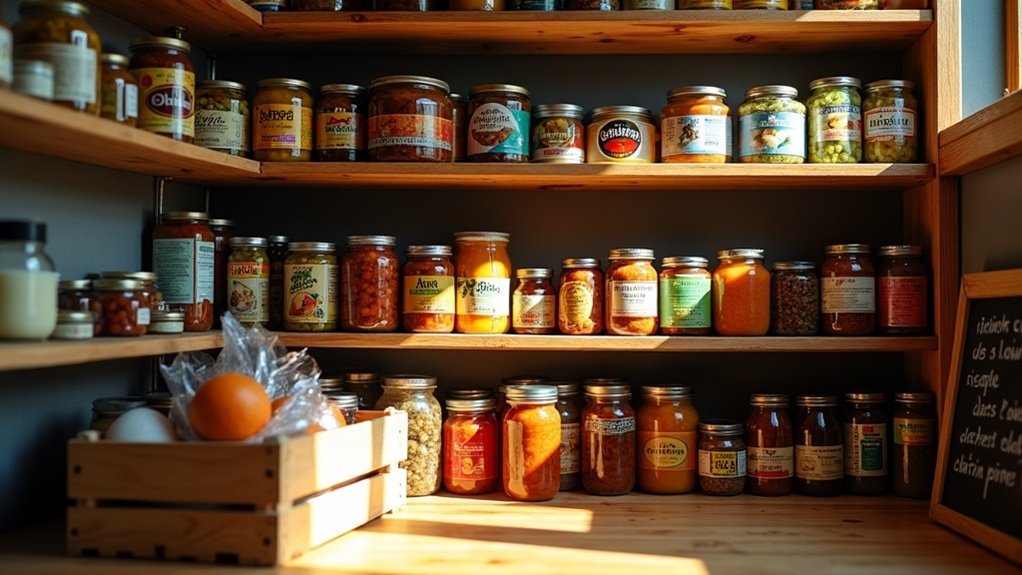
To store canned goods correctly for survival and prepping, keep them in a cool, dark, and dry place, ideally between 50 to 70°F. Avoid areas with humidity and heat sources, as these can compromise the integrity of your supplies. Label each can with purchase and expiration dates, and use the FIFO (First In, First Out) method to rotate your stock effectively. Regularly inspect your inventory for signs of spoilage, such as bulging lids or off smells, to ensure your food remains safe and edible. Following these guidelines is essential for maintaining the quality of your provisions, and there’s much more to explore about long-term storage techniques for your preparedness plan.
Key Takeaways
- Store canned goods in a cool, dark, and dry environment, ideally between 50 to 70°F, to maximize their shelf life for emergency situations.
- Clearly label all cans with purchase and expiration dates to ensure easy tracking and to maintain your stockpile effectively.
- Utilize the FIFO (First-in, First-out) method to ensure that older items are used first, preventing waste and ensuring you have the freshest supplies on hand.
- Regularly inspect cans for signs of spoilage, such as bulging lids or unusual odors, to keep your emergency food supply safe and reliable.
- Maintain clean and dry storage areas to prevent moisture and rust from affecting your canned goods, which is crucial for long-term preparedness.
Ideal Storage Conditions
When it comes to storing canned goods for survival and prepping, it’s crucial to ensure they’re kept in optimal conditions to maintain their quality and safety for long-term use.
Store your canned foods in a cool, dark, dry location, ideally within a temperature range of 50 to 70°F. Avoid exposing them to temperatures above 95°F or placing them near heat sources, as this can lead to spoilage and nutrient degradation.
Store canned goods in a cool, dark, dry place, ideally between 50 to 70°F, to maintain quality and safety.
Ensure your storage area is free from moisture to prevent corrosion of metal cans, which could compromise their integrity.
Regularly monitor the conditions and implement a rotation system to use older items first, thus preserving their quality and preventing waste in your preparedness stockpile.
Proper Labeling and Rotation
Proper labeling and rotation of canned goods is crucial for survivalists and preppers, as it ensures that your food supply remains safe and ready for use in any situation.
Follow these steps for effective inventory management in your preparedness plan:
- Clearly label all cans with both the purchase date and expiration dates to avoid confusion during emergencies.
- Implement the FIFO (First-in, First-out) method to ensure that older goods are consumed first, minimizing waste and maximizing your resources.
- Position jars with older items at the front of your storage area for easy access during critical times.
- Regularly inspect your inventory to remove any expired items, preventing spoilage and maintaining a reliable food supply.
Identifying Spoiled Canned Goods
To ensure your survival and health in any situation, it’s crucial to know how to identify spoiled canned goods.
Start by inspecting lids for tightness and vacuum; a loose or bulging lid indicates spoilage and could compromise your food supply. Look for air bubbles, unnatural colors, or dried food streaks around the lid, which can signal potential issues.
Trust your senses—smell for any unnatural odors, as these can indicate bacterial growth that could be harmful in a survival scenario. Additionally, check for mold growth inside the jar; this is a clear sign of spoilage.
Never taste food from unsealed jars or those showing signs of spoilage, especially low-acid foods, as they may harbor dangerous bacteria. Always treat suspected containers as potentially hazardous to ensure your preparedness and safety in challenging situations.
Safe Detoxification Procedures
Even if you come across spoiled canned goods while prepping or in a survival situation, knowing how to safely detoxify them can help minimize health risks. Follow these steps:
- Always wear disposable gloves when handling spoiled items to prevent contamination.
- Place the containers in a stock pot, cover with water, and boil for 30 minutes to neutralize harmful bacteria, ensuring you have a reliable heat source available.
- After boiling, let them cool before securely discarding the containers, food, and lids in a designated trash bag to prevent attracting pests.
- Clean surfaces with a bleach solution or a natural disinfectant to eliminate lingering contaminants, especially if you’re in a confined space.
Lastly, dispose of gloves and wash your hands thoroughly to guarantee proper hygiene and safety, which is crucial for maintaining your health in any survival scenario.
Best Practices for Long-Term Storage
When preparing for long-term storage of canned goods as part of your survivalist strategy, it’s crucial to keep them in a clean, cool, dark, and dry environment. Aim for a temperature range of 50-70°F to ensure maximum quality and minimize spoilage risks.
Regularly inspect your storage area for moisture, as it can lead to rust and spoilage, jeopardizing your food supply. Label and date all jars to keep track of inventory, and use them within a year for optimal quality.
For low-acid foods, aim to consume them within three years to ensure safety and edibility. Remember to remove screw bands from vacuum-sealed jars periodically to check the integrity of the seal.
Lastly, keep your storage away from heat sources, as high temperatures can accelerate nutrient loss and increase the risk of spoilage, which is critical for maintaining your preparedness supplies.